GAC Aion RT battery-swap model appears in China’s regulatory filings

GAC Aion has officially submitted filings to China’s Ministry of Industry and Information Technology (MIIT) for a battery-swappable version of its Aion RT electric sedan. The new variant maintains identical specifications to the non-swappable version launched on September 22, featuring a 150 kW (201 hp) electric motor.
This development aligns with CATL‘s “Chocolate” battery-swapping initiative announced in April, where the battery giant partnered with five major automakers to launch ten battery-swappable models. Both the Aion RT and Chery’s iCar V23 were listed among these planned vehicles, with the latter also submitting battery-swap variant filings alongside GAC.
CATL’s initiative, dubbed the “Chocolate” platform, aims to standardise battery-swapping technology across multiple manufacturers, creating a more accessible and convenient charging solution for Chinese EV owners.
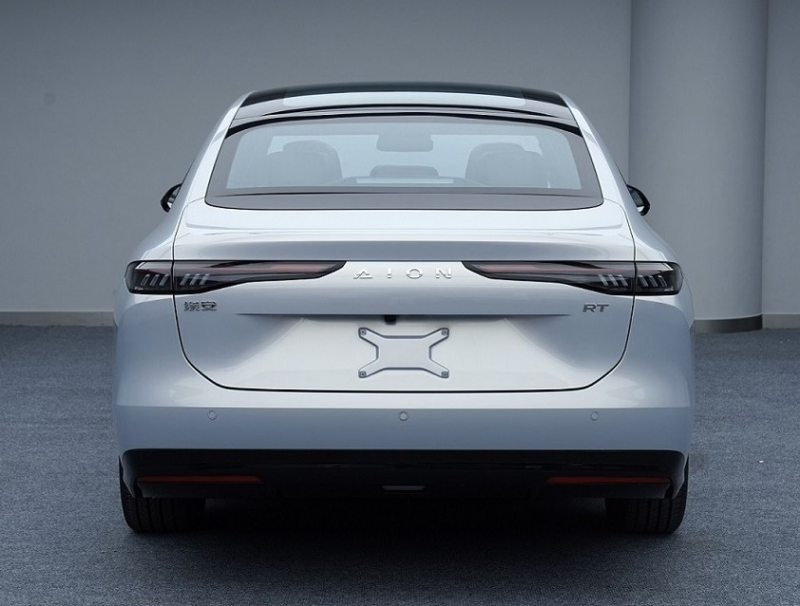
The non-swappable Aion RT specifications:
- Aerodynamic “velociraptor” design with a drag coefficient of just 0.208Cd
- Dimensions: 4,865mm length, 1,875mm width, 1,520mm height, 2,775mm wheelbase
- Available with either 55.1kWh or 68.1kWh CATL lithium iron phosphate batteries
- Range options of 520km or 650km
- Energy consumption rates of 11.7kWh/100km and 11.9kWh/100km
- Advanced 400V silicon carbide fast-charging technology
- Sophisticated autonomous driving capabilities powered by 126-line LiDAR and Nvidia’s Orin-X chip
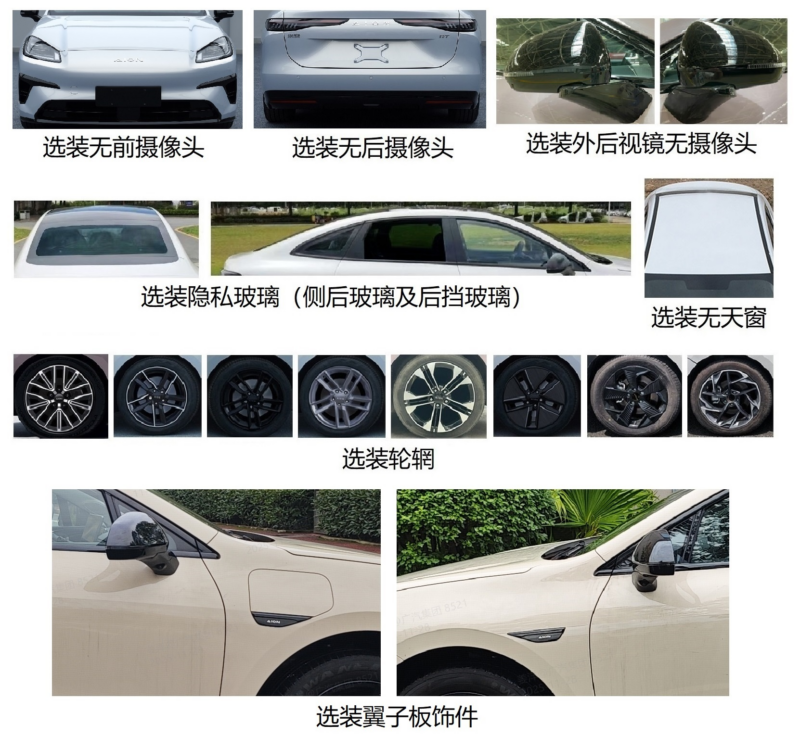
The standard Aion RT is priced between 99,800 and 123,800 yuan (14,000-17,400 USD), the battery-swap version may offer a 7,000 USD lower entry price with a battery subscription model.
According to CATL, the goal for its Choco-SEB battery swap stations this year was to build 1,000 units, a target that was nearly met by October. It announced on December 2nd that the 1,000 battery swap stations it constructed this year will all be energised and fully operational before the Spring Festival.
These stations now cover approximately two-thirds of the nation’s cities, ensuring users can locate a station within about 10 kilometres. By 2030, CATL aims to expand its network to between 10,000 and 20,000 stations, with a long-term plan to establish 30,000 stations, thereby making battery swapping as convenient as traditional refuelling.
As of now, the battery-equipped versions of Choco-SEB compatible models—including the Changan Oshan battery swap vehicles already in service, the Aion UT Super launched last month, and the recently declared Aion RT and iCar V23—are all priced under 14,000 USD, making them more affordable than Nio’s lowest price model, Firefly, which also supports battery-swapping.