Yangwang U7, Nio ES8, and Luxeed R7 are certified intelligent chassis benchmark vehicles by Chinese national research enterprise
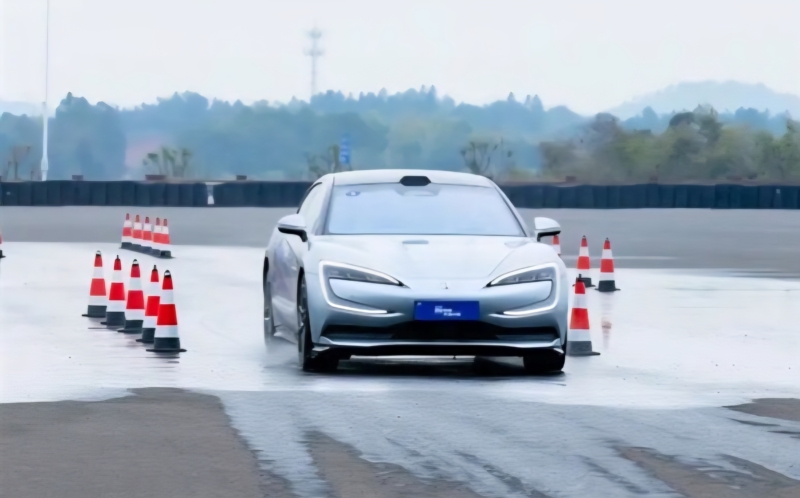
With the continuous advancement of automotive intelligence, intelligent chassis systems, characterized by active suspension, steer-by-wire, and brake-by-wire technologies, have become one of the core benchmarks for measuring the level of intelligence in a vehicle. Recently, the China Automotive Engineering Research Institute (CAERI) certified three benchmark vehicles with advanced chassis systems in its “Automotive Intelligent Chassis Real-World Testing Research Report”:
- Sedan in the 500,000 to 700,000 yuan (71,100 to 99,600 USD) price range: Yangwang U7
- SUV in the 300,000 to 500,000 yuan (42,700 to 71,100 USD) price range: Nio ES8
- SUV in the 200,000 to 300,000 yuan (28,500 to 42,700 USD) price range: Luxeed R7
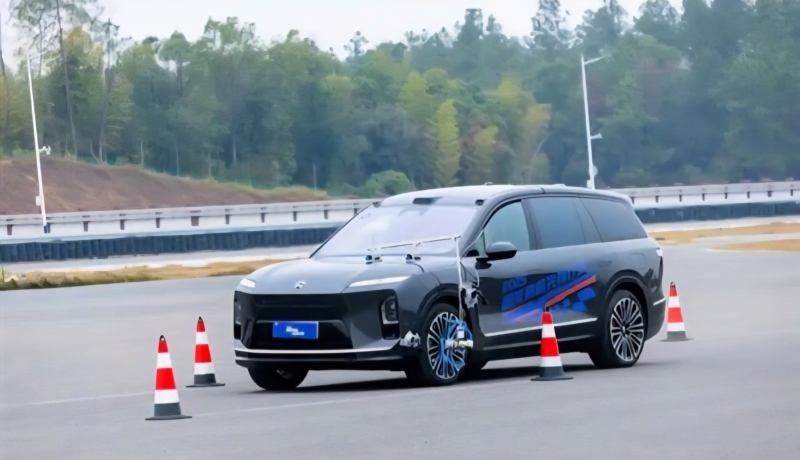
For the evaluation, more than 20 metrics were used across more than 10 mainstream vehicle models on the Chinese market such as “peak yaw rate” and “maximum steering wheel correction angle”.
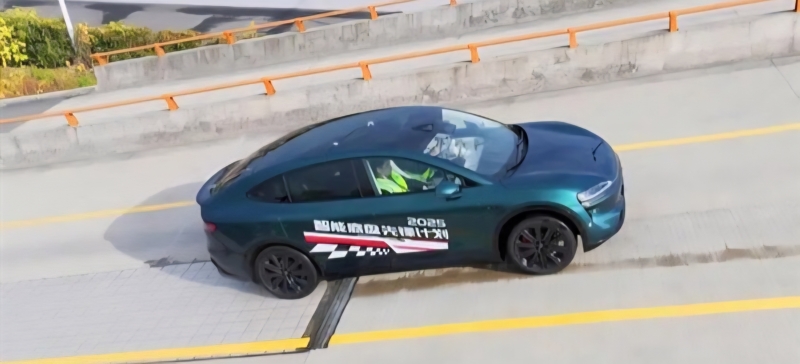
Yu Yinghong, a senior expert in intelligent chassis development at the CAERI shared some observations from the testing that some models equipped with intelligent chassis can sense the vehicle’s status in real time during braking, adjusting the suspension in advance to suppress shaking and make deceleration smoother. On uneven road surfaces, intelligent sensors can identify road conditions in advance and make adjustments proactively before the wheels slip, preventing the vehicle from veering off course.
In 2019, the size of China’s intelligent chassis industry was 10.6 billion yuan (1.51 billion USD). By 2030, it is predicted to surpass 100 billion yuan (14.2 billion USD), according to Chinese news outlet East Money.
Currently, there is no industry consensus on the classification and grading of different intelligent chassis solutions in China. Since 2024, more than 70 mass-produced models launched in the Chinese market have been equipped with intelligent chassis configurations such as with Nio’s “SkyRide”, BYD’s DiSus, Huawei’s Tuling, Xpeng’s Taiji AI, and Changan’s Tianzhu systems.
The report also introduced eight standards to guide the development of intelligent chassis technology, covering 18 test conditions, including:
- High-risk and high-attention driving scenarios such as tire blowouts and cornering at intersections
- Intelligent driving in low-speed scenarios, specifically addressing enhanced maneuverability modes such as tank turn for vehicles with intelligent chassis
About CAERI
CAERI was founded in March 1965, originally named Chongqing Heavy-Duty Automobile Research Institute. In June 2012, it was officially listed on the Shanghai Stock Exchange. Then in 2022, it was merged into the China Certification & Inspection Group, a China state-owned mega group providing inspection, verification, certification and testing services.
Source: CAERI, East Money


