China to enforce world’s first mandatory EV energy standard in 2026, capping two-tonne models at 15.1 kWh per 100 km
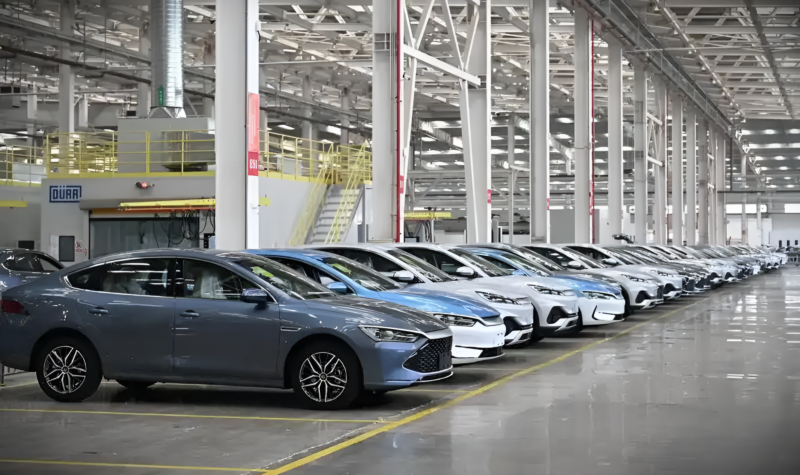
China will implement a new mandatory national standard governing energy consumption for pure-electric passenger vehicles, effective January 1, 2026, according to China Central Television, as cited by IT Home. The regulation is the world’s first mandatory standard for electric-vehicle energy consumption and replaces China’s previous recommended framework, giving it direct legal force over newly produced models.
The standard is formally titled Energy Consumption Limits for Electric Vehicles Part 1 Passenger Cars. It establishes binding electricity consumption thresholds differentiated by vehicle curb weight and technical characteristics. Regulators stated that the limits were set after assessing the current energy consumption of pure-electric passenger cars, the potential of energy-saving technologies, cost-control considerations, and the performance characteristics of special-vehicle categories.
Compared with the previous recommended version, the new mandatory standard tightens energy consumption requirements by approximately 11 percent. It also introduces differentiated indicators that reflect variations in vehicle usage scenarios and technical solutions, to accommodate diverse product development pathways and to guide future research and application of efficiency technologies.
Once the standard takes effect, manufacturers will be required to carry out technical upgrades on newly produced vehicles to ensure compliance. For pure electric passenger cars with a curb weight of around two tonnes, the new requirement sets a maximum electricity consumption of 15.1 kilowatt-hours per 100 kilometers. Authorities stated that, following technical upgrades, vehicles with the same battery capacity are expected to see an average increase of about 7 percent in driving range due to reduced energy consumption.
The regulation applies specifically to pure electric passenger vehicles and does not cover plug-in hybrid or extended-range models. The efficiency gains reported in official documents are attributed to system-level improvements rather than to increases in battery capacity.
Additional policy measures will link the new energy consumption standard directly to financial incentives. Chinese authorities, including the Ministry of Industry and Information Technology, the Ministry of Finance, and the State Taxation Administration, have issued updated technical requirements for new energy vehicles to qualify for purchase tax exemptions in 2026 and 2027. Under these rules, pure electric passenger cars must meet the new mandatory energy consumption limits to remain eligible for tax exemptions, aligning fiscal policy with regulatory efficiency targets.
Vehicles already listed in the purchase tax exemption catalogue by the end of 2025 that comply with the updated requirements will transition into the 2026 catalogue, while non-compliant models may be removed. The same policy package also raises technical thresholds for plug-in hybrid and extended-range vehicles, including higher minimum pure electric driving range requirements for incentive eligibility.
In July this year, the Ministry of Industry and Information Technology, the National Development and Reform Commission, and the State Administration for Market Regulation jointly emphasized accelerating the introduction of energy consumption and battery recycling standards during a new energy vehicle industry symposium. The mandatory energy consumption standard will take effect nationwide on January 1, 2026.
For major Chinese automakers such as BYD and Geely, the new regulation formalizes efficiency thresholds that many of their newer pure electric passenger models already meet. Compliant vehicles can continue production with minimal changes, while non-compliant models may require technical upgrades or be removed from production and from purchase tax exemption eligibility. The standard primarily affects two-tonne-class vehicles and other heavier models, prompting automakers to prioritize energy-efficiency improvements across platforms and trim levels to remain competitive under the new regulatory and fiscal framework.