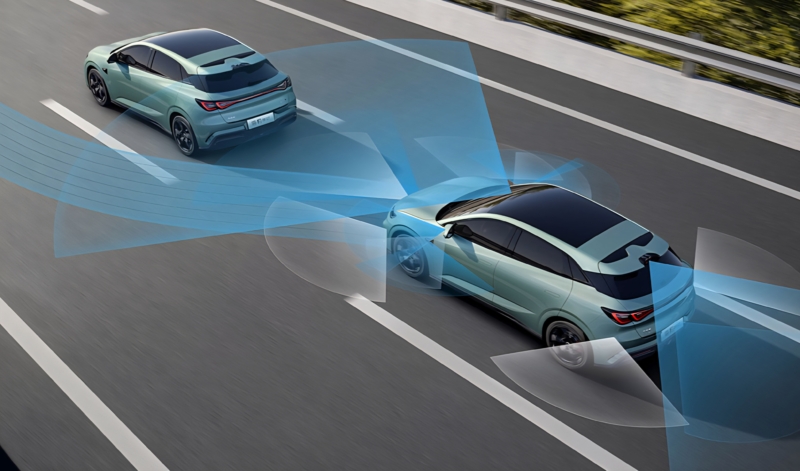
BYD has assembled a team of over 5,000 people to focus on the development of advanced driving assistance technology, and will invest over 100 billion yuan (14.3 billion USD) in future intelligent driving technologies.
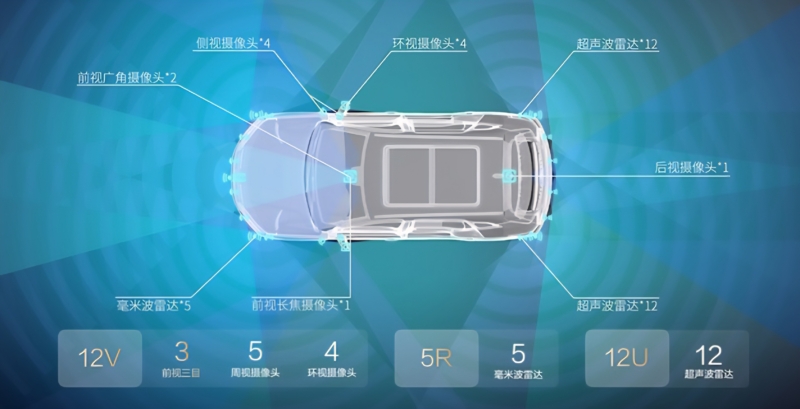
Earlier in July 2025, BYD revealed the L4 (level 4) autonomous parking capability for its “God’s Eye” system and promised full liability for losses in China.
Then as of December 2025, the cumulative number of vehicles equipped with BYD’s “God’s Eye” system exceeded 2.5 million, forming China’s largest vehicle cloud database. The assisted driving system generates over 150 million kilometers of driving data daily.
As a reference, from January to July 2025, the market penetration rate of passenger vehicles equipped with advanced driving assistance systems reached 62.58% in China.
Furthermore, for the development methodology, BYD is promoting an “AI intelligent agent + world model” solution, using virtual scenarios to train the system to handle rare errors.
BYD also indicated that assisted driving and intelligent cockpits together constitute the core of automotive intelligence. Cars are no longer just a means of transportation, but rather “intelligent entities” in the era of the Internet of Things. BYD is promoting the upgrade of cars from “means of transportation” to “life partners,” with functions such as drone integration and smart home control, and focuses on making advanced driving assistance systems standard across its entire vehicle lineup, from budget to luxury, under its “Intelligent Driving for All” initiative.
Looking ahead, Chinese automakers are focusing on L3 (level 3) autonomous driving capabilities. Several companies including Xpeng, Arcfox, and Deepal have recently obtained L3 road testing license in China, allowing the vehicle to operate independently in specific environments although manual intervention is still required if the system cannot make accurate judgments.
Source: BYD


