Sunday China Drive | Chery’s Exeed Exlantix MX quietly sets the benchmark in China’s mid-size SUV segment
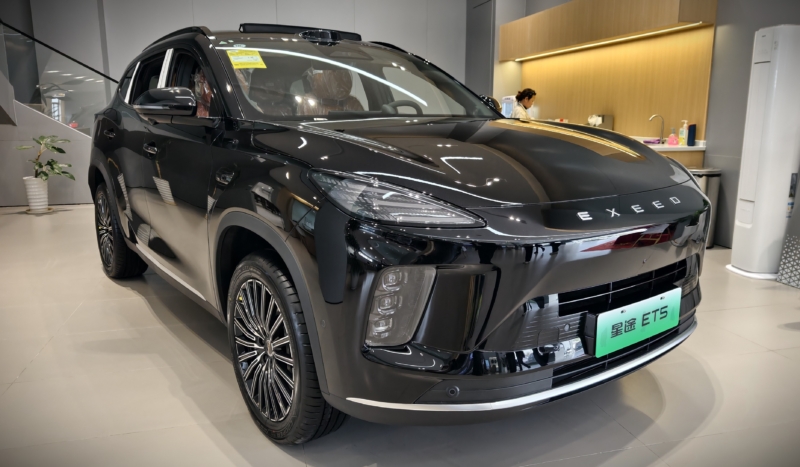
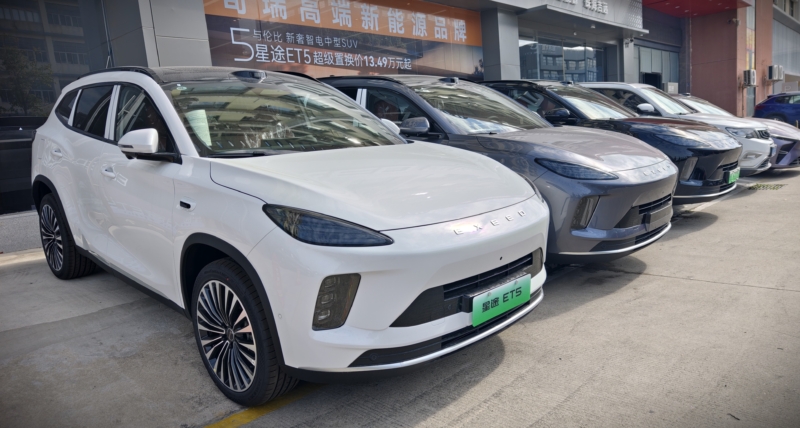
Chery’s Exeed Exlantix MX (ET5 in China) enters the mid-size SUV segment as one of the lowest-priced models equipped with lidar hardware and a 560 TOPS assisted driving platform. The tested vehicle is the top-tier 210 Laser Radar Edition, priced at 159,900 yuan (23,144 USD). Its combination of a rear-wheel-drive platform, a high-output electric motor, and a lidar-based autonomous driving system positions it against competitors such as the BYD Song L DM-i and Leapmotor C11, while offering technology typically reserved for higher-priced vehicles.
Chery’s premium sub-brand Exeed officially launched the mid-size extended-range SUV Exeed Exlantix MX internationally, marketed in China as the Exeed Exlantix ET5. The MX’s platform integrates aluminium suspension components, a 32.66 kWh LFP battery supplied by Gotion High-tech, and the Horizon Journey 6P computing chip with 560 TOPS, making it notable for the Chinese EREV market. Trade-in subsidies can reduce the high-trim price to 149,900 yuan (21,697 USD).
Exterior
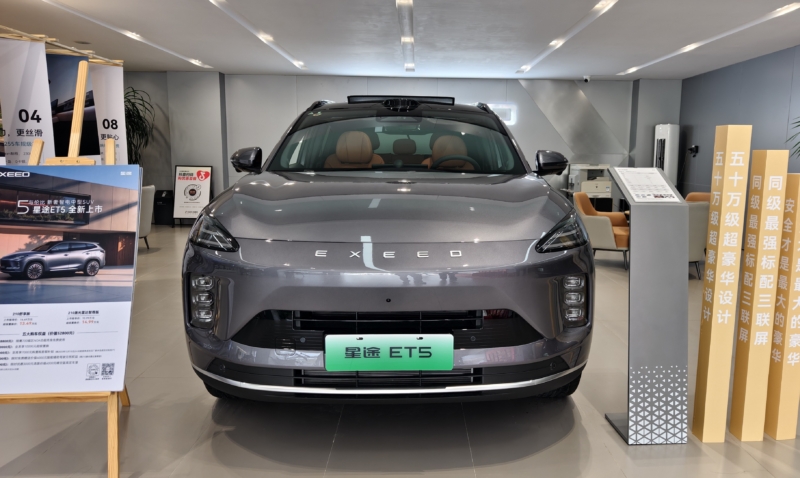
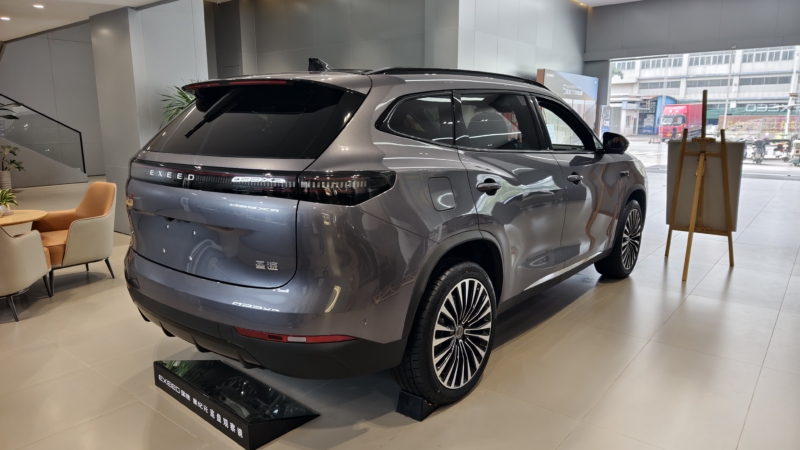
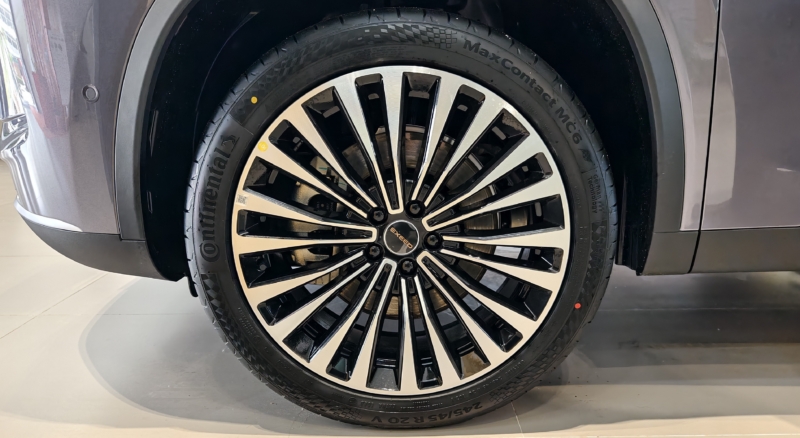
The Exeed Exlantix MX adopts a rounded design philosophy emphasising aerodynamics and efficient airflow management. Its body measures 4,780 mm in length, 1,890 mm in width, and 1,720 mm in height, with a 2,800 mm wheelbase. The closed front fascia reduces drag, while the trapezoidal lower intake directs cooling airflow for the 1.5T range extender. Integrated wheel arch ducts channel turbulent air away from the sides, minimising aerodynamic resistance around the 20-inch wheels.
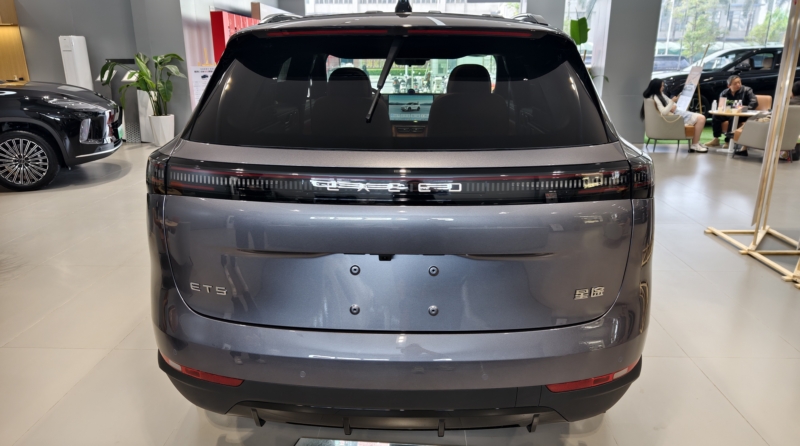
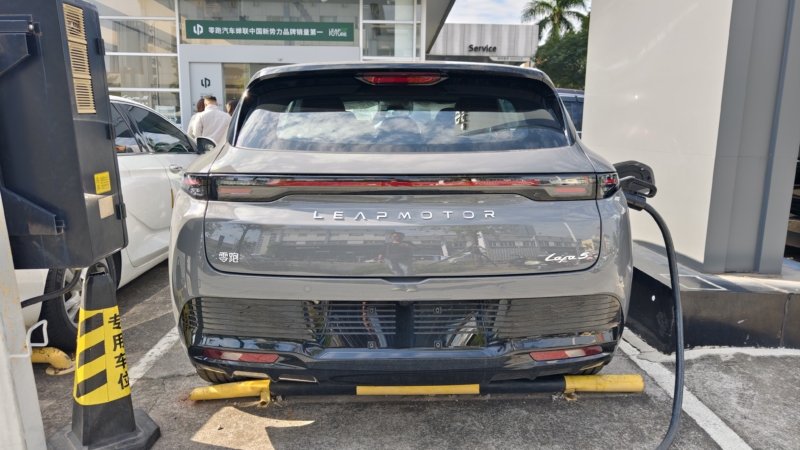
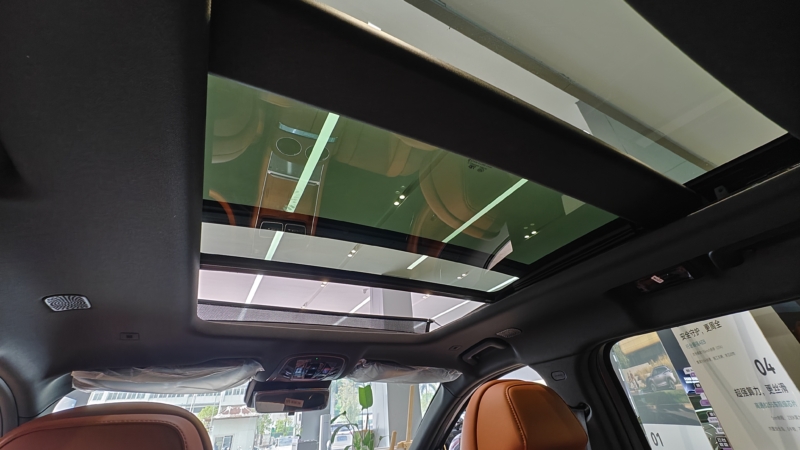
Front lighting features shell-shaped modules containing three horizontal LED strips per side, aligned with main headlamp units for consistent illumination. A laser radar unit is mounted above the windshield within the roofline, providing a clear field of view for the Horizon Super Drive system. At the rear, a continuous LED light bar spans the width of the tailgate, complemented by vertical internal elements and a diffuser-style rear bumper for airflow management.
The MX features traditional door handles rather than recessed hardware, simplifying integration with electronic access systems. Aerodynamic shaping around the rear quarter panel was aimed at reducing lift at higher speeds. The design favours aerodynamic efficiency over aggressive styling, signalling Exeed’s intent to prioritise range and refinement.
Interior
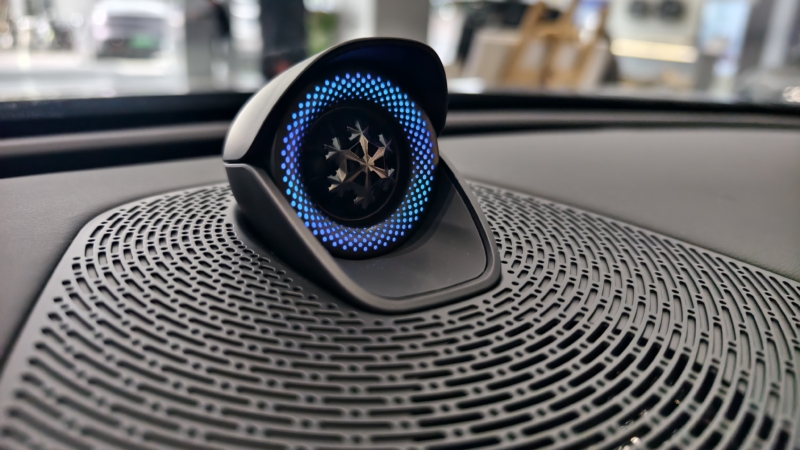
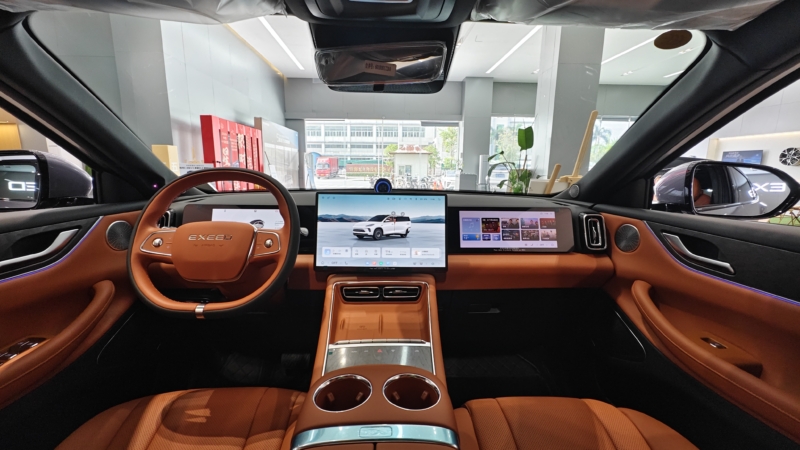
The cabin centres on a triple-screen layout powered by the Qualcomm Snapdragon 8255 automotive chipset. The 10.25-inch digital instrument cluster provides driver information, while a 15.6-inch 2.5K central touchscreen handles infotainment, navigation, and system controls. A 12.3-inch passenger display enables content viewing or secondary vehicle functions. All screens have matte finishes to minimise reflections and fingerprints.
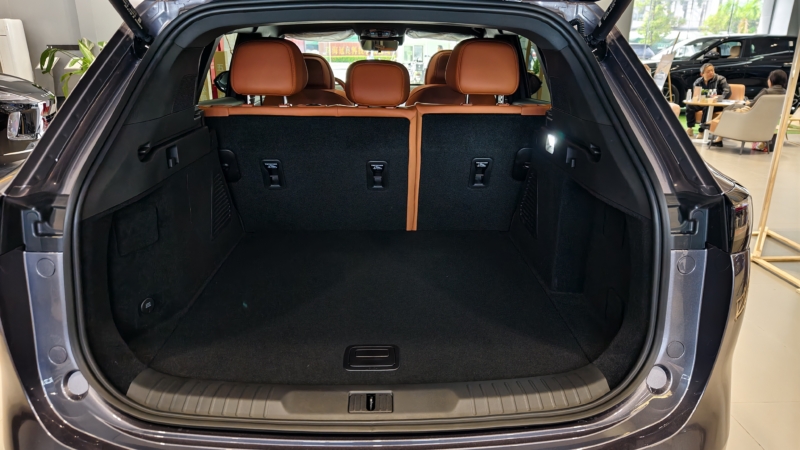
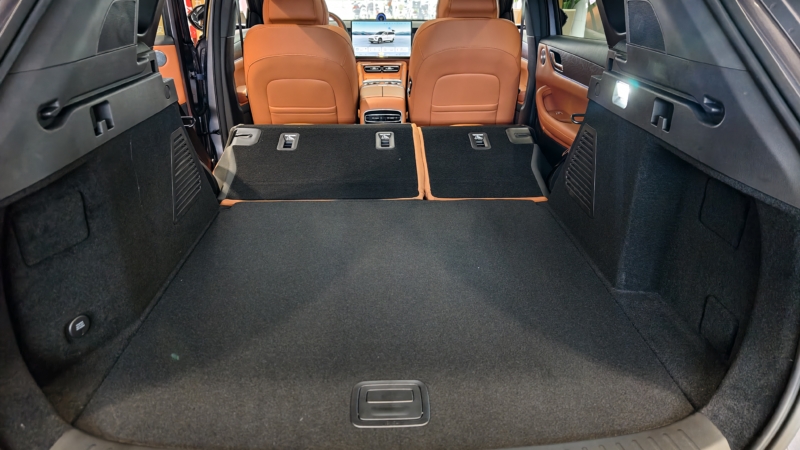
Physical controls for climate and defogging remain below the central touchscreen, ensuring operational accessibility without navigating menus. The centre console incorporates a 50-watt cooled wireless charging pad with raised edges to secure devices. Storage includes a flat cargo floor with underfloor compartments for charging cables and tools, side-panel cargo hooks, and a 120-volt power outlet.
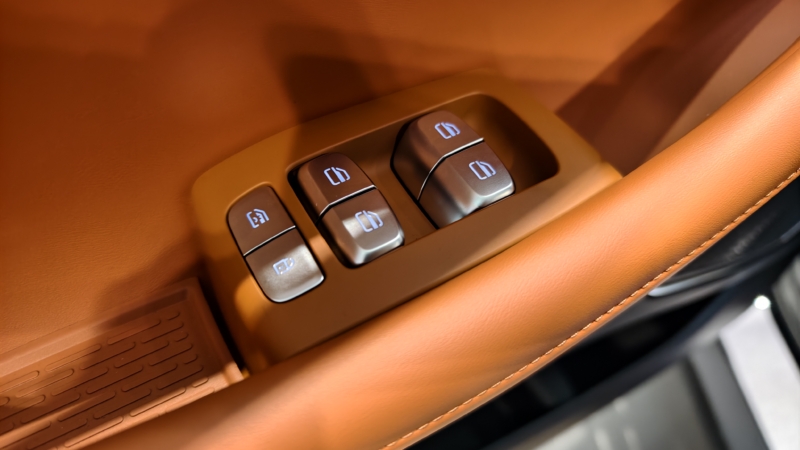
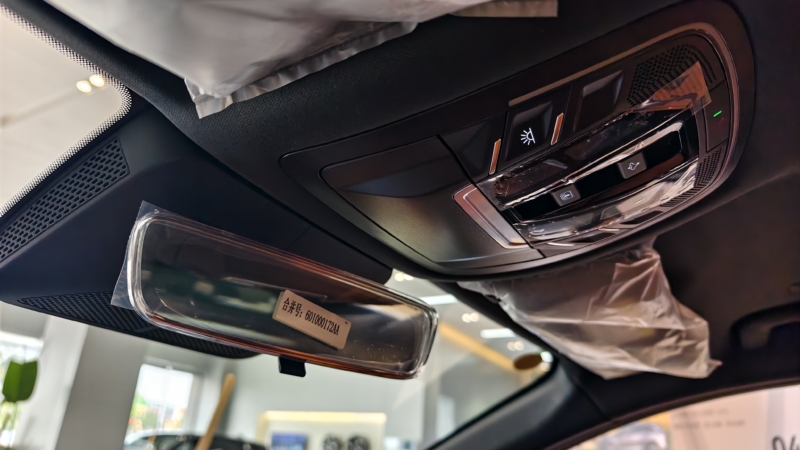
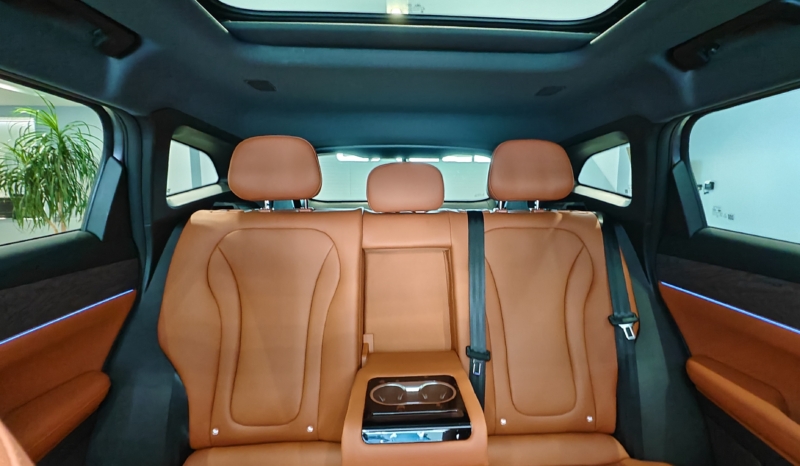
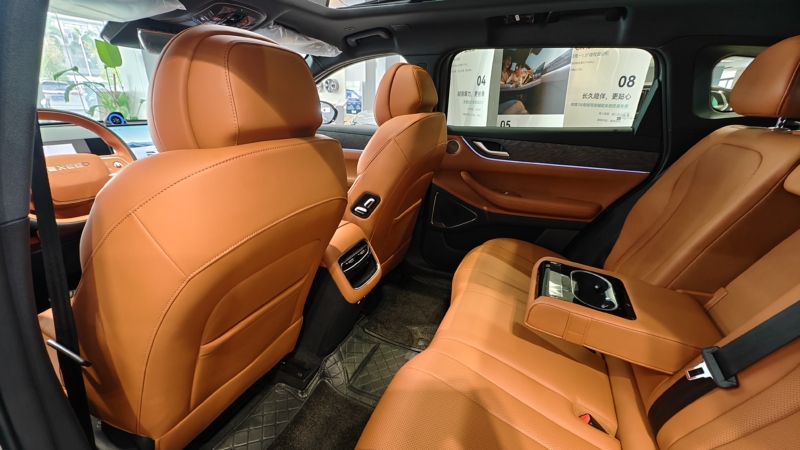
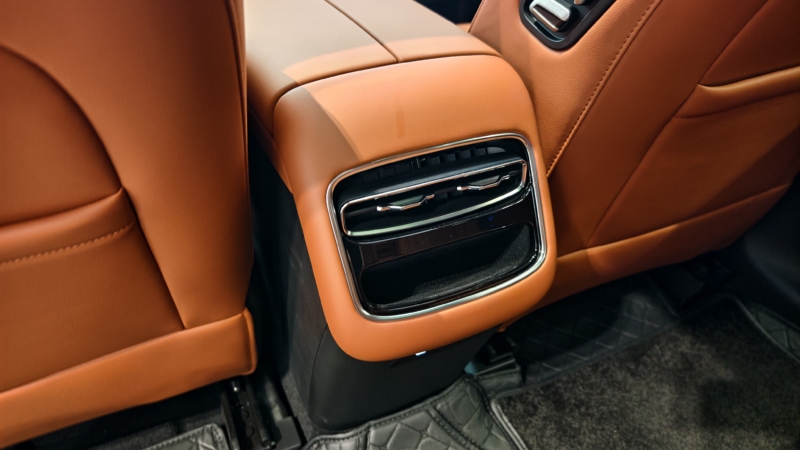
Seating integrates leather covers with Alcantara accents. Rear cabin space benefits from the 2,800 mm wheelbase, offering approximately four fingers of headroom for an 185 cm adult. Rear seats fold in a 4:6 ratio to expand cargo volume. The materials are tightly fitted, the triple-screen assembly shows minimal gaps, and panel alignment demonstrates consistent build quality. USB-C ports and a central armrest are positioned for passenger convenience without obstructing legroom.
Driving Experience
The Exeed Exlantix MX utilises a rear-wheel-drive layout powered by a 195 kW (261 hp) permanent-magnet synchronous motor, delivering 324 N·m of torque. Acceleration from 0 to 100 km/h takes 7.6 seconds. Energy is stored in a 32.66 kWh lithium-iron phosphate battery from Gotion High-tech, providing a CLTC-rated pure-electric range of 210 km. Real-world urban driving yields approximately 160–170 km per charge. DC fast charging from 20 to 80 percent takes 30 minutes. The 1.5T turbocharged range extender, which produces 115 kW, acts as a generator and is mounted on hydraulic supports to reduce cabin vibration. The generator maintains a thermal efficiency of 45.79 per cent, producing 3.71 kWh per litre of fuel in hybrid operation.
The chassis features aluminium H-arm rear suspension and independent front suspension. Damping is tuned for rapid wheel settlement over uneven surfaces. Steering is calibrated for stability and linear response, while braking provides predictable deceleration through the pedal travel. Aerodynamic refinements to the A-pillars and wheel arches reduce wind noise. The range extender becomes audible during sustained high-load operation, but mechanical behaviour remains consistent and predictable.
The Horizon Super Drive system leverages the Journey 6P chip with 560 TOPS of computing power and lidar hardware. The system’s end-to-end model behaviour was observed navigating lane changes, traffic lights, and urban intersections with precise timing. Conservative following distances were maintained during heavy traffic. Sensors include one front-facing lidar, multiple cameras, and radar units, all integrated with the computing platform for real-time decision-making.
Suspension effectively isolates irregularities without excessive body roll, while regenerative braking smoothly transitions from motor to hydraulic brakes during deceleration. Steering effort remains consistent at low and medium speeds, supporting urban manoeuvrability, and chassis tuning balances stability with wheel compliance across variable road conditions.
Verdict
The Exeed Exlantix MX occupies a specific niche in China’s mid-size EREV SUV market. At 159,900 yuan (23,144 USD), it offers lidar-based autonomous hardware and a high-compute ADAS platform at a price below several domestic and imported competitors. Its main competitors include the BYD Song Plus DM‑i, Deepal S07, and Leapmotor C11, none of which are offered with the same standard combination of lidar hardware and the specific 560 TOPS computing platform found on the tested Exeed Exlantix MX trim.
The MX’s integration of hardware, suspension structure, and panel alignment reflects attention to engineering detail. The aluminium H-arm suspension, hydraulic-mount range extender, and triple-screen system are all implemented to maintain predictable mechanical and electronic performance. Production occurs at Chery’s main facilities, supporting domestic volume with verified component quality.
At 159,900 yuan (23,144 USD), it is currently among the lowest-priced SUVs in China equipped with lidar hardware. The MX demonstrates how lidar-based assisted driving and high-compute platforms are entering the mainstream, setting a precedent for China’s mid-size SUV segment. Its platform and engineering approach make it an EREV option with both verified EV range and reliable generator operation.