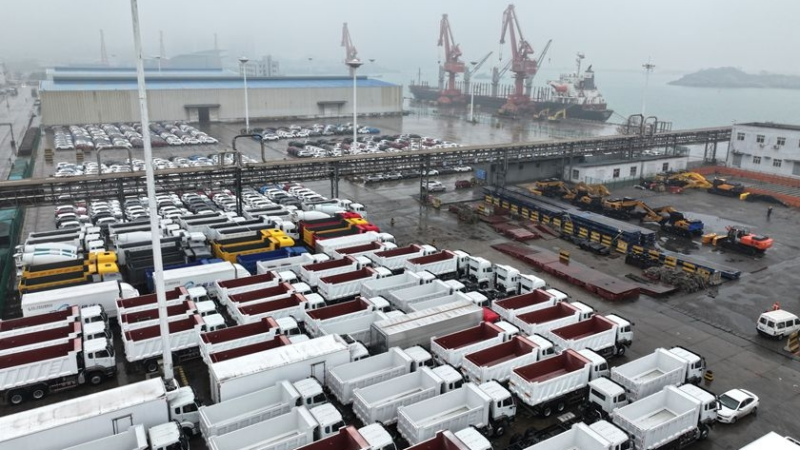
Chinese automakers are experiencing significant disruptions to their export operations as conflicts in the Middle East intensify, affecting not only direct sales to countries like Iran but also crucial transhipment routes through Dubai that serve markets across the Middle East, West Africa, and North Africa.
“Our Iranian business has completely stalled,” an export manager from a state-owned Chinese automaker told Caixin. The impact extends well beyond Iran, as another automotive trade professional explained: “Many Chinese car companies use Dubai as a transhipment hub to reach other Middle Eastern markets or West and North Africa. Now that this transit point has become unsafe, the entire operation is affected.”
The United Arab Emirates (UAE) has emerged as China’s third-largest automotive export destination in 2025, following only Mexico and Russia. According to data compiled by Cui Dongshu, Secretary-General of the China Passenger Car Association, exports to the UAE reached 567,000 vehicles last year, representing over 70% year-on-year growth. Notably, this figure far exceeds the UAE’s domestic auto sales of less than 400,000 units, highlighting Dubai’s critical role as a distribution hub.
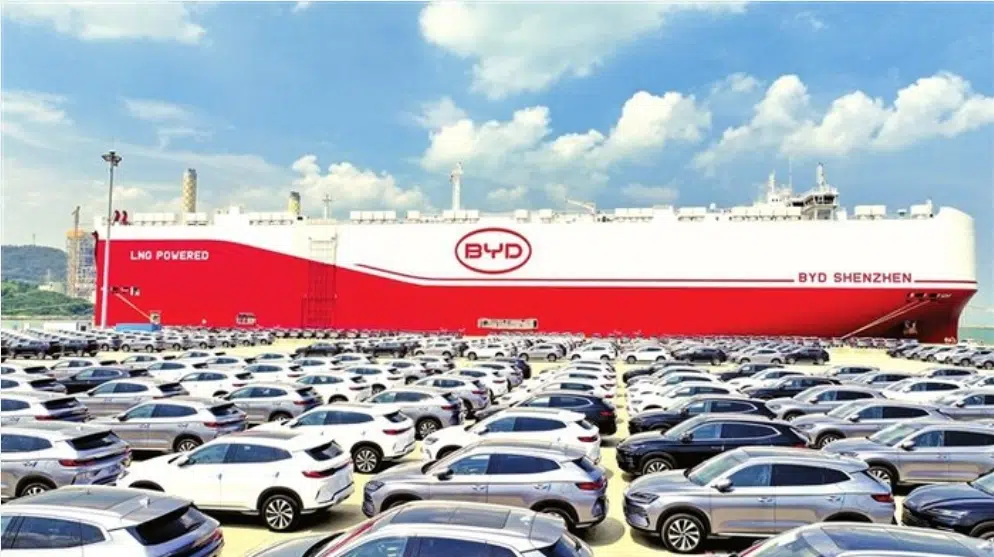
“Dubai essentially functions as a forward warehouse,” explained one automotive trade professional to Caixin. “Many companies ship vehicles to Dubai in advance before redistributing them to final destinations. In 2025 alone, our company shipped nearly 30,000 vehicles to Dubai.” This strategy leverages Dubai’s geographic advantages, financial conveniences, and tax benefits.
Maritime shipping remains the primary and most cost-effective transportation method for Chinese automotive exports to the Middle East. Jebel Ali Port in Dubai, the region’s largest port, serves as the central hub for roll-on/roll-off vehicle transport and a key gateway for Chinese automotive exports to the Middle East.
The situation deteriorated when Jebel Ali Port was attacked in the early hours of March 1, temporarily halting operations. Although port operator DP World announced the resumption of normal operations at four berths by 6 PM the same day, shipping companies have largely suspended services, leaving ports effectively idle despite being technically operational.
The impact extends to European markets as well. The European Union represents China’s third-largest regional export market for automobiles, receiving over 1.3 million vehicles in 2025 and serving as the primary destination for China’s new energy vehicle exports. With Red Sea-Suez Canal routes under high risk, shipments must be rerouted around the Cape of Good Hope, adding 10-15 days to transit times.
According to the China Association of Automobile Manufacturers (CAAM), China exported a record 7.09 million vehicles in 2025, marking a year-on-year increase of approximately 20%. CAAM had previously forecast a modest 4.3% growth to 7.4 million units in 2026, but these projections may now need revision as regional conflicts threaten China’s overall automotive export landscape.
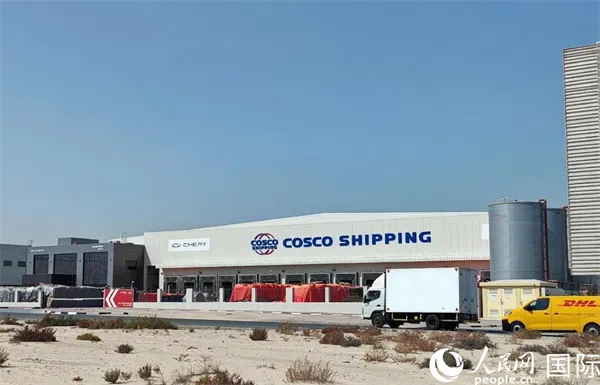
Chinese companies invested a lot in the region’s logistics infrastructure. As reported by People.cn, in February, just days before Israel’s attack on Iran, a shipment of Chinese automotive parts arrived at Jebel Ali Port and was transferred to an overseas warehouse in the Jebel Ali Free Zone for distribution throughout the Middle East. This warehouse, built by COSCO Shipping and Chery, occupies 19,000 square meters and aims to reduce response times for regional automotive customers from weeks to days.