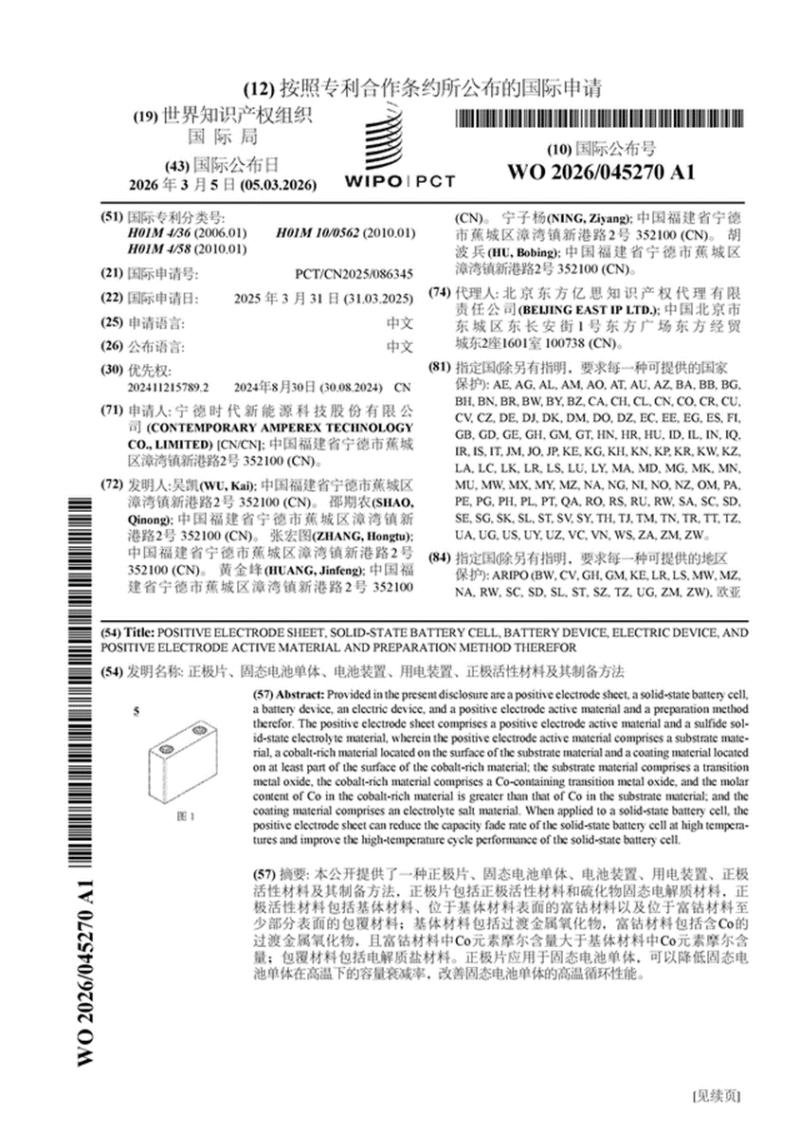
Solid-state patent: CATL tackles sulfide instability ahead of 2027 pilot
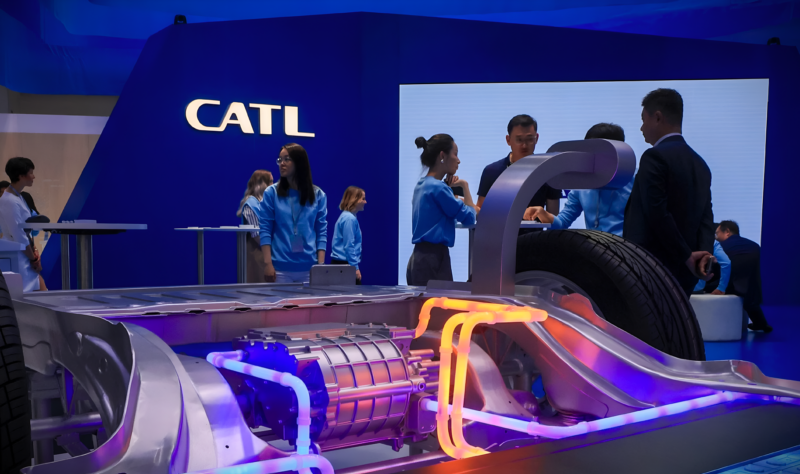
CATL solid-state battery with 500 Wh/kg energy density and sulfide-based chemistry started pilot development in China. Its domestic name is Ningde Shidai All-Solid-State. The battery giant is racing to meet a 2027 deadline for small-scale production as China plans to release a solid-state battery standard in July 2026, implementing its first national technical standard for the category.
The newly published patent, PCT/CN2025/086345, focuses on a specific positive electrode active material and preparation method designed to mitigate the inherent instability of sulfide electrolytes. Technical data indicates the company is currently at technology maturity level 4 and aims to reach levels 7 or 8 by 2027. This level signifies the transition from laboratory prototypes to automotive-grade cells ready for pilot-scale vehicle integration, according to Ifeng.
Patent Anchors
The filing reflects the brand’s focus on stabilising solid-state battery electrolytes, which have long been plagued by interface contact failures. Chief Scientist Wu Kai has repeatedly emphasised that the roadmap is calibrated: Level 9 represents mass production, but the near-term target is automotive-grade 60Ah prototypes. The manufacturer currently ranks among the most active applicants alongside global players like Toyota and Samsung, leveraging over 10 years of accumulated research experience.
Copper Foil Commitment
On November 4, 2025, CATL signed a Cooperation Framework Agreement with Guangdong Jiayuan Technology, reserving 626,000 tons of copper foil capacity for 2026-2028. This supply chain move, valued at approximately 66 billion yuan (9,597,208,376 USD) based on today’s rate, ensures specialised anode current collector materials for both semi-solid and all-solid-state routes. While Jiayuan’s shipments accounted for a symbolic 0.1% of output in 2025, the massive capacity reservation signals a pivot toward industrialisation at scale.
Engineering Moat: The 60Ah Challenge
CATL’s “engineering moat” lies in scaling from 20Ah samples to 60Ah automotive-grade cells. Unlike liquid-electrolyte NCM batteries, sulfide solid-state stacks demand constant high-tonnage compression to maintain interfacial contact. Engineers describe the ceramic-like layers as “polished slate tiles,” dense, brittle, and unforgiving. This mechanical brutality forces rigid casing designs that can erode the weight advantage of high energy density.
Regulatory Reality Check
CATL has tempered expectations. In October 2025, the company admitted that while “scientific challenges have been largely resolved,” engineering hurdles remain. Cost is chief among them: sulfide solid-state cells are currently 3–5 times more expensive than conventional lithium-ion. CATL has denied rumours of 2,000 km solid-state EVs by 2027, instead positioning early deployments in drones and robotics where energy density matters more than mass-market cost parity.
Global Context
The copper foil pact and patent filing together mark CATL’s dual strategy: secure intellectual territory while locking in material infrastructure. According to SMM, all-solid-state shipments could reach 13.5 GWh by 2028, dwarfed by 160 GWh semi-solid shipments. The clock is ticking, and CATL’s gamble is clear: master the 60Ah moat or risk watching rivals claim the crown of solid-state industrialisation.