China’s top EV expert Ouyang Minggao: solid-state batteries need years to mature, current technology already good
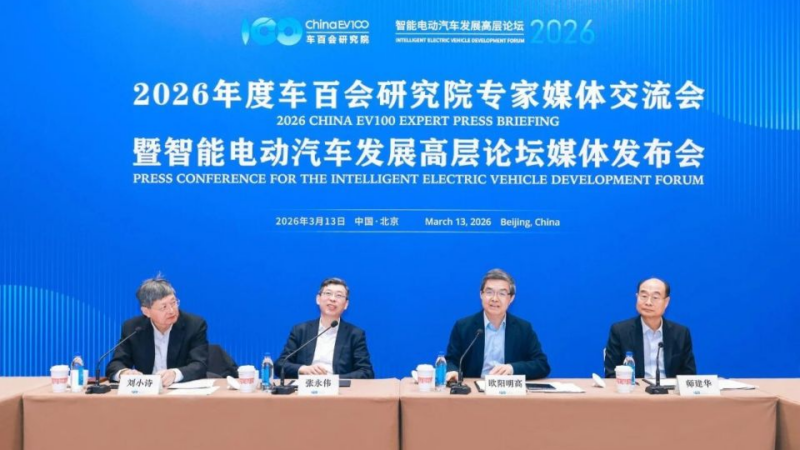
Chinese Academy of Sciences Academician Ouyang Minggao has advised people not to wait for solid-state battery-powered vehicles over the next two years, citing the need for further testing and development.
“Some vehicles will begin testing solid-state batteries by the end of this year and into next year. While there is marketing for solid-state battery products, they haven’t truly been sold yet—and out of caution, it’s best not to sell them in the next two years,” Ouyang stated at the “2026 Annual EV100 Research Institute Expert Media Exchange and Intelligent Electric Vehicle Development Forum” on March 11th, according to report from Yicai.
Ouyang reassured consumers that “many people are waiting for solid-state batteries, but there’s no need to wait—today’s electric vehicles are already very good.” He emphasised that solid-state battery development should proceed “step by step” rather than being rushed to market.
The renowned scientist noted that China has made rapid progress in solid-state battery technology. In 2024, China began aggressively pursuing this technology, and by 2025, Chinese companies accounted for 44% of newly published solid-state battery patents worldwide, surpassing Japan. Additionally, the cost of sulfide solid-state electrolytes has dramatically decreased from 20 million yuan (2.9 million USD) per ton to less than 1 million yuan (145 thousand USD) per ton, while production capacity has increased significantly.
However, Ouyang stressed that technological development takes time. “Solid-state batteries represent a revolutionary technology with high barriers to entry and greater technical challenges. They require comprehensive solutions addressing key materials, interfaces, electrodes, and cells,” he explained.
According to Ouyang, the industrialisation of solid-state batteries will occur in three stages:
- From 2025 to 2027: Development of graphite and low-silicon anode sulfide solid-state batteries with energy densities of 200-300Wh/kg, focusing on establishing the complete technology chain.
- From 2027 to 2030: High-silicon anode sulfide solid-state batteries targeting 400Wh/kg and 800Wh/L, concentrating on high-capacity, low-expansion, long-cycling silicon-carbon anodes.
- From 2030 to 2035: Lithium anode sulfide solid-state batteries aiming for 500Wh/kg and 1000Wh/L, with research focusing on advanced anodes and high-voltage, high-capacity cathodes.
Ouyang concluded that higher energy density solid-state batteries present greater challenges in development and quality control. He predicted that when solid-state batteries begin to become widespread, they will likely achieve energy densities of 300-350Wh/kg, with commercial viability expected in three to five years.
About Ouyang Minggao
Ouyang Minggao (born in 1958), one of the top experts in the auto industry, is a member of the Chinese Academy of Sciences and an Editor-in-Chief of eTransportation. He is currently a Changjiang Distinguished Professor and the Leader of the Advanced Powertrain System Team, School of Vehicle and Mobility, Tsinghua University, Beijing, China, where he is responsible for directing the research and development of lithium-ion battery safety design and management, PEM fuel cell powertrain and hydrogen systems, engine control and hybrid powertrains, energy storage, and smart energy systems.
Editor’s comment
Lately, I’m sure you, like me, have grown weary of the constant barrage of news surrounding solid-state batteries. Not only are traditional automakers such as FAW, Dongfeng, Changan, and Geely regularly testing their solid-state battery prototypes, but even companies like Dreame, a vacuum cleaner manufacturer that only recently announced its foray into car manufacturing, have jumped on the solid-state battery bandwagon. Admittedly, they’ve certainly garnered significant attention.
However, the reality is that even if some laboratories have successfully developed functional solid-state batteries, they still grapple with numerous challenges: Are they safe? Are they durable? Is their charging speed sufficient? And even if all these questions are answered affirmatively, will their cost be low enough?
Naturally, the relatively low energy density of current lithium-ion and sodium-ion batteries adds some extra weight to vehicles. However, beyond this, other technologies, such as Nio and CATL’s battery swapping solutions or BYD’s flash charging, are already quite mature. As Academician Ouyang Minggao stated, there’s no need to desperately await solid-state batteries, at least not within the next few years.