Nio-backed energy firm partners with BYD on flash charging stations
A Chinese energy infrastructure company backed by investors including Nio will cooperate with BYD to deploy Flash Charging stations in China, expanding beyond its earlier focus on battery-swap infrastructure, according to Zhong’an Energy. The development highlights the growing overlap between China’s ultra-fast charging networks and Nio’s battery-swap ecosystem.
Technical overview
The cooperation involves Zhong’an Energy, an infrastructure operator established in December 2023 to develop EV charging networks, battery asset management platforms, and virtual power plant services. The company was created with registered capital of 1.6 billion yuan and includes shareholders from China’s energy, battery, and electric vehicle industries.
Ownership is shared among several industrial partners. Anhui Energy Group is the largest shareholder, while battery manufacturer Gotion High-Tech and Nio each hold minority stakes of 19.25%. Gotion supplies power batteries for electric vehicles, while Nio has developed one of China’s largest battery-swap ecosystems as a core element of its vehicle strategy.
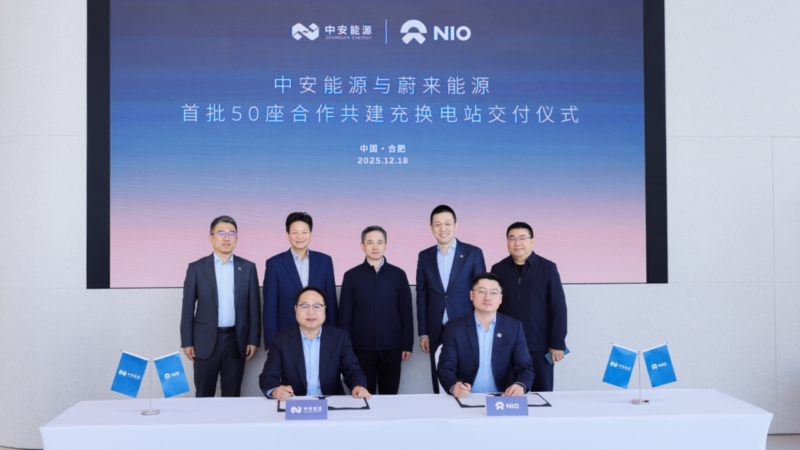
Zhong’an Energy’s earlier infrastructure cooperation focused mainly on Nio’s swap network. The company previously delivered 50 jointly developed swap stations with Nio and put them into operation as part of the automaker’s expanding battery-swap system.
Product context
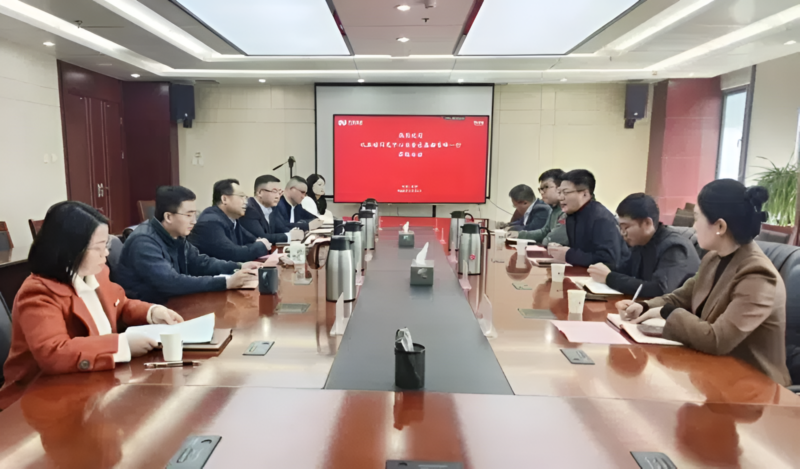
Following BYD’s unveiling of flash-charging technology, Zhong’an Energy decided to cooperate with the automaker to deploy flash-charging stations. The agreement adds a second energy infrastructure approach to the company’s portfolio.
The arrangement creates an unusual alignment within China’s EV supply chain. Zhong’an Energy’s shareholders include a battery manufacturer and a carmaker that both compete with BYD in the electric vehicle market.
Despite those competitive overlaps, infrastructure operators are increasingly positioning themselves to support multiple charging approaches rather than relying exclusively on a single ecosystem such as battery swapping.
Market positioning
China’s EV infrastructure landscape is becoming more diversified as manufacturers pursue different strategies to reduce charging time and improve convenience. Battery swapping has been promoted primarily by Nio, while several automakers are investing in ultra-fast charging systems capable of delivering significantly higher power.
By cooperating with BYD while maintaining its existing links to Nio’s swap network, Zhong’an Energy appears to be expanding its infrastructure strategy rather than replacing one technology with another. Supporting multiple systems could allow infrastructure providers to serve vehicles from a broader range of manufacturers as charging technologies evolve.
Industry context
Recent developments also highlight the rapid scale of BYD’s charging expansion. The company has accelerated deployment of its megawatt-class Flash Charging network through partnerships with highway operators and regional governments across several provinces, including Gansu, Henan, Hunan, and Shaanxi.
Official data indicates the network had reached 4,597 flash charging stations across 279 Chinese cities as of March 12, 2026, while the broader “Flash Charging China” strategy targets 20,000 stations nationwide by the end of 2026, including both urban and highway locations. The rollout is supported by Megawatt Flash Charging 2.0 technology paired with the second-generation Blade Battery, which the company said can recharge from 10% to 97% in 9 minutes.
Earlier this month, BYD outlined its “Flash Charging China” strategy alongside the launch of upgraded Blade Battery technology, positioning ultra-fast charging as a large-scale alternative to battery-swap networks.
Industry reports also indicate that BYD intends to expand its high-power charging ecosystem beyond China, with Flash Charging 2.0 infrastructure expected to roll out in Europe as part of the company’s global charging strategy.
Outlook
The cooperation highlights how charging infrastructure operators in China are increasingly adopting a multi-technology approach. As ultra-fast charging networks expand alongside battery-swap systems, companies involved in infrastructure deployment may seek partnerships across competing ecosystems to capture a larger share of the EV charging market.