Xpeng P7 refreshes with new trims, setting to challenge the new Xiaomi SU7 launching tonight
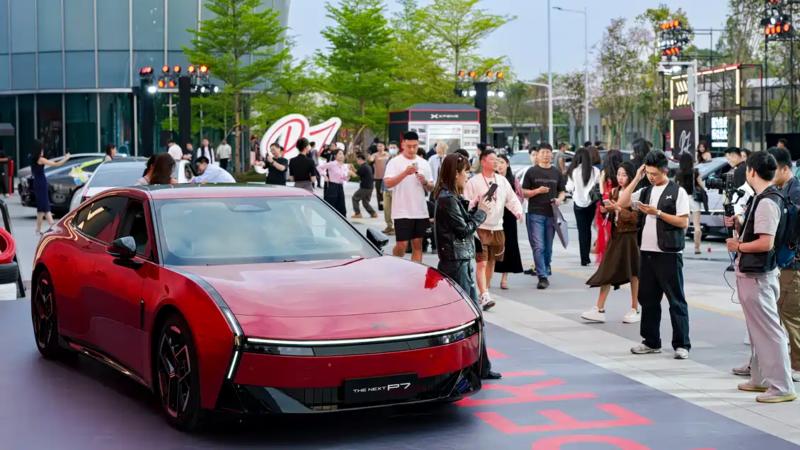
Xpeng announced a refresh of its P7 series at an event held yesterday, March 18, 2026. The updated lineup introduces new Max and UltraSE trims, alongside three fresh exterior colours: Starry Red, Dark Night Black, and Nebula White. The current Xpeng P7 model was launched last August.
The core of this product update lies in an upgrade to its advanced driver-assistance system (ADAS), with the new Xpeng P7 Ultra and UltraSE variants set to feature the company’s second-generation VLA (Visual Language Action) model.
The new release significantly enhances the Xpeng P7’s model matrix. The newly added Max trims include:
- 702 Max, priced at 203,800 yuan (29,500 USD)
- 820 Max, priced at 223,800 yuan (32,400 USD)
- 750 4WD Max, priced at 243,800 yuan (35,300 USD)
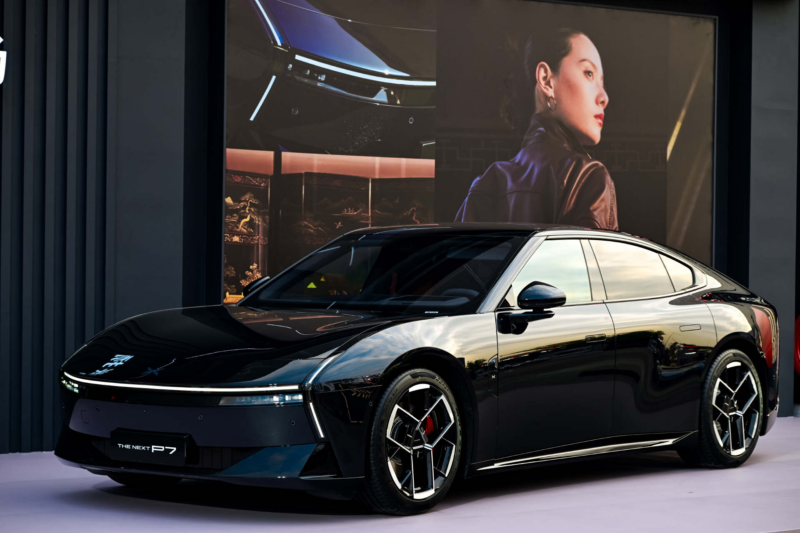
The previous top-tier variant has been renamed the 750 4WD Wing Ultra, now priced at 301,800 yuan (43,700 USD). Additionally, Xpeng introduced the UltraSE variant, available as an optional upgrade for 12,000 yuan (1,740 USD) on top of the Max trims. Users can also opt for the Ultra upgrade for an additional 20,000 yuan (2,900 USD). Xpeng confirmed that all new Max variants are designed to support future ADAS system upgrades.
The highlight of this launch is the advanced driver-assistance system. Xpeng defines its second-generation VLA as a “physical world large model” aimed at achieving L4 autonomous driving capabilities. This technology is officially integrated into the Xpeng P7 Ultra and UltraSE variants.
According to Xpeng, the second-generation VLA streamlines its technical framework by eliminating the “language translation” step, aiming for more human-like perception and decision-making. Its claimed capabilities include:
- Identifying irregular vehicles
- Bypassing accident scenes
- Yielding to small animals at night
- Pre-emptively reducing speed on bumpy roads
- Navigating park paths, rural dirt roads, and unmapped routes
- Achieving near-human driving efficiency in congested traffic
On the hardware front, variants equipped with three Turing AI chips boast a formidable effective computing power of up to 2250 TOPS. The second-generation VLA also introduces two new interactive features:
- Full-scenario human-machine co-driving: Allowing drivers to adjust vehicle trajectory and speed by turning the steering wheel or pressing the accelerator within the 0-130 km/h speed range.
- Integrated NGP (Navigation Guided Pilot): The NGP function now seamlessly incorporates the capabilities of ACC (Adaptive Cruise Control).
In terms of powertrain, the 750 4WD variant features dual motors, delivering a maximum horsepower of 593 hp and a peak torque of 695 N·m. It boasts a 0-100 km/h acceleration time of 3.7 seconds and a top speed of 230 km/h.
Built on an 800V high-voltage platform, the refreshed P7 series offers three CLTC range versions:
- 702 km (with a Lithium Iron Phosphate battery)
- 820 km (with a Ternary Lithium battery)
- 750 km (with a high-performance Ternary Lithium battery)
The entire series supports 5C supercharging, with official data indicating that a 10 minutes of charging can add up to 525 km of range for the ternary lithium battery version.
The upgrade also introduces a new “Sport+” driving mode, which enhances driving dynamics with a 12% increase in suspension damping, a 6% reduction in body roll, and a 27% decrease in pitch. Drivers can also enjoy a Boost mode for a 20-second instant power surge, launch control, and two simulated engine sounds: “Internal Combustion Storm” and “Supernova.”
Editor’s comment
Xpeng is currently the only Chinese automaker sticking to a pure vision-based autonomous driving solution, otherwise, installing LiDAR would inevitably compromise the Xpeng P7’s styling to some extent.
The P7 surpassed 10,000 pre-orders within just six minutes of opening, but this didn’t translate into sustained sales performance. The car sold 8,110 units last September, dropped to 5,662 in October, and saw sales slashed in half to 2,902 units in November.
The timing of this launch is also quite interesting. Since the new generation Xiaomi SU7 is set to launch at seven tonight, Xpeng chose to launch its new model last night. Is that a coincidence? I don’t think so. It seems they still want to try to take a shot at Xiaomi.