Nio CEO urges industry-wide standardisation of batteries and chips to save billions of dollars
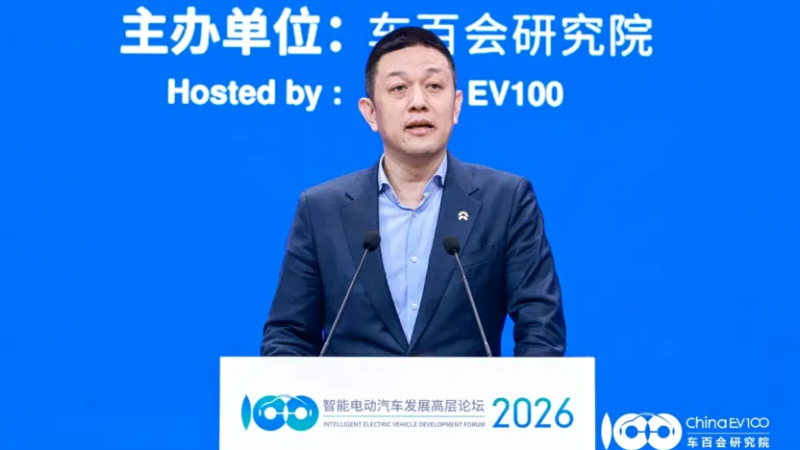
William Li, founder, chairman, and CEO of Nio, called for industry-wide standardisation of batteries and chips at the Intelligent Electric Vehicle Development Forum (2026) held in Beijing on April 11-12, identifying a potential cost reduction opportunity exceeding 100 billion yuan (14.5 billion USD) for the entire sector.
Li revealed that Nio has entered its phase of rapid growth, with first-quarter deliveries soaring 98.3% year-on-year to 83,465 premium smart electric vehicles. The company achieved its first profitable quarter in history in Q4 2025, with operating profit reaching 1.25 billion yuan (181.8 million USD).
However, Li cautioned that the industry broadly faces the dilemma of “increasing volume without increasing revenue, increasing revenue without increasing profit.” The accelerated iteration cycle of smart electric vehicles – driven by advancements in intelligent chips, battery technology, lighting, and interiors – has made supply-demand balance extremely difficult to achieve.
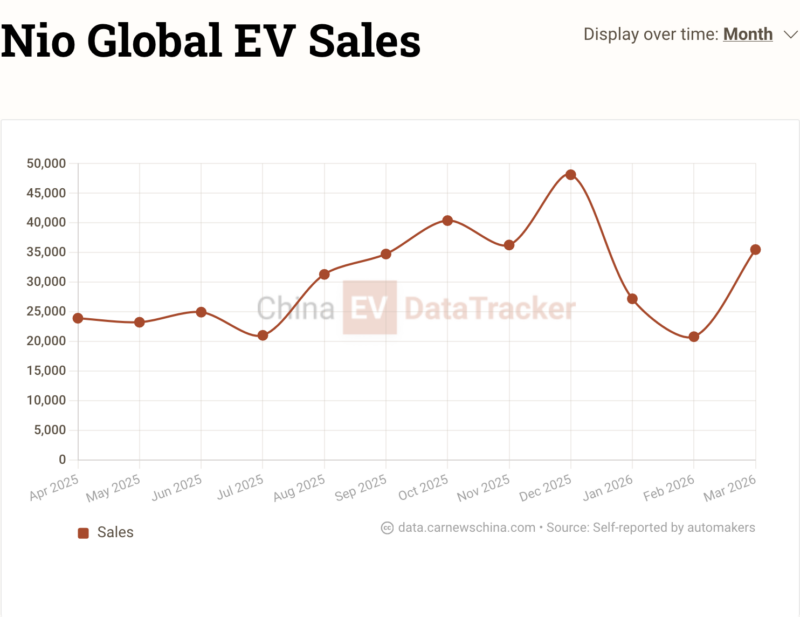
“New models now experience a brief sales peak, followed by a rapid decline,” Li explained. “This creates massive resource waste – when demand surges, supply chains ramp up aggressively; by the time production capacity catches up, demand has already fallen. Wasting several hundred million yuan on a single model has become the norm.”
Li identified batteries and chips as the industry’s biggest pain points, together accounting for over 50% of a vehicle’s cost. The lack of unified battery cell specifications prevents flexible capacity allocation across the supply chain. He drew a comparison to standardised AA and AAA batteries in consumer electronics, noting that the industry need not worry about production capacity for those formats.
“Battery technology has now sufficiently converged,” Li stated. “Standardisation of mid-nickel ternary and high-nickel ternary cells is timely and feasible.”
On chips, Li noted that Nio’s latest ES9 model requires over 1,000 semiconductor part numbers and more than 4,000 individual chips. Nio is working internally to reduce chip varieties to 400 through consolidation. He urged regulators to coordinate with automakers to establish unified chip categories with interchangeable standards, which would strengthen supply chain resilience and make domestic chip adoption economically viable.
“If we standardise batteries and consolidate chip varieties, the industry could save over 100 billion yuan (14.5 billion USD) without eroding profits at any stage of the value chain—reducing costs by several thousand yuan per vehicle,” Li concluded.