Sunday China Drive | Zeekr 8X Ultra Plus tested with 885 hp hybrid, Europe entry late 2026
In a segment where most Chinese SUVs compete to be the best ‘mobile lounge,’ the Zeekr 8X takes a different path, prioritising chassis dynamics and driver feedback.
Early market response has been measurable, with the model reportedly securing 10,000 orders within 30 minutes of opening, supported by a high-output hybrid system reaching up to 1,381 hp in the top Yao Ying configuration.
The vehicle tested here is the Zeekr 8X Ultra Plus, positioned near the top of the range, with a sales price of 399,800 yuan (55,500 USD). The model is scheduled to follow the Zeekr 9X into global markets, with exports expected to begin after late 2026.
Exterior
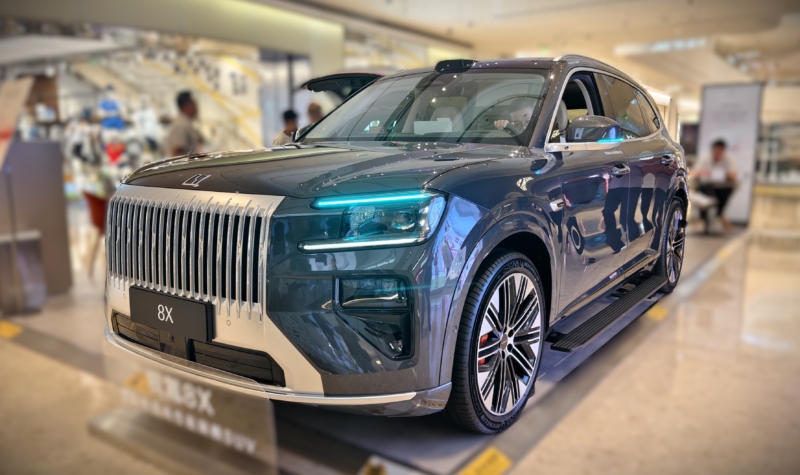
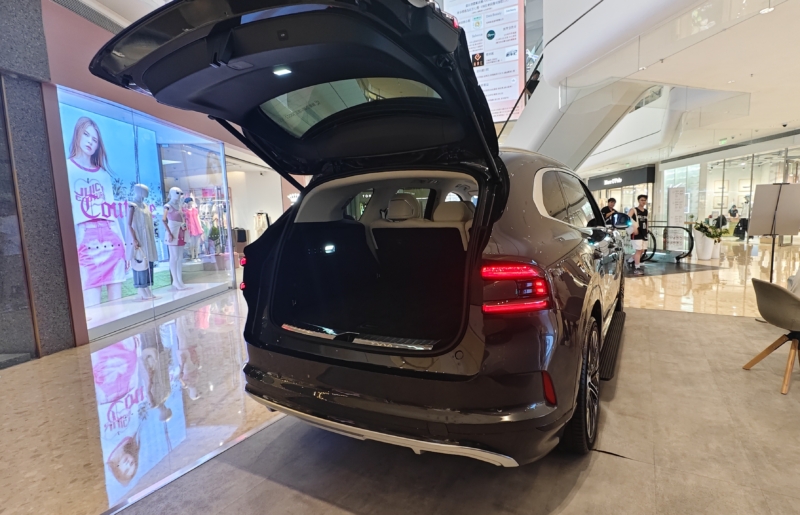
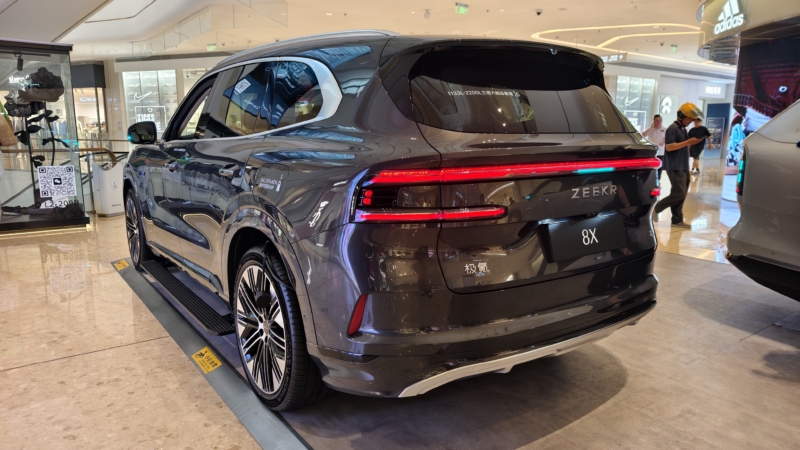
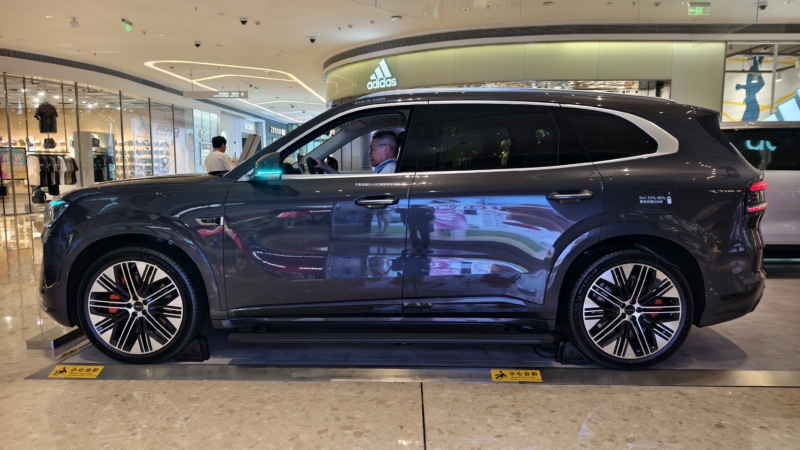
The Zeekr 8X measures 5100 mm in length with a 3069 mm wheelbase. The front overhang is extended to accommodate the front-mounted 2.0T engine, resulting in a longer L113 proportion compared to some range-focused competitors.
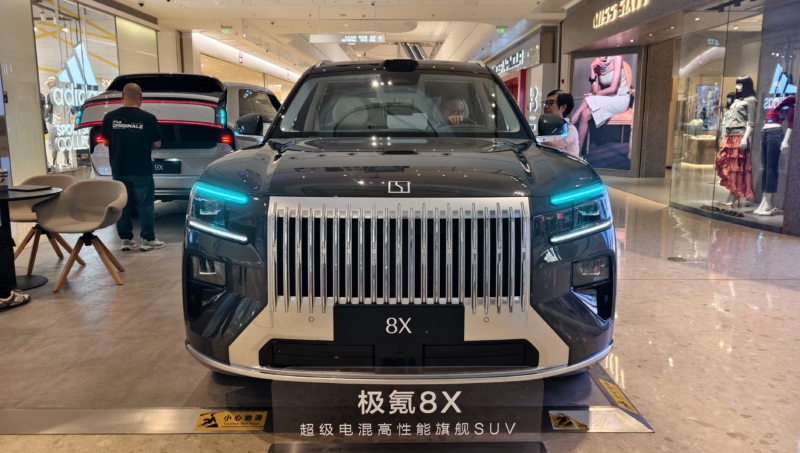
Aerodynamic management includes active grille shutters in both upper and lower intake sections. These close when cooling demand is reduced, lowering drag and airflow noise. The lighting system on the tested trim uses multi-module matrix LED units.
The Ultra Plus test vehicle is equipped with a single roof-mounted lidar unit, centrally mounted above the windshield. No additional lidar units are present on this configuration.
The vehicle rides on 22-inch wheels fitted with 275-section tyres. This setup prioritises lateral grip but introduces trade-offs in rolling resistance and tire-generated noise. Conventional door handles are used instead of retractable designs, prioritising mechanical simplicity.
The air suspension system allows height adjustment, increasing ground clearance by up to 5 cm in off-road mode and lowering the body by approximately 3 cm at higher speeds. Additional exterior functions include a reinforced roof rack and a 2200 W external power supply.
Interior
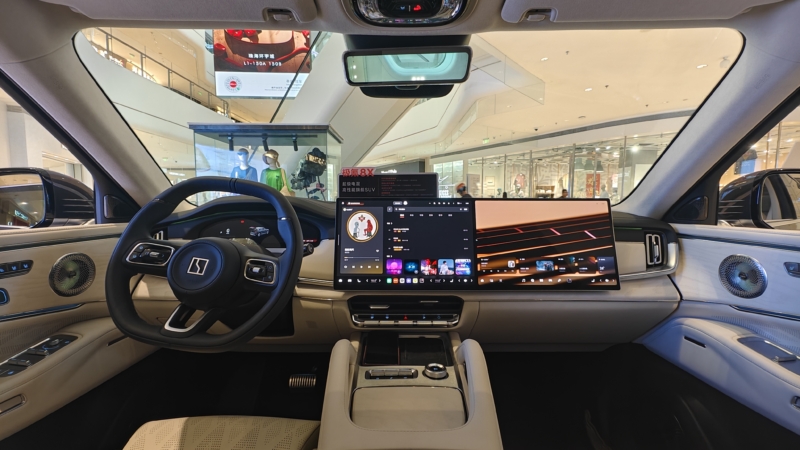
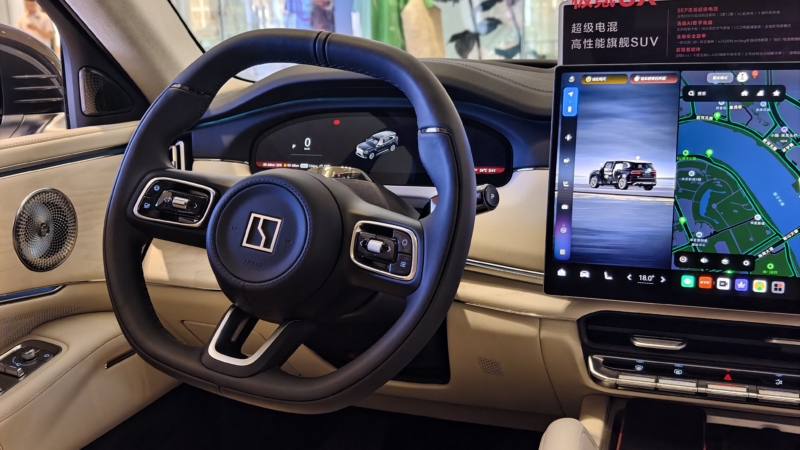
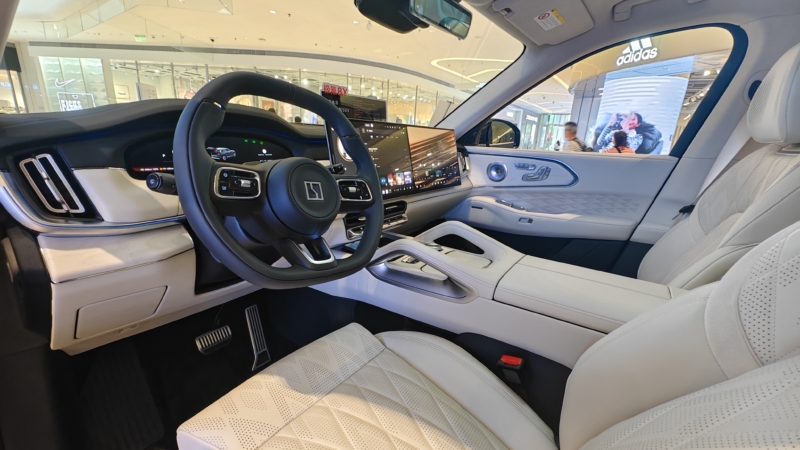
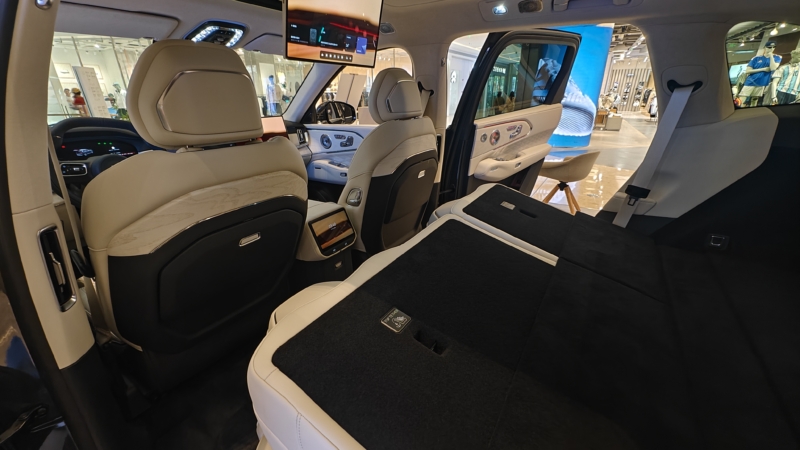
The cabin features a dual-screen layout with a central infotainment display and a passenger-side screen. System response during testing remained stable across navigation, media, and multitasking scenarios.
Physical controls are retained for key functions such as drive mode selection and suspension height adjustment, allowing operation without touchscreen interaction during driving.
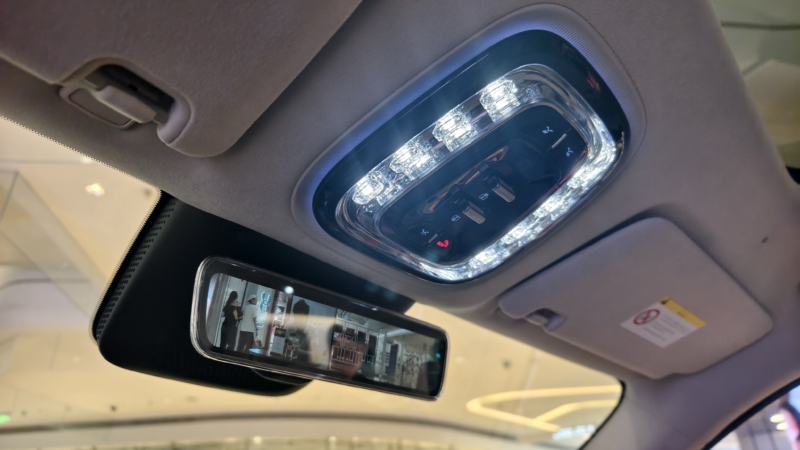
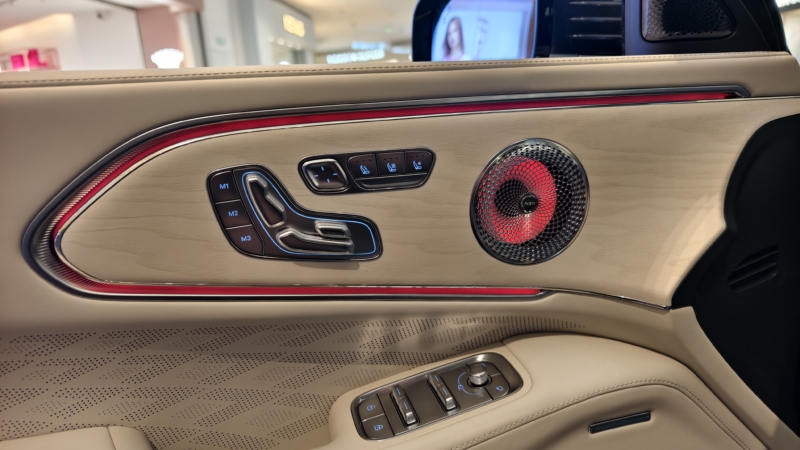
Material coverage across contact areas is extensive. Soft-touch surfaces are used on the dashboard and door panels, while real wood trim is applied to door inserts. Suede-like materials are used on the headliner. Seat adjustment, heating, ventilation, and memory controls are integrated into the door panels.
The panel alignment is consistent, and material transitions are uniform across interfaces. The wood trim shows consistent grain matching. However, ambient lighting diffusion is uneven, with visible point sources rather than a continuous strip.
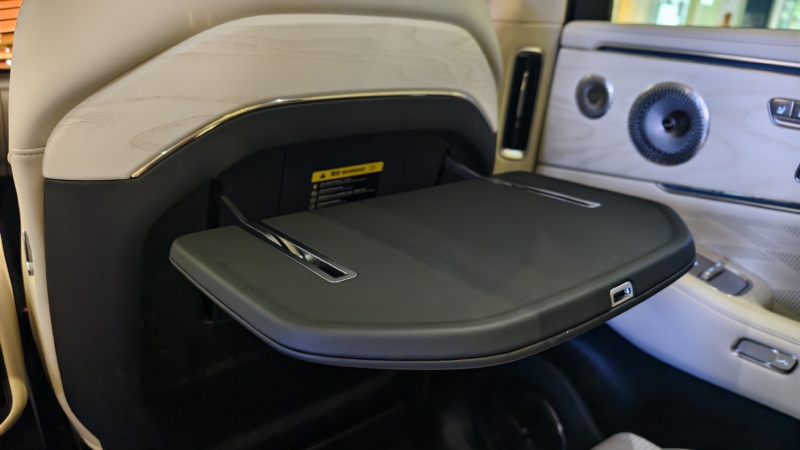
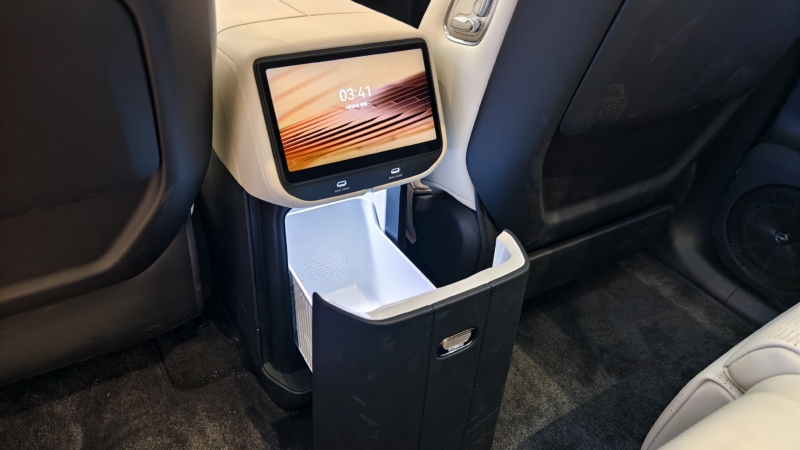
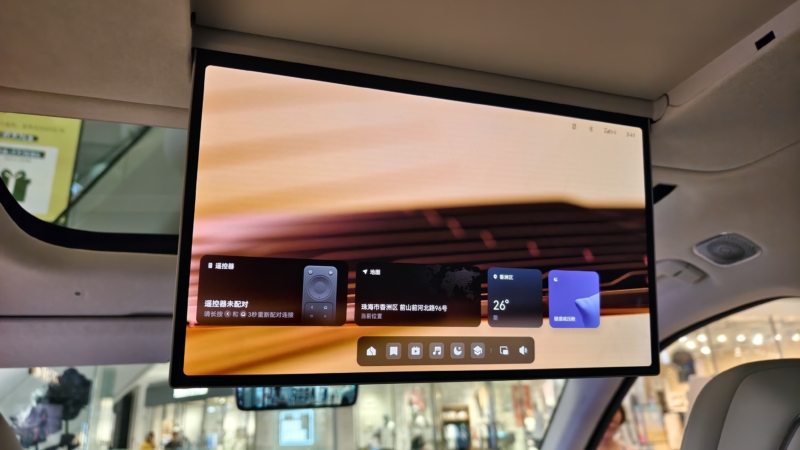
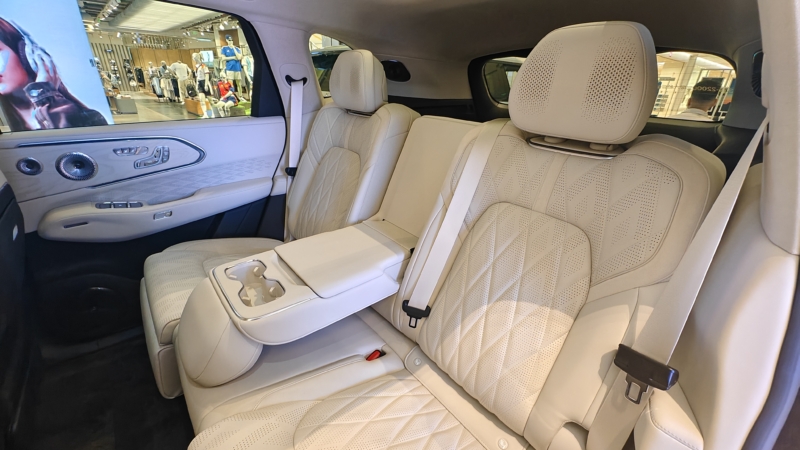
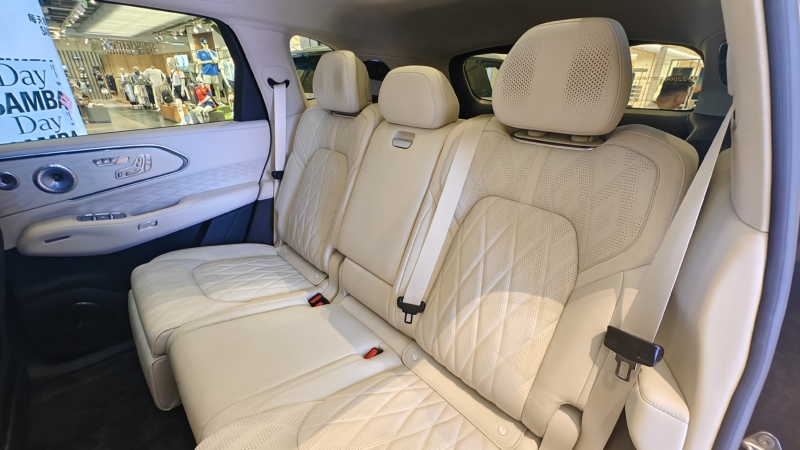
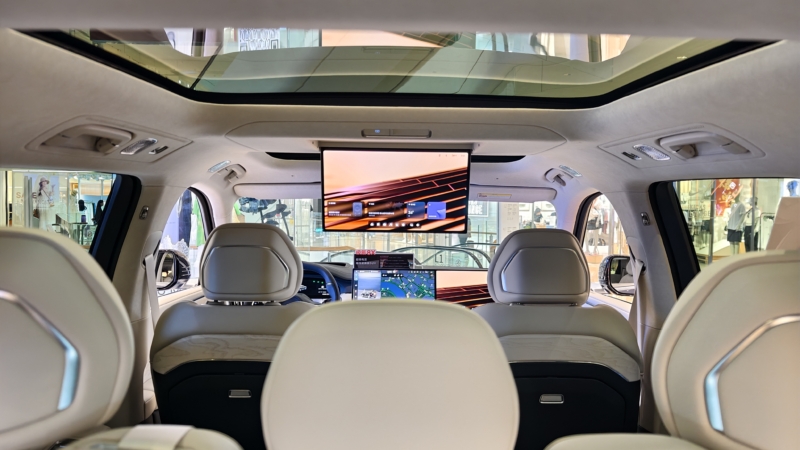
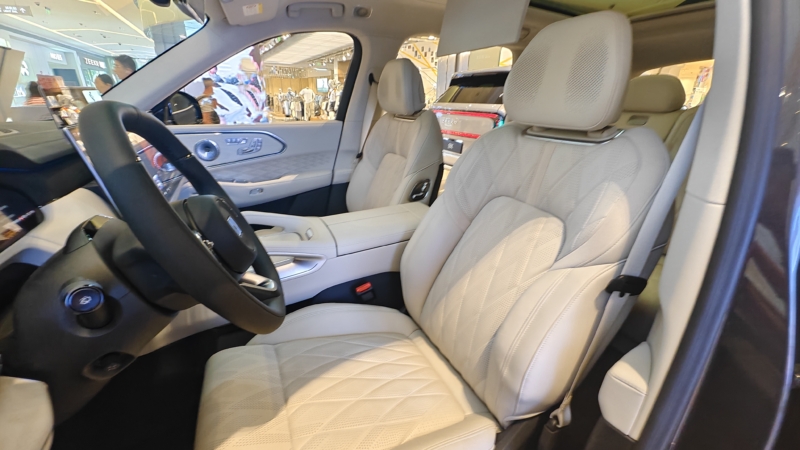
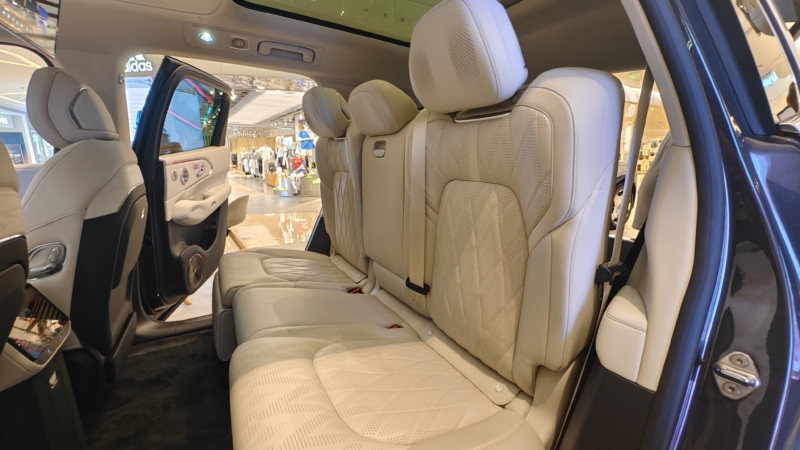
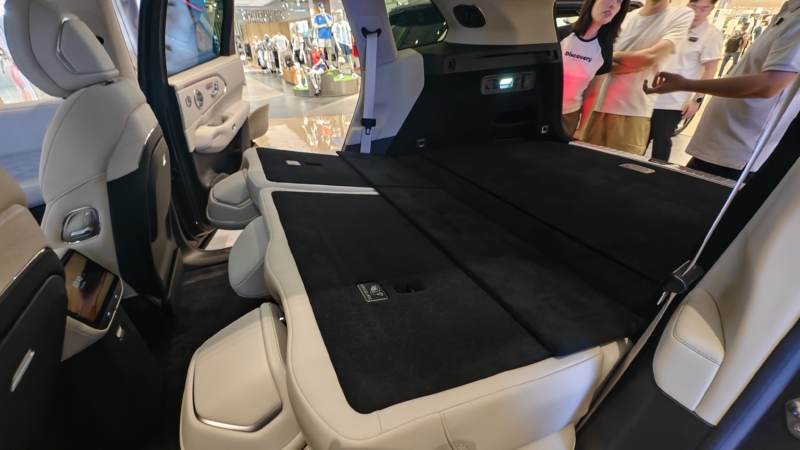
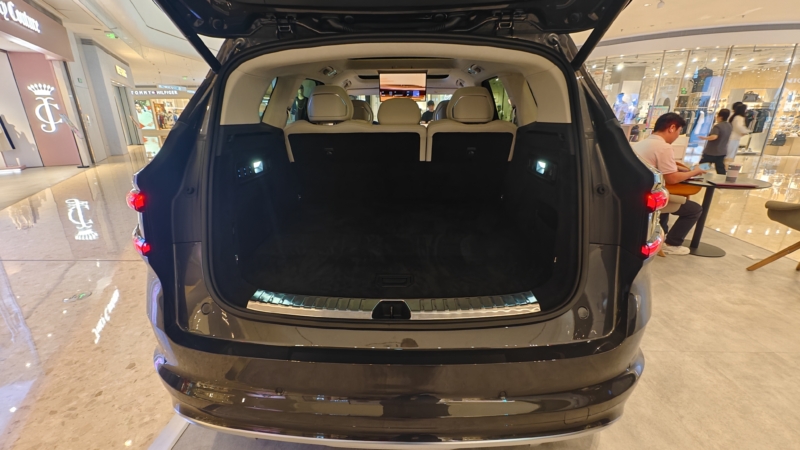
Front seats provide moderate lateral support, helping stabilise occupants during acceleration. The rear cabin includes electrically adjustable seats, tray tables, and a compressor-based refrigerator integrated into the centre console. A secondary rear control screen is present, though its functional overlap with the main system reduces its practical value.
Driving Experience
The Zeekr 8X Ultra Plus is built on the SEA-S (Haohan-S) super hybrid platform. It combines a 2.0T engine rated at 205 kW with a dual-motor electric drive system producing a combined 660 kW (885 hp).
The tested vehicle is equipped with a 70 kWh battery operating on a 900 V architecture. The system supports 6C charging, enabling a 20-80% charge in approximately 9 minutes under optimal conditions. The electric range reaches up to 410 km (CLTC), with total combined range figures depending on operating conditions.
Acceleration to 100 km/h takes approximately 3.7 seconds. Power delivery is immediate but controlled, with a linear response that avoids abrupt torque spikes. In standard driving modes, output is moderated for smoother operation.
Braking response is consistent under initial application. However, the transition between regenerative and mechanical braking is non-linear at low speeds, requiring additional pedal modulation to maintain smooth deceleration.
The chassis features a double-wishbone front suspension and a multi-link rear suspension, combined with dual-chamber air springs and continuously adjustable dampers. In standard mode, vertical movement is controlled with moderate compliance. Switching to sport-oriented settings reduces ride height and increases damping stiffness, improving body control.
An electronically controlled active anti-roll system dynamically adjusts roll stiffness. During cornering, it reduces body roll, while in low-traction conditions, it allows increased wheel articulation.
Steering response is direct for a vehicle of this size, with predictable front-end behavior. However, the absence of rear-wheel steering results in a larger turning radius than some competitors’.
Two technical limitations were observed. Tyre noise becomes the dominant NVH factor at highway speeds, driven by the 275 mm tyre width and 22-inch wheel size. Additionally, the rear suspension transmits sharper vertical inputs over uneven surfaces than the front suspension, indicating a difference in damping calibration between the axles.
Autonomous Driving & Tech
The Ultra Plus test vehicle uses a lidar-based driver assistance system with a single roof-mounted lidar sensor supported by cameras and radar.
During testing, highway lane centring and adaptive cruise functions operated consistently without abrupt disengagements. Sensor fusion appeared stable under typical driving conditions.
Higher-spec configurations in the Zeekr 8X lineup feature more advanced sensor arrays and higher computing power, with top models reaching up to 1400 TOPS. These systems were not present on the tested vehicle.
Verdict
The Zeekr 8X Ultra Plus is positioned within a segment that includes the Li Auto L7, Aito M7, and BMW X5 plug-in hybrid. The lineup starts from 329,800 yuan (45,800 USD), placing it within the core pricing band of large electrified SUVs in China.
Compared with competitors, the 8X differentiates itself through its 900 V electrical architecture, 660 kW dual-motor output, and electronically controlled active anti-roll system. The Li Auto L7 focuses on extended-range efficiency and interior space, while the Aito M7 emphasises software integration. The BMW X5 plug-in hybrid offers established mechanical refinement but does not match the electrical architecture or peak output of the Zeekr.
Starting at 329,800 yuan (45,800 USD), the Zeekr 8X is one of the few large SUVs in its price range to combine a 900 V platform, dual-motor output of 660 kW, and an active anti-roll system within a parallel hybrid drivetrain.
From a brand perspective, Zeekr’s quarterly sales reached 59,466 units in Q1 2026, representing a 48.3 percent year-on-year increase, according to China EV DataTracker. This growth provides context for the 8X as a volume stabiliser within the brand’s portfolio, particularly as competition intensifies in the 400,000 yuan (55,500 USD) price band.