New Chery Tiggo 9 is longer, taller, and features redesigned front end
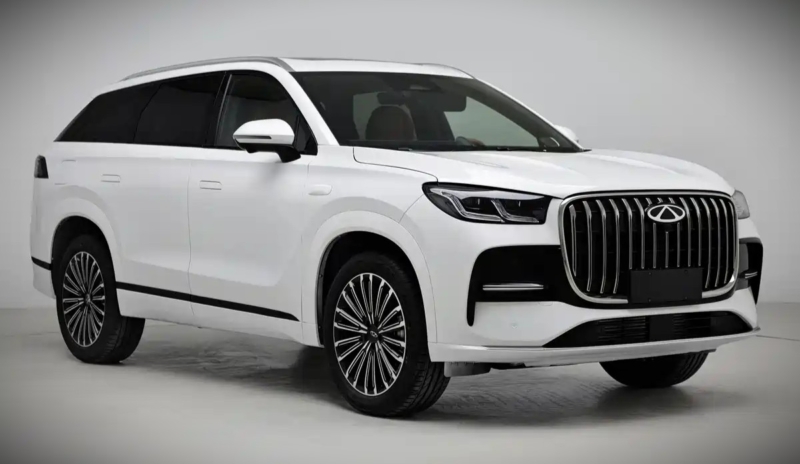
The latest MIIT filing confirms that Chery is preparing an updated Tiggo 9. The SUV will be slightly longer and taller than the current model, retain the 2.0-litre turbo engine, and feature a redesigned front end. This refresh positions the Tiggo 9 to remain competitive in China’s mid- to large-size SUV segment.
Briefly about the current Chery Tiggo 9
The existing Tiggo 9 already uses the same 2.0-litre turbocharged engine rated at 192 kW, offered with either a seven-speed dual-clutch or an eight-speed automatic depending on trim. It provides up to seven seats and includes features such as a dual-screen display and an AR-HUD system. It measures 4820/1930/1712 mm, with a wheelbase of 2820 mm. Chery recently expanded the Tiggo 9 product family with a shorter-wheelbase variant and a plug-in hybrid model, forming a wider lineup alongside the standard version referenced in the latest filing.
What’s new about the updated Chery Tiggo 9
According to the filing, the updated Tiggo 9 adopts a redesigned front section. The headlights have been reshaped with a rounder structure, and the lower front area incorporates wider air inlets that extend toward the centre grille. The SUV is 33 mm longer and 6–18 mm taller than the current model, while the width and wheelbase remain the same, further highlighting the exterior changes. These updates create a noticeable difference from the current version.
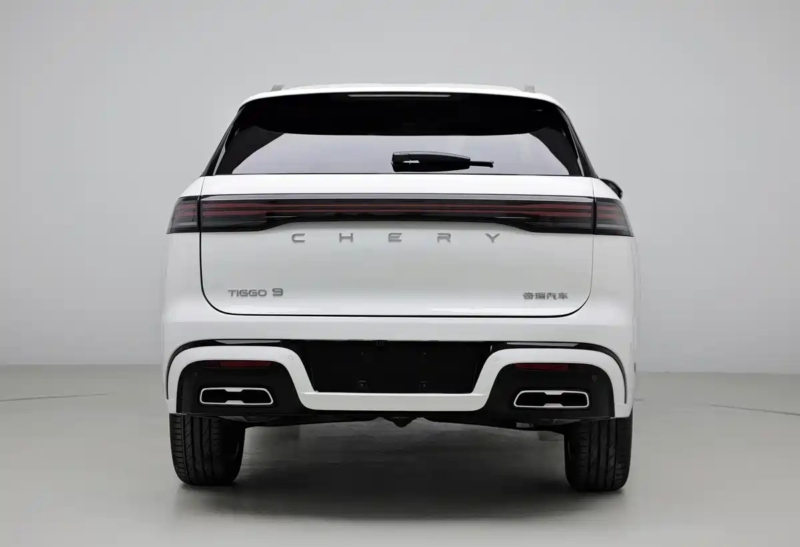
The side profile remains consistent with the existing model and continues to feature hidden door handles and multiple wheel options, including 18, 19, and 20-inch designs. At the rear, the vehicle keeps its full-width light bar with a darkened finish, along with dual exhaust outlets positioned on both sides.
The filing lists five-seat and seven-seat layouts. Body dimensions are 4853 millimetres in length, 1930 millimetres in width, and either 1718 mm (five seats) or 1730 mm (seven seats) in height. The wheelbase remains unchanged at 2820 millimetres. Curb weights are 1779 kg for the five-seat version and 1831 kg for the seven-seat version.
Approach and departure angles are 19°/19° (five seats) and 20°/17° (seven seats). Axle loads are 1134/1222 kg (five seats) and 1128/1228 kg (seven seats). Optional items include a sunroof, two-tone exterior paint, various wheel options, four-door guide channels, door water shields, rear corner windows, non-privacy glass, a lifetime warranty badge, alternative rear badges, a shark fin antenna, and an optional ETC onboard device. The vehicle is also equipped with an Event Data Recorder (EDR).
The powertrain information shows that the updated model will retain Chery’s SQRF4J20C 2.0-litre turbocharged four-cylinder engine, paired with an eight-speed automatic transmission. The filing lists a maximum net output of 183 kW and an official fuel consumption figure of 8.15 litres per 100 kilometres. The ABS models and manufacturers are specified, and no hybrid or plug-in hybrid versions appear in this round of regulatory documents.

Updated: 06/12/2025 17:45 China time