Sunday China Drive | BYD Ti7 city SUV top-spec four-wheel-drive test
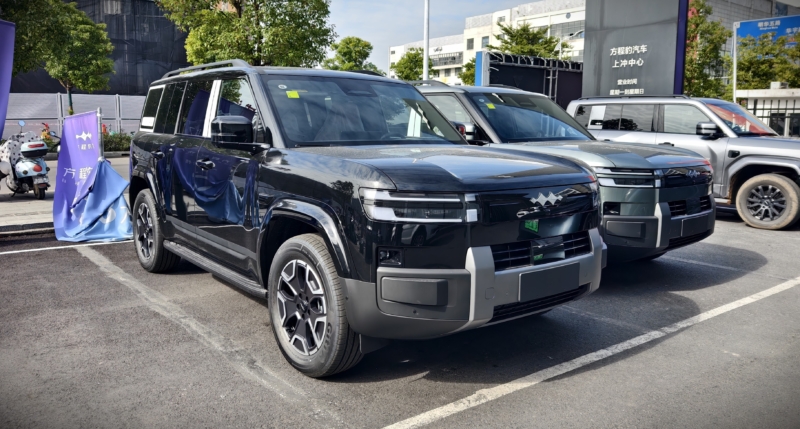
The BYD Ti7, tested here in its top-spec four-wheel-drive plug-in hybrid configuration, represents a deliberate alternative to the mainstream urban SUV formula in China. Rather than focusing primarily on soft-ride tuning and crossover proportions, the Ti7 combines a tall, boxy body with hardware designed for mixed-use scenarios, including long-distance travel and light off-road use.
Since its launch on 9 September 2025, BYD has sold 86,259 Ti7 units in China, giving the model strong traction in the mid-to-large SUV segment.
Exterior
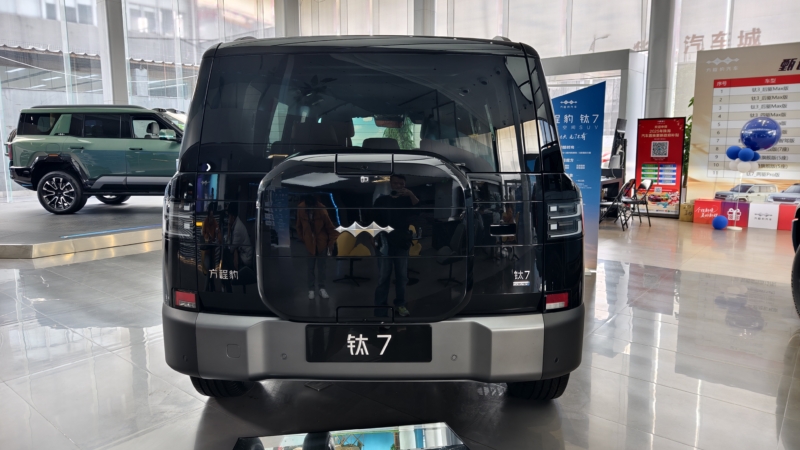
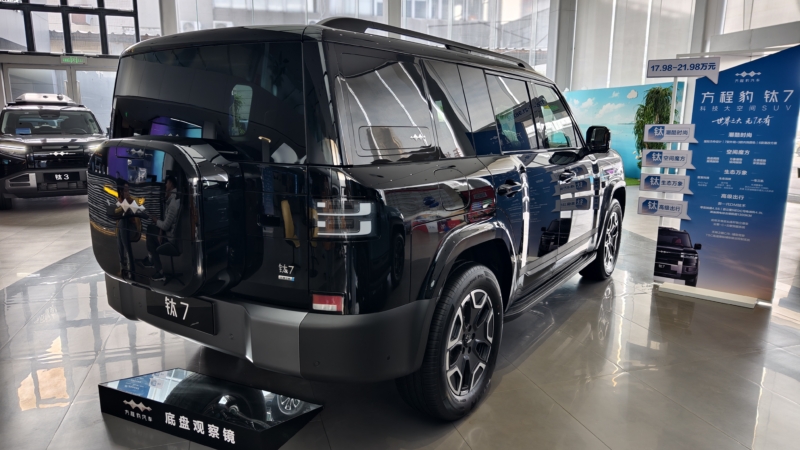
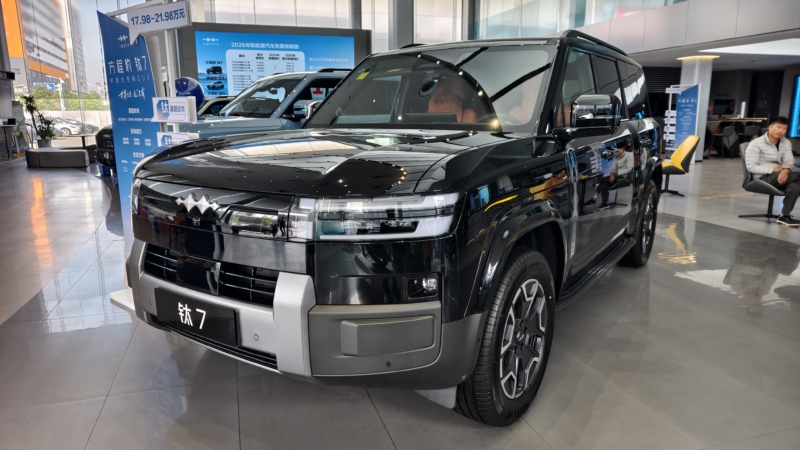
The Ti7 adopts a rigid, geometric design language defined by straight lines and planar surfaces. Overall dimensions measure 4,999 mm in length, 1,995 mm in width, and 1,865 mm in height, with a 2,920 mm wheelbase. These proportions support an upright stance and generous cabin volume, while reinforcing the vehicle’s utilitarian positioning.
Ground clearance and body geometry allow for an approach angle of 24 degrees and a departure angle of 25 degrees. The Ti7 also claims a maximum wading depth of 600 mm, putting it ahead of typical city-focused SUVs in terms of environmental adaptability. Vehicle height and width contribute to a substantial road presence, though they can pose limitations in tighter urban parking environments.
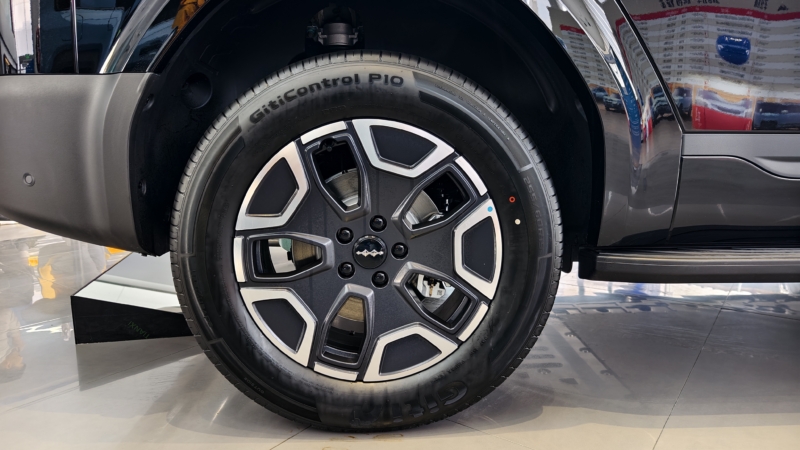
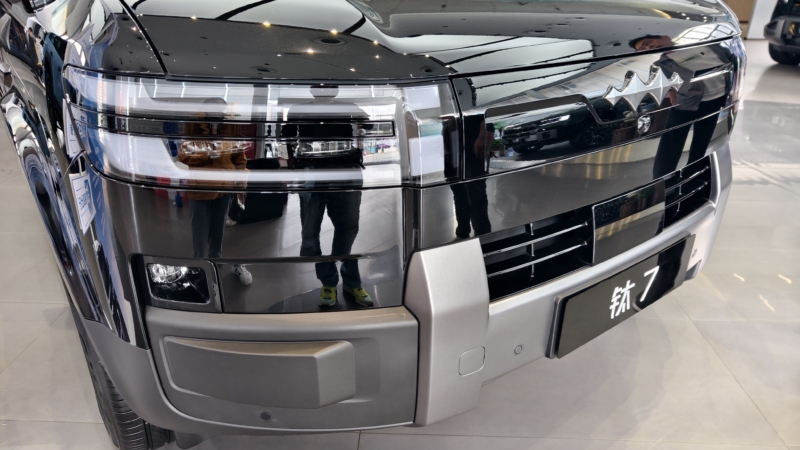
The front fascia follows new-energy-vehicle conventions, with a sealed upper grille and a lower intake dedicated to cooling. Rectangular headlamp clusters feature layered internal elements, while the daytime running light signature remains minimalistic. The test vehicle is fitted with 20-inch wheels, while lower trims use smaller wheels.
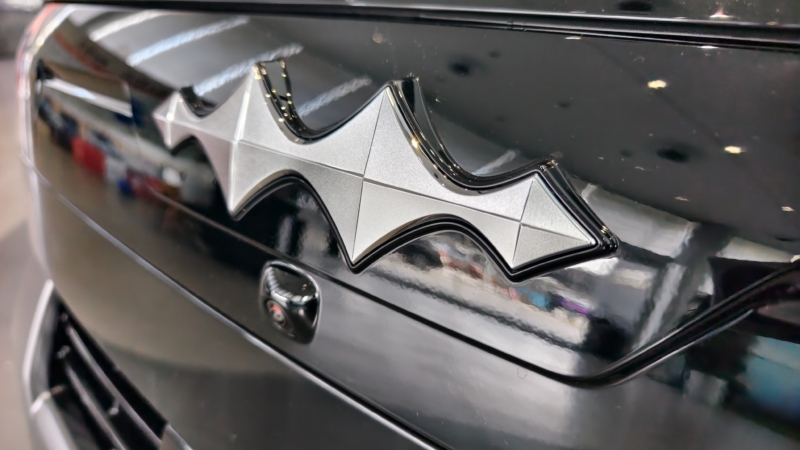
At the rear, the external decorative pack remains a defining visual element. While it reduces usable cargo length and shortens effective body proportions, it contributes to visual differentiation within a crowded SUV market.
Interior
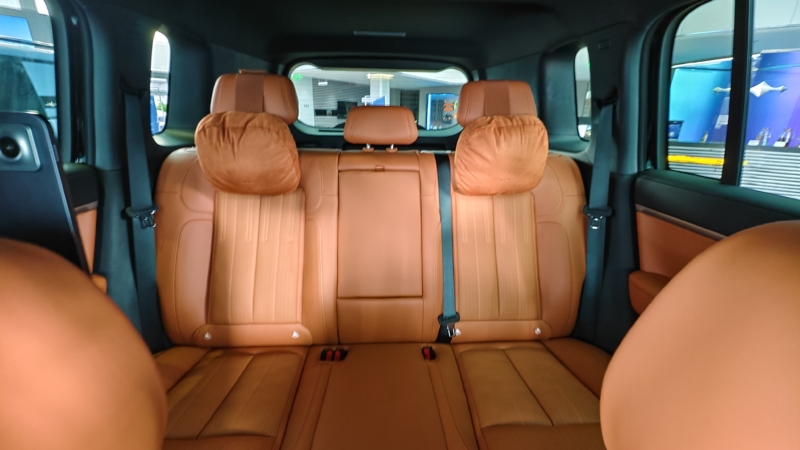
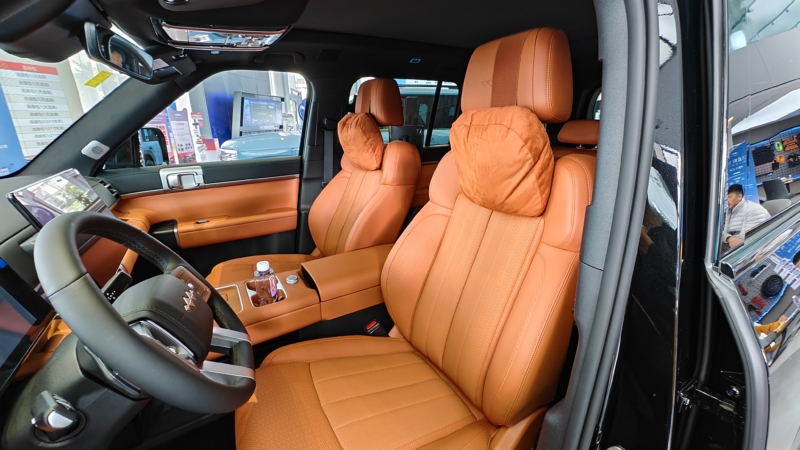
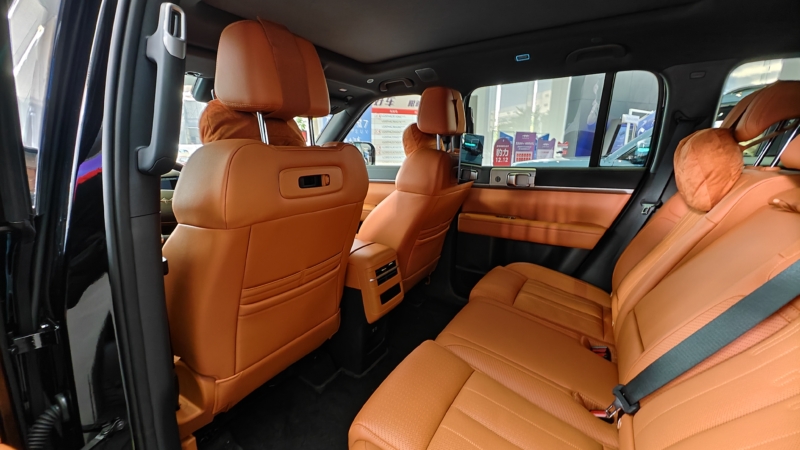
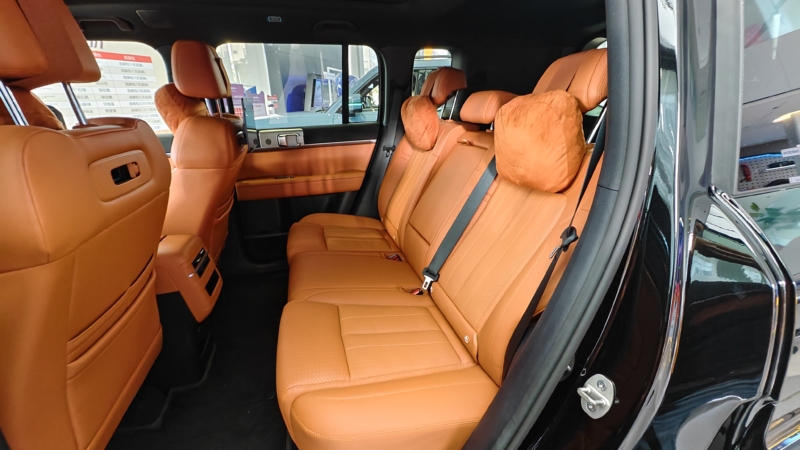
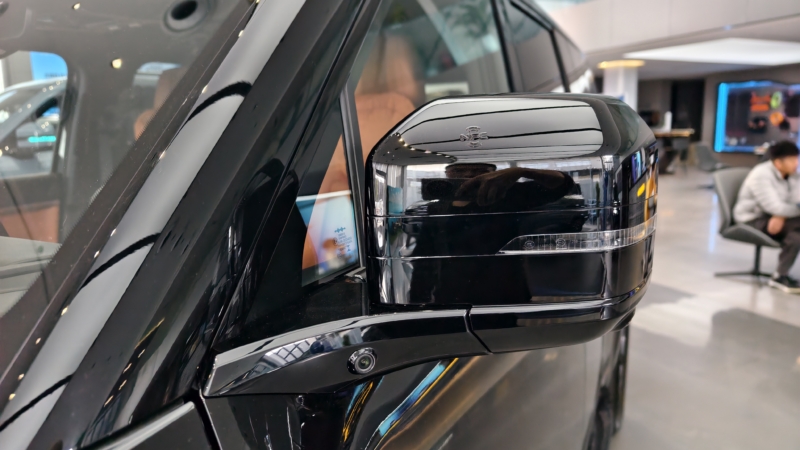
The Ti7 is configured as a five-seat vehicle, and its upright exterior dimensions translate into a spacious cabin. The high seating position offers a commanding forward view over the flat hood, though large A-pillars and oversized mirrors introduce some lateral blind spots.
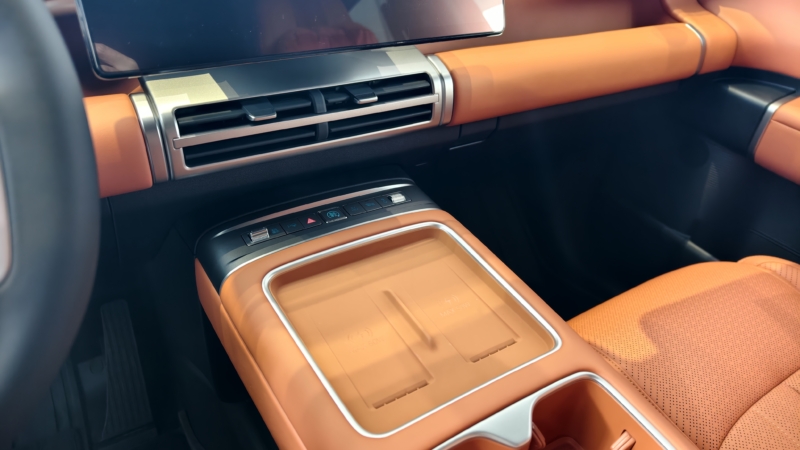
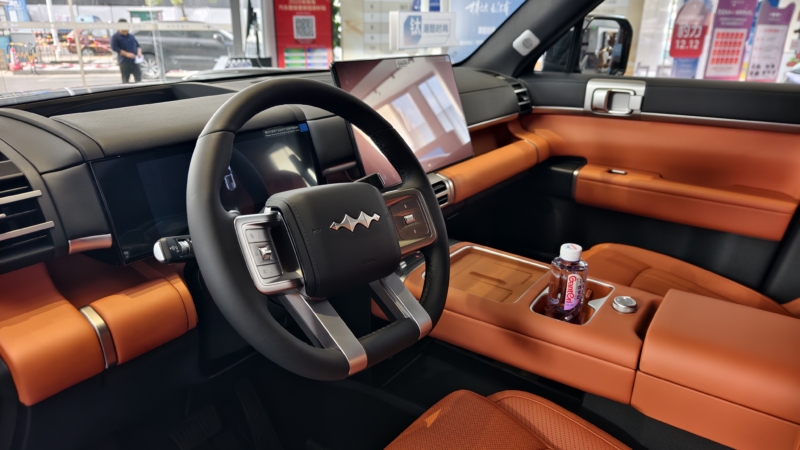
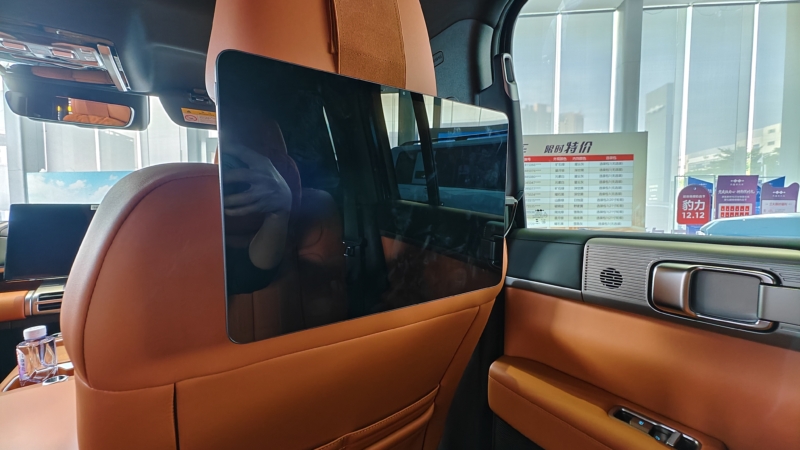
Interior layout emphasizes function and equipment density. The cabin features seven screens: a 15.6-inch central control display, a 12.3-inch digital instrument cluster, a 26-inch head-up display, two climate-control screens, and two 13-inch rear-row BYD Pads. This screen-heavy layout is complemented by physical controls for frequently used functions.
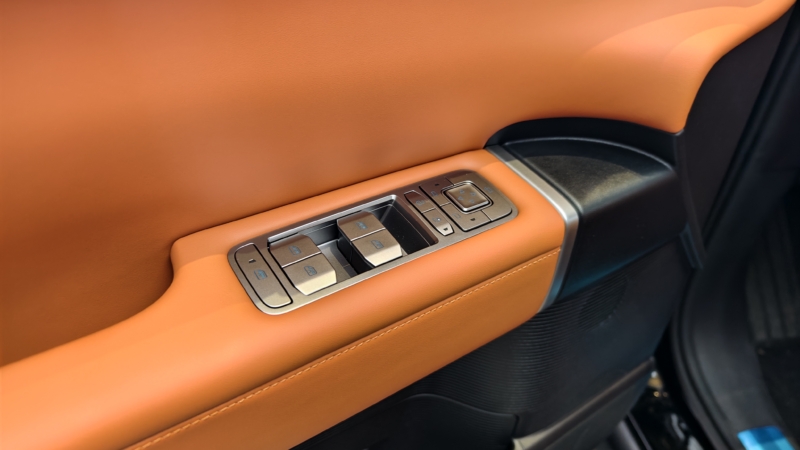
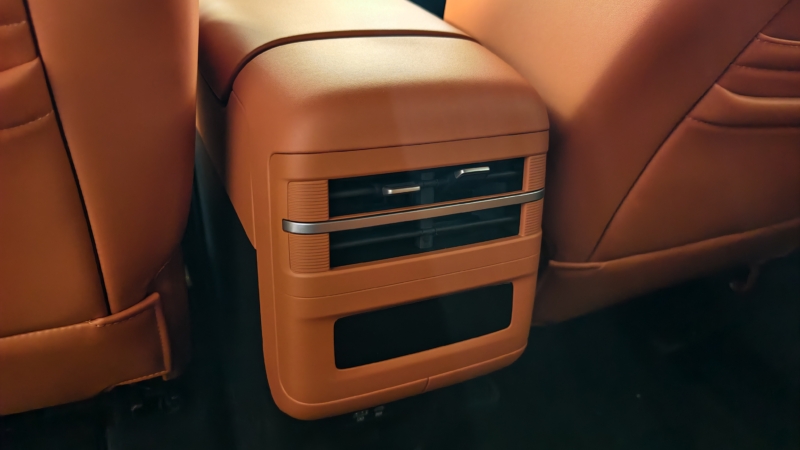
Storage is a central theme. With the second row folded, trunk capacity expands to 1,880 liters, and BYD claims up to 45 storage spaces throughout the cabin. Wireless charging pads, multiple USB interfaces, and wide door bins support everyday usability.
The top-spec interior includes up to 20 speakers and a 4.5-liter in-vehicle refrigerator integrated into the center console, capable of cooling to minus 6 degrees Celsius or heating to 50 degrees. Ambient lighting and extensive charging options further reinforce the vehicle’s focus on long-distance usability. Interior color options include gray, orange, and blue.
Driving Experience
Behind the wheel, the Ti7 reflects its size and weight in normal driving conditions. Power is provided by a 1.5-liter turbocharged plug-in hybrid system, with the combustion engine producing 115 kW (154 hp). In the top-spec four-wheel-drive configuration tested here, a 200 kW (268 hp) rear electric motor is paired with an additional 160 kW (215 hp) front motor, using a 35.6 kWh Blade lithium-iron phosphate battery. Acceleration increases progressively across all drive modes, including Sport. The claimed 0–100 km/h acceleration time is 4.5 seconds.
With a curb weight of approximately 2.48 tonnes, the vehicle’s mass is noticeable during acceleration and direction changes. The Ti7 uses a double wishbone front suspension and a five-link rear suspension, paired with BYD’s DiSus-C Intelligent Body Control System. This configuration results in firmer suspension behavior than that of typical urban SUVs. Body pitch and roll are limited during lane changes and cornering. On smooth roads, smaller surface irregularities are absorbed, while larger bumps and uneven sections are transmitted more directly into the cabin.
On coarse or undulating road surfaces, suspension firmness is more apparent, and road texture is more noticeable to occupants. Steering response is direct with moderate weighting, suitable for highway driving and urban maneuvering. Braking response remains consistent and predictable under varying traffic conditions.
Cabin noise levels are generally controlled, though rough road surfaces generate increased tire and suspension noise, particularly in the rear seating area.
Driver Assistance
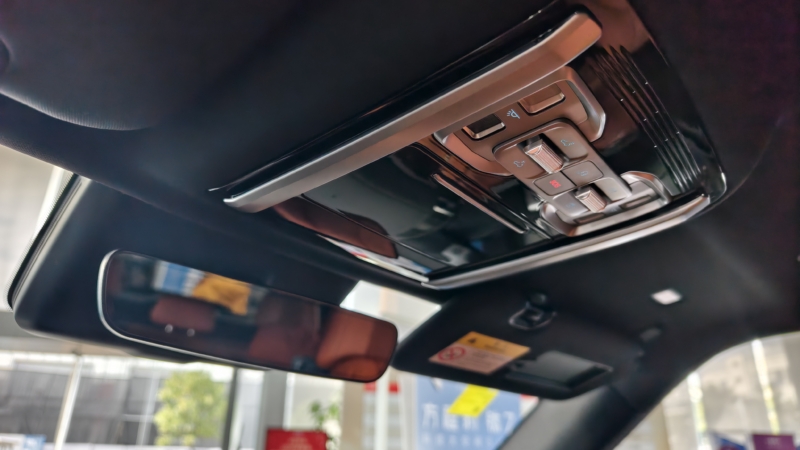
The top-spec AWD Ti7 is equipped with BYD’s “God’s Eye” B system, also known as DiPilot 300. This includes a roof-mounted lidar sensor and an Nvidia Orin-X processor, supporting more than 30 functions, including highway and city navigation on autopilot, obstacle avoidance, and automated parking. In complex traffic situations, occasional hesitation or abrupt corrective inputs may occur.
Lower trims use the “God’s Eye” C system, which currently supports highway navigation on autopilot, with city NOA functionality planned for future updates. The top trim can also be optionally fitted with BYD’s Lingyuan vehicle-mounted drone system.
Verdict
The BYD Ti7 top-spec four-wheel-drive plug-in hybrid is a mid-to-large SUV with a nearly five-meter length and an upright, boxy body. Its powertrain combines a 1.5-liter turbocharged engine with front- and rear-mounted electric motors, paired with a 35.6 kWh battery, delivering a CLTC-rated pure-electric range of 190 km and a total range of 1,300 km. The AWD configuration, firm suspension, and Tire Stability Control system prioritize stability and body control over maximizing ride softness.
Interior space and functionality are notable, with seating for five, a maximum cargo volume of 1,880 liters with the rear seats folded, and multiple storage compartments. The top trim includes lidar-based driver-assistance functions, a multi-screen cockpit, and optional vehicle-mounted drone support.
Priced from 179,800 yuan (USD 25,700) to 220,000 yuan (USD 31,500), the Ti7 sits between conventional urban crossovers and larger SUVs with more specialized off-road capabilities. Its combination of plug-in hybrid performance, advanced safety hardware, and interior flexibility positions it as a distinctive choice for buyers seeking a larger, feature-rich SUV within this segment.