New breakthrough in lithium battery technology enables 700 Wh/kg energy density
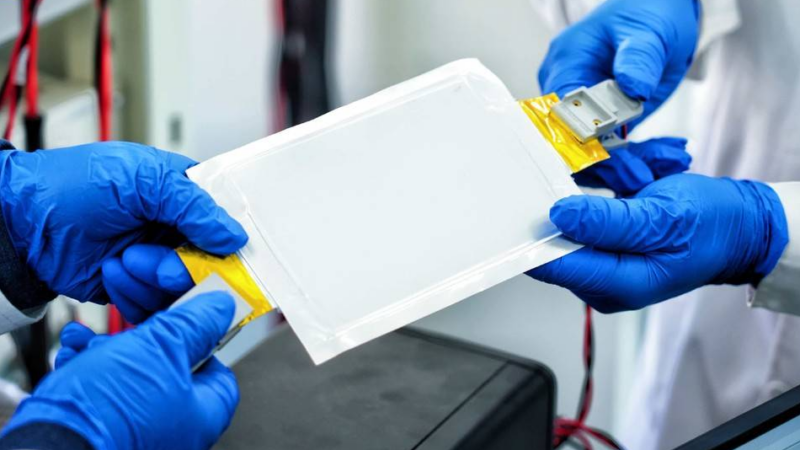
A Chinese research team has overcome longstanding kinetic constraints in lithium battery electrolytes by designing and synthesising a series of novel electrolyte systems based on fluorinated hydrocarbon solvents, enabling lithium batteries to achieve an energy density of 700 watt-hours per kilogram.
The research was jointly accomplished by teams led by Professor Zhao Qing from the College of Chemistry at Nankai University, Academician Chen Jun, Executive Vice President of Nankai University, and Researcher Li Yong from the Shanghai Institute of Space Power Sources. The findings were published online in the international journal Nature on February 25.
As reported by Xinhua News, commercial lithium battery electrolytes typically consist of lithium salts and carbonate ester solvents, in which the ionic-dipole interaction between lithium and the oxygen atom in the carbonate ester solvent promotes the dissolution of lithium salts. However, these solvents have poor wettability and require large quantities, making it difficult to further increase battery energy density. Additionally, strong interactions impede charge transfer at interfaces, limiting low-temperature performance – batteries typically struggle to function below -50°C.
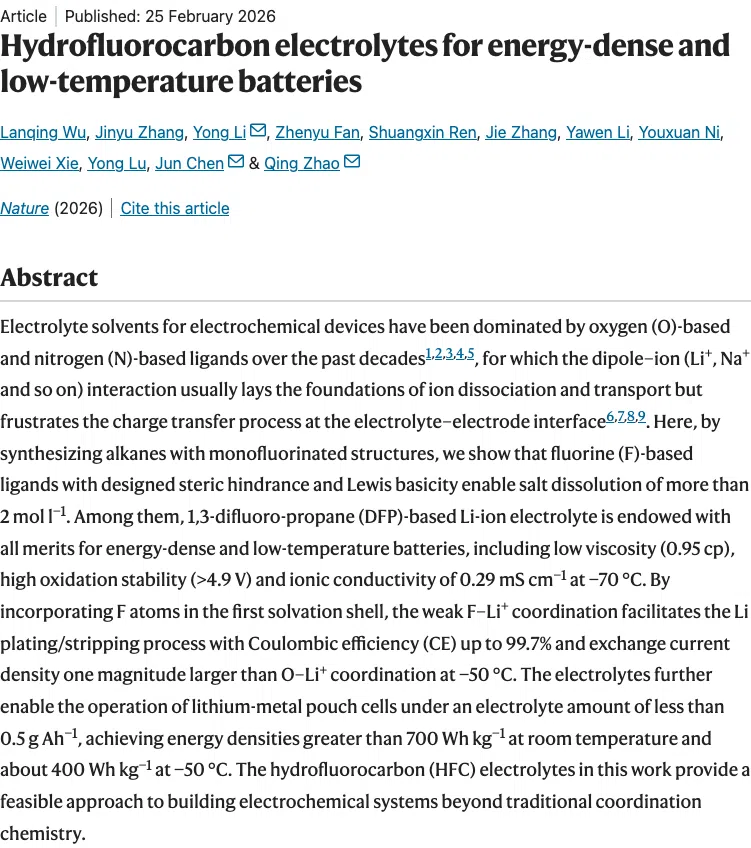
To address these limitations, the research team designed and synthesised a series of novel fluorinated hydrocarbon solvent molecules, achieving effective dissolution of lithium salts in the electrolyte and successfully replacing the traditional lithium-oxygen coordination mode. Compared to traditional oxygen-coordinated electrolyte systems, fluorinated hydrocarbon solvents offer superior wettability and utilisation efficiency, significantly reducing the required amount of electrolyte. Furthermore, the weaker lithium-fluorine coordination enables rapid charge transfer processes even at low temperatures.
Using this novel electrolyte system, the team has developed lithium batteries with an ultra-high specific energy of 700 watt-hours per kilogram at room temperature. These batteries maintain a high energy density of nearly 400 watt-hours per kilogram even in environments as cold as -50°C.
Zhao Qing explained that the key to achieving lithium salt dissolution through fluorine coordination lies in regulating the electron density of fluorine atoms and the spatial hindrance of solvent molecules. Lithium batteries based on this electrolyte will have advantages such as high specific energy and low-temperature tolerance.
“High-energy batteries based on this electrolyte have broad application potential in new energy vehicles, embodied intelligent robots, low-altitude economy, as well as in extremely cold regions and aerospace applications,” said Chen Jun.
Editor’s comment
Currently, CATL‘s Qilin battery, a ternary lithium battery, boasts a system energy density of 250Wh/kg to 255Wh/kg. This figure is widely considered to be the current upper limit for lithium battery energy density.
An energy density of 700Wh/kg might only refer to the cell itself, but it would still significantly boost the overall system’s energy density. After all, solid-state batteries currently under development have yet to exceed 400Wh/kg. It’s fair to say that this research has brought the energy density of traditional lithium batteries up to the level of current solid-state technology.
If the latest research by Chinese scientists can be swiftly implemented, it could raise the energy density of non-solid-state lithium batteries even further.