Memory chip crisis: why volatility has surpassed battery costs and stalled China’s L3 autonomy push
A convergence of semiconductor supply shortages and a major shift in national tax policy has created a high-cost environment for Chinese New Energy Vehicle (NEV) manufacturers in early 2026. On February 28, 2026, the National Development and Reform Commission (NDRC) reported that “explosive” demand growth has led to widespread inventory hoarding, according to CCTV.
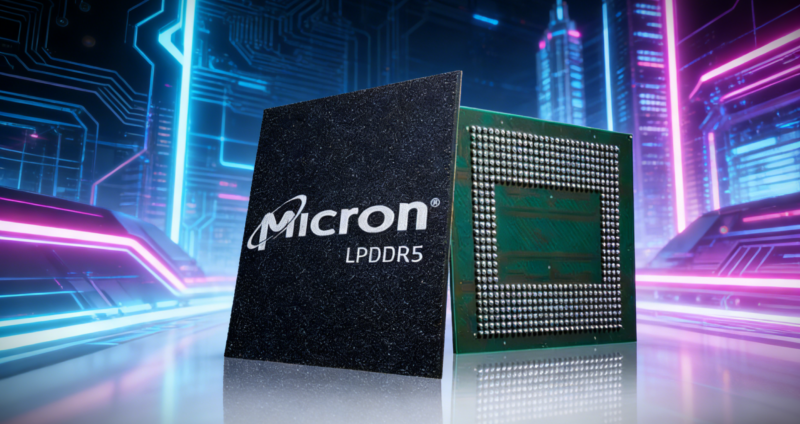
Industry data from UBS indicates that automotive DRAM prices surged 180% in the last three months, while TrendForce reports that high-end, car-grade DDR5 spot prices have tripled (300%) as AI server production cannibalizes global silicon supply.
Drivers of the 2026 Storage Crisis
The price surge is driven by a 28% year-on-year increase in global AI server shipments, which require approximately eight times the memory of traditional servers. Global DRAM leaders, Samsung, SK Hynix, and Micron, have shifted over 80% of advanced production capacity toward high-margin High Bandwidth Memory (HBM). This “abandoning low-end for high-end” strategy has reduced the supply of mature process chips used in automotive applications.
With a supply satisfaction rate currently below 50%, manufacturers such as Nio and Li-Auto are forced to accept “premium pricing” to maintain production. Nio Chairman William Li stated that memory price volatility is now the primary cost pressure for 2026, while Xiaomi founder Lei Jun confirmed that car-grade storage prices jumped 40% to 50% in Q4 2025 alone, as CE reported.
Xiaomi SU7 Pricing
The second-generation Xiaomi SU7, which opened pre-sales on January 7, 2026, at 33,410 USD, reflects these upstream cost pressures. The model features a baseline MSRP increase of 2,030 USD compared to the previous version. Xiaomi executive leadership characterised the move as a “passive price adjustment” necessitated by soaring storage component costs.
To manage 2026 margins, Xiaomi has ceased production of the first-generation SU7. This allows the company to reallocate its existing high-performance chip inventory to the higher-margin second-generation model. Despite the price adjustment, Xiaomi recorded 100,000 pre-orders for the new SU7 as of March 1, 2026.
Supply Chain Constraints
Data from JSChina on February 26 indicates that the supply satisfaction rate for automotive memory has fallen below 50%. Domestic manufacturers, including Nio and Li Auto, are currently competing with AI data centre providers for limited wafer capacity. Unlike consumer-grade electronics, automotive-grade memory must meet AEC-Q100 certification standards, limiting alternative sourcing options. Nio founder William Li noted that memory price volatility has surpassed battery costs as the most significant variable in 2026 production planning.
Segment Pricing & Growth
| Model Variant | 2026 MSRP (USD) | 2025 MSRP (USD) | Price Delta (USD) |
| Xiaomi SU7 Standard | 33,410 USD | 31,380 USD | +2,030 USD |
| Xiaomi SU7 Pro | 37,770 USD | 35,740 USD | +2,030 USD |
| Xiaomi SU7 Max | 45,040 USD | 43,580 USD | +1,460 USD |
Market Positioning
To address supply risks, Chinese manufacturers are accelerating the validation of domestic storage solutions. ChangXin Memory Technologies (CXMT) has commenced mass production of automotive-grade LPDDR5X, aiming to capture a 35% domestic market share by the end of 2026. However, with NEV insurance registrations reaching 820,000 units in the last four weeks of February, demand continues to exceed current supply. The NDRC expects that high-cost “panic inventories” will continue to impact manufacturer margins through Q2 2026.