BYD’s Flash Charging 2.0 network to roll out in Europe within weeks, report says
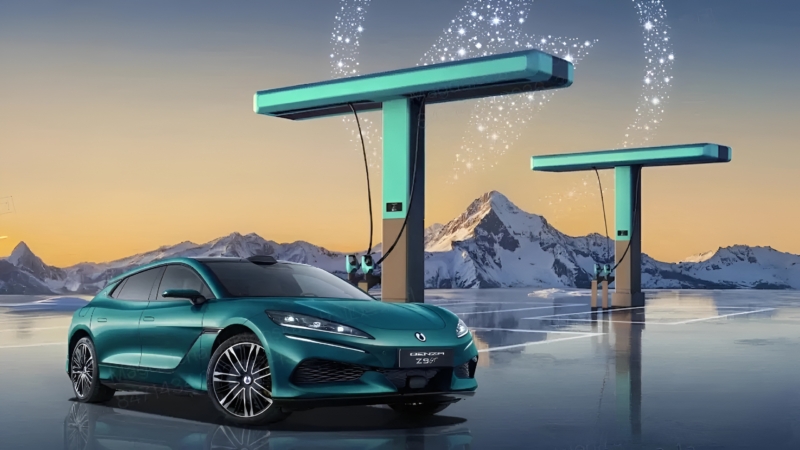
BYD plans to deploy its 1,500 kW Flash Charging 2.0 network in Europe within the next few weeks. Initial stations will support vehicles equipped with compatible Blade Batteries. This rollout follows BYD’s earlier March announcement of overseas Flash Charging infrastructure and coincides with the European launch of the Denza Z9 GT on April 8, 2026, according to IT-home.
Technical Overview
Vehicles with BYD’s second-generation Blade Battery can charge from 10% to 70% in 5 minutes and from 10% to 97% in 9 minutes under Chinese charging standards. Whether European Z9 GT units will reach the same performance is not confirmed. BYD’s system currently supports only the Z9 GT. Most European EVs support up to 400 kW of DC charging. For context, Ionity operates over 5,000 chargers at 350 kW and is deploying 600 kW Alpitronic units upgradeable to 1,000 kW. Industry reports highlight that BYD’s 1,500 kW stations would be the highest-capacity public chargers in Europe once deployed.
Product Context
The Denza Z9 GT features a 122 kWh Blade Battery, three electric motors producing 960 hp (~716 kW), and rear-drive and AWD variants. WLTP range is 800 km. The cabin features a Devialet audio system certified for Dolby Atmos, making it the first European vehicle with theatre-level audio. Dimensions and wheelbase were not disclosed. BYD has already installed thousands of Flash Charging stations in China, but specific details of its European deployment remain unannounced.
Market Positioning
Domestic competitors in the sedan/wagon segment include Zeekr 001. No official European price has been announced. Adoption of BYD’s network will depend on deployment density, compatibility with additional vehicles, and verification of claimed recharge performance.
Industry Context
Observers note that BYD’s European rollout continues the company’s overseas infrastructure strategy, first revealed on 5 March 2026. The Flash Charging program leverages the high-power Blade Battery architecture to deliver fast charging times, providing a proprietary alternative to battery swap networks like Nio’s. BYD maintains control over vehicle compatibility and charging hardware, enabling staged deployment and performance validation before wider adoption.
Outlook
The primary factors to watch include whether European stations achieve the claimed recharge speeds and whether additional vehicles can utilise the network. Rollout timing, station coverage, and cross-brand compatibility will determine BYD’s influence on European EV adoption and its competitive positioning relative to existing networks such as Ionity.