Mobile charging robots in China convert any parking space into an EV charging point
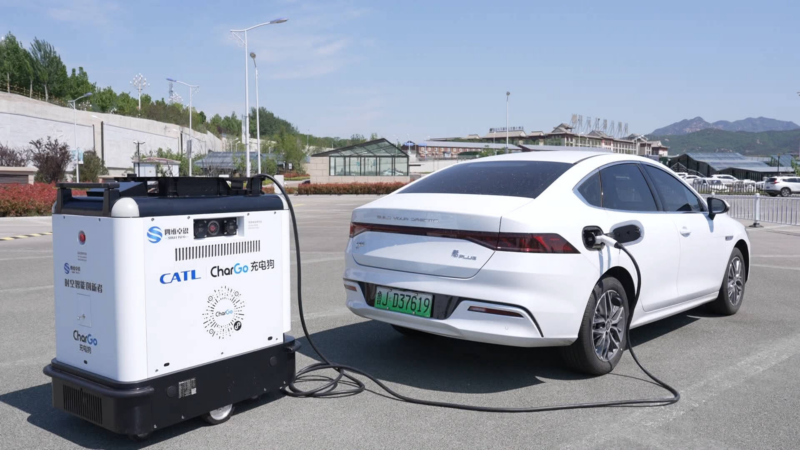
A compact, self‑guided charging unit dubbed the “mobile power bank” is easing the perennial headache of electric‑vehicle owners in an older Nanning neighborhood, offering on‑demand charging without costly infrastructure overhauls, as reported by Chinese newspaper Nanning Evening.
Residents of Linliqiao Jiayuan, a community of more than 400 EVs, can now summon an intelligent charging robot via a phone app. The device – about 1.5 meters tall and equipped with a roughly 100‑kWh battery pack – navigates to a parked car and begins fast charging within minutes. According to the company, a vehicle down to 10 percent state of charge can be replenished in about 40 minutes to an hour.
“Parking at home and getting charged – no more trips to charging stations,” said a local resident identified as Ms. Liu. “It saves time and effort, and the electricity is cheap.” The project manager highlighted another advantage: the solution requires no grid retrofit and does not occupy fixed parking spots, making it especially attractive for older housing complexes where physical constraints have hampered charger installation.
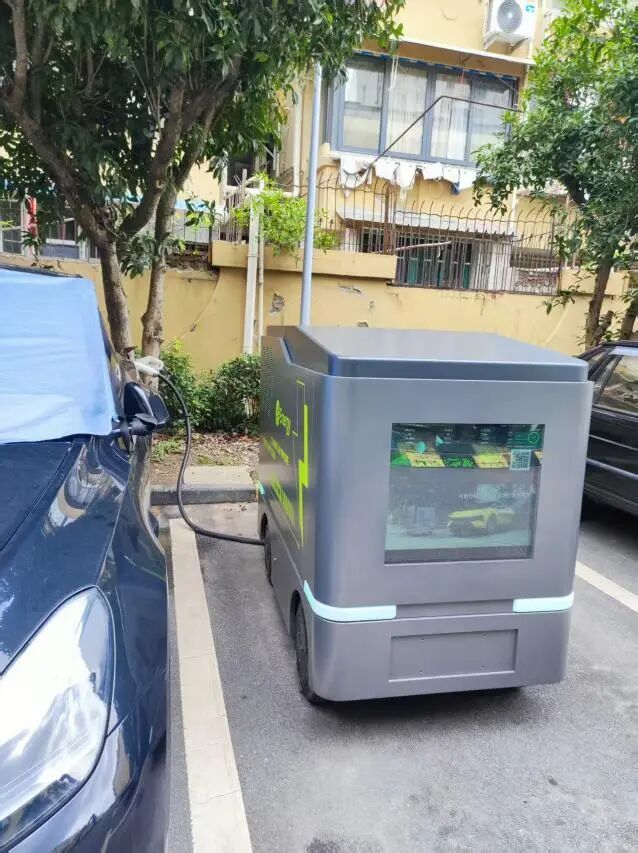
Operators say the on‑demand robots directly address the “car‑finds‑a‑pile” problem by turning charging into a punctual, service‑driven process: the charger comes to the car rather than the other way around.
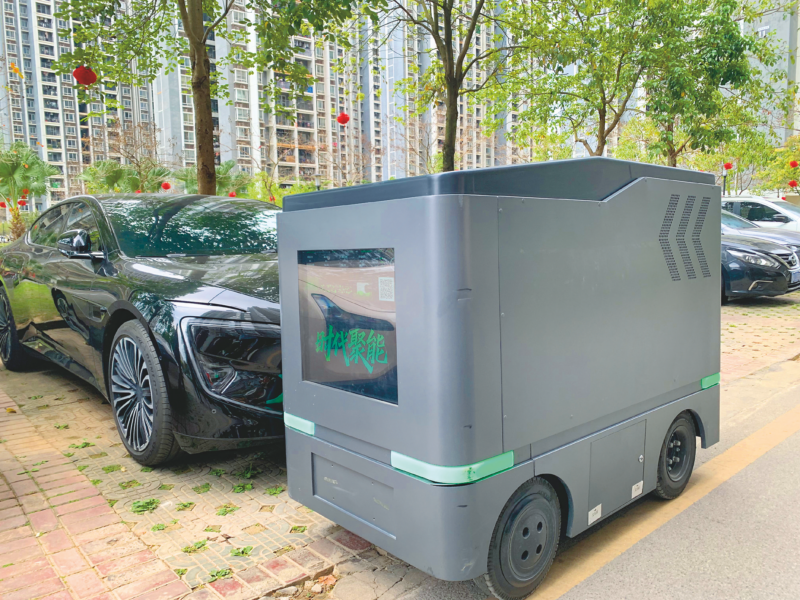
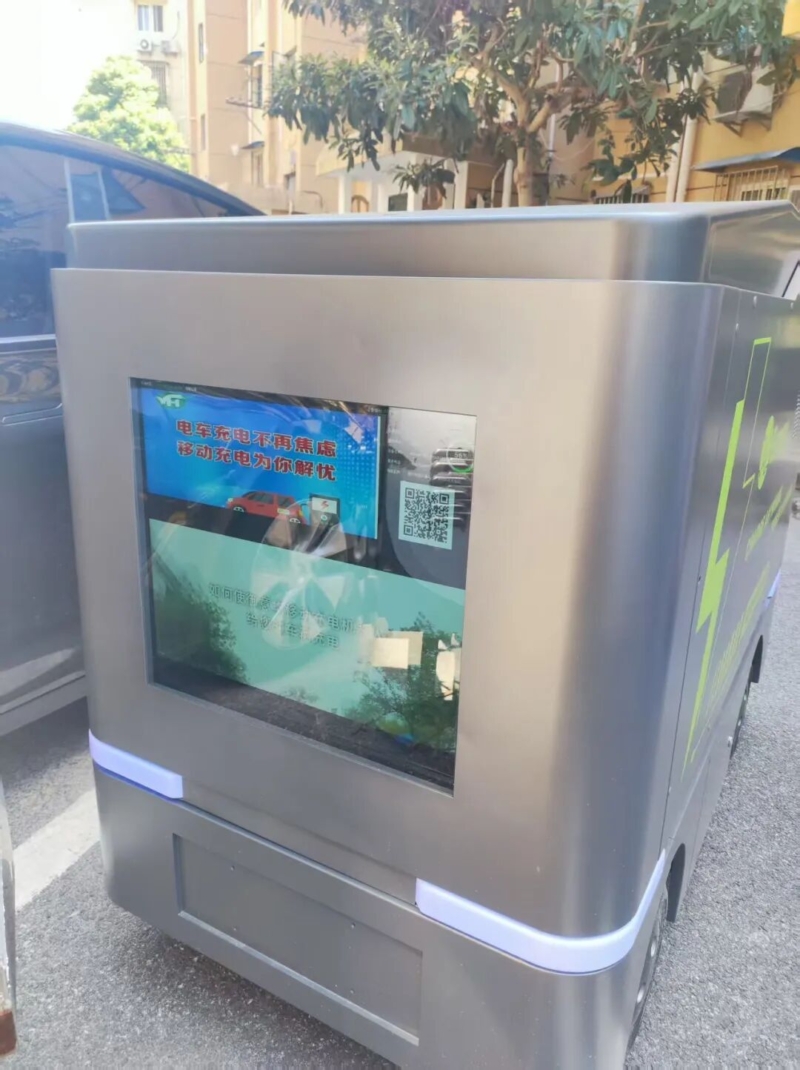
The “moblile power bank” is a product named “Energy Tank” from Eraergy. The company describes the “Energy Tank” concept as a full‑chain reimagining that combines storage cells, a driveable chassis and intelligent control into a dispatchable charging and power unit.
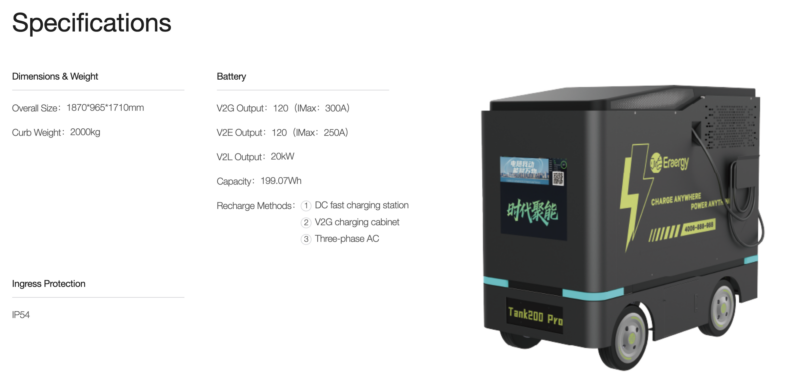
According to its official website, the Energy Tank is currently available in three models with capacities of 30 kWh, 100 kWh, and 200 kWh, featuring a maximum discharge power of up to 120 kW.
The company is also pushing the mobile charging model into hotels, highway service areas and logistics yards. It has deployed a “hotel worry‑free room” pilot that allows guests to see mobile charging availability when booking; this removes the need for hotels to invest millions in electrical upgrades. In logistics and cold‑chain operations, partners including SF Express have used mobile chargers to top up vehicles during loading or waiting periods, avoiding costly queue time.
While current systems operate via teleoperation and limited autonomy, the firm is aiming for L4‑level unattended operation in closed industrial or gated environments.
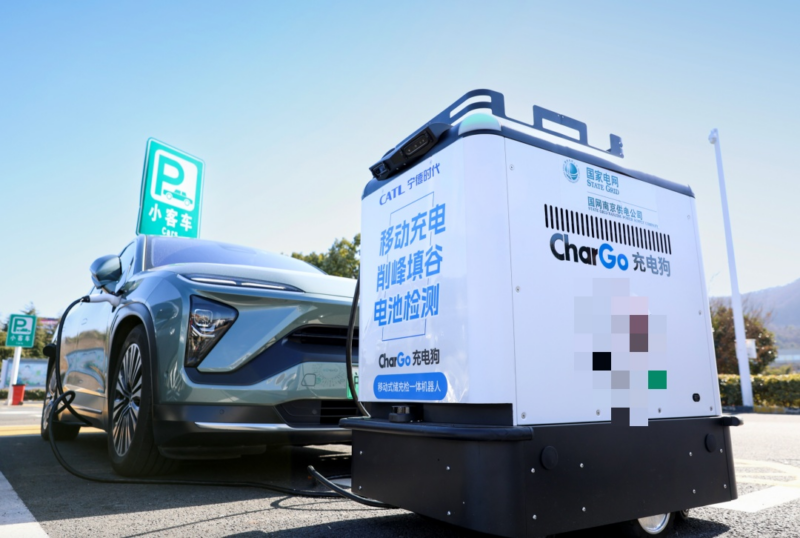
The global battery giant CATL is also a player in this field. A subsidiary of CATL launched a mobile power bank product called CharGo, which was deployed at many highway service areas across China during last year’s Spring Festival to relieve charging pressure during the holiday peak.
Editor’s comment
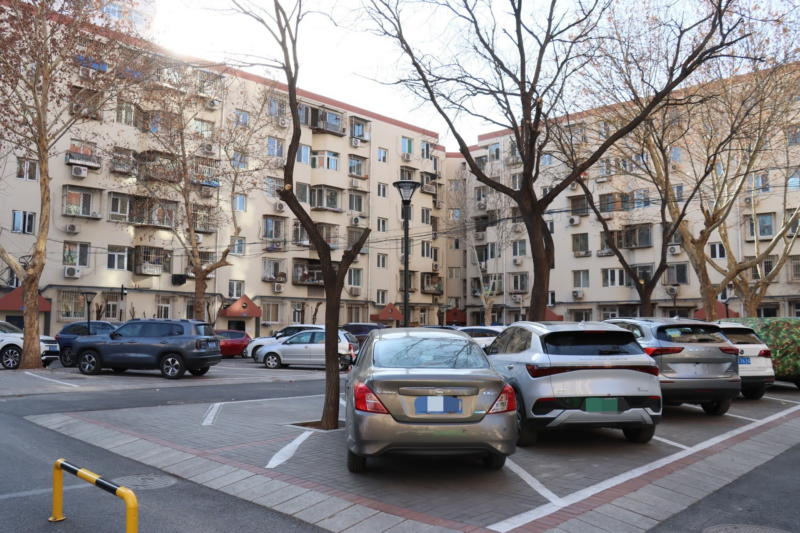
In China, many people still live in old residential compounds built last century. The planners back then didn’t foresee the rapid growth of the Chinese economy, so they didn’t set aside enough parking spaces. Nowadays, living in these neighborhoods, even finding a place to park is a nightmare, let alone charging an electric vehicle. Most residents don’t have a designated parking spot, so they can’t install a charging pile. Even if they do have a spot, installing one requires approval from the power grid, and if it exceeds the grid’s capacity, they’ll turn you down. For neighborhoods like this, these mobile EV power banks can really come in handy.
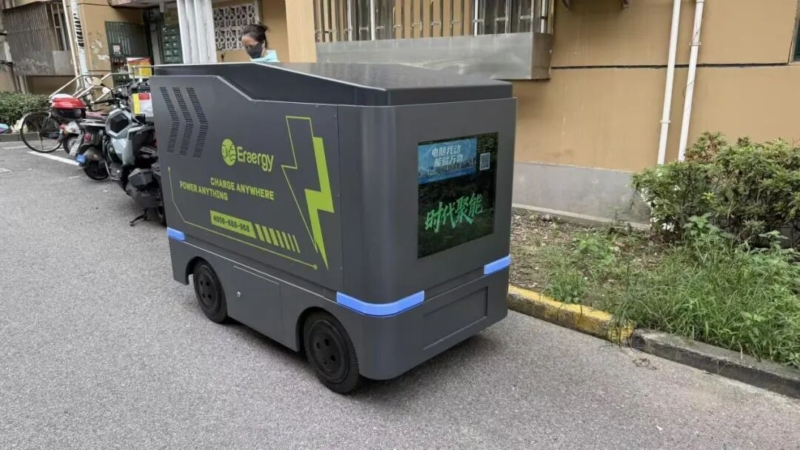
For new energy vehicle owners living in China, the last thing we need to worry about is recharging. Nowadays, people’s options aren’t just limited to home charging, fast charging, BYD’s flash charging, or battery swapping from Nio and CATL. There are now even these mobile power banks that offer proactive on-site service.
But for many countries, charging infrastructure remains a major headache. However, these mobile power banks could be a great solution, especially for hotel operators. Without having to mess with the power grid and at a very low cost, they can upgrade their hotels to provide fast-charging facilities.