BYD, Nio, CATL push charging and swap as EV race moves to infrastructure in China
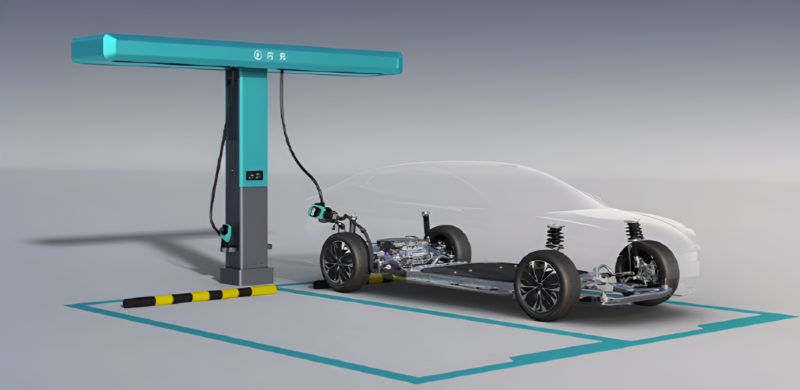
BYD, Nio, and CATL, are increasing investment in charging and battery-swap infrastructure as competition shifts from vehicle specifications to network deployment, according to 36kr.
Earlier competition focused on range, acceleration, and cockpit systems, while charging efficiency has emerged as a key user concern. CarNewsChina previously reported that a Nio-backed energy company has partnered with BYD to deploy flash charging stations, indicating overlap between traditionally separate charging and swap ecosystems.
Fast charging networks scale through coverage and partnerships
BYD’s fast-charging network is described as a coverage-driven system in which station value depends on proximity, availability, and charging speed. The network expands through increasing station density and utilisation. The cost structure is centred on hardware and site deployment, with relatively predictable operating costs. Revenue is generated through electricity price differences and service fees.
BYD integrates existing charging infrastructure through partnerships, allowing faster expansion with lower marginal costs. BYD plans to deploy 20,000 megawatt-level flash charging stations by the end of 2026, supported by its “station-within-a-station” model, which reduces grid upgrade requirements.
In parallel, the company’s (Short) Blade Battery 2.0 system supports charging from 10% to 70% in five minutes under stated conditions, a figure linked to increased consumer demand following its introduction.
Battery swap networks rely on standardisation and asset investment
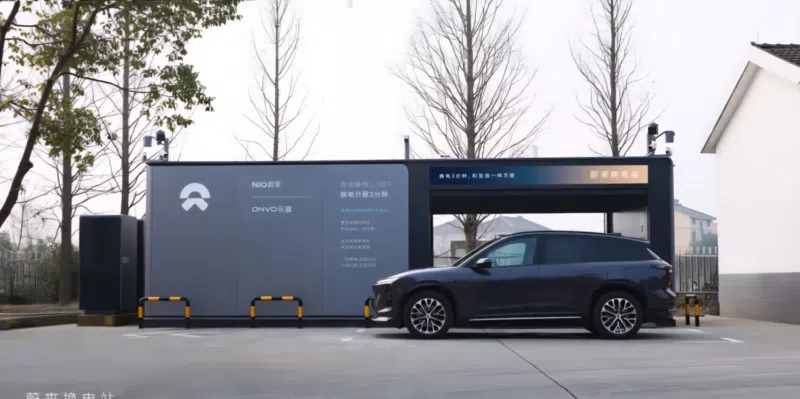
Nio and CATL are developing battery swap networks structured around vehicle users and participating automakers. CarNewsChina reported on February 22 that Nio vehicles set a new battery‑swap performance record, completing four consecutive days of operations with swap times averaging less than 0.5 seconds per swap during controlled trials. The company highlighted this achievement as evidence of improvements in swap automation and efficiency, and stated that the rapid swap capability was achieved across a series of test days, underscoring progress in the speed and reliability of its battery swap technology.
The system provides replenishment in around three minutes and allows separation of battery ownership from the vehicle. The report describes a network effect in which more stations increase user adoption, attracting additional automakers and expanding the range of compatible models.
However, battery swap infrastructure requires higher capital investment. Each station holds dozens to hundreds of batteries, with individual units costing tens of thousands of yuan. These batteries form an asset pool that must be managed over time. Nio’s rollout pace reflects these constraints, taking four years to reach 1,000 swap stations.
Different financial models support long-term coexistence
Charging networks generate stable cash flow from service fees and electricity margins, while battery swap systems rely on Battery-as-a-Service models that provide recurring rental income. The report also states that batteries retain residual value after vehicle use and can be repurposed for energy storage applications.
In terms of market coverage, fast charging is expected to serve the mass market due to scalability, while battery swapping is positioned for high-frequency use cases and premium segments. CATL is promoting standardisation to improve compatibility across brands, addressing a key limitation of battery swap systems.
BYD’s aggressive Flash Charging China strategy, combined with its second‑generation Blade Battery, positions the company to lead in high-speed charging infrastructure. The company plans to deploy 20,000 megawatt-level flash stations by the end of 2026, enabling battery charging from 10 % to 70 % in just five minutes under stated conditions. This infrastructure expansion is intended to surpass the scale of Nio’s current 3,790 battery swap stations. The Blade Battery’s thermal resilience and safety performance further support reliable high-speed charging at scale, both domestically and in overseas markets.
The rollout of flash charging stations coincides with BYD raising its 2026 automotive export target to 1.5 million units, 15 % higher than its earlier goal, reflecting the company’s reliance on international growth to offset domestic market pressures. By integrating fast charging infrastructure, innovative battery technology, and global expansion plans, BYD aims to strengthen its competitive position across both domestic and overseas electric vehicle markets.