BYD hits 5,000th flash charging station just 27 days after launch
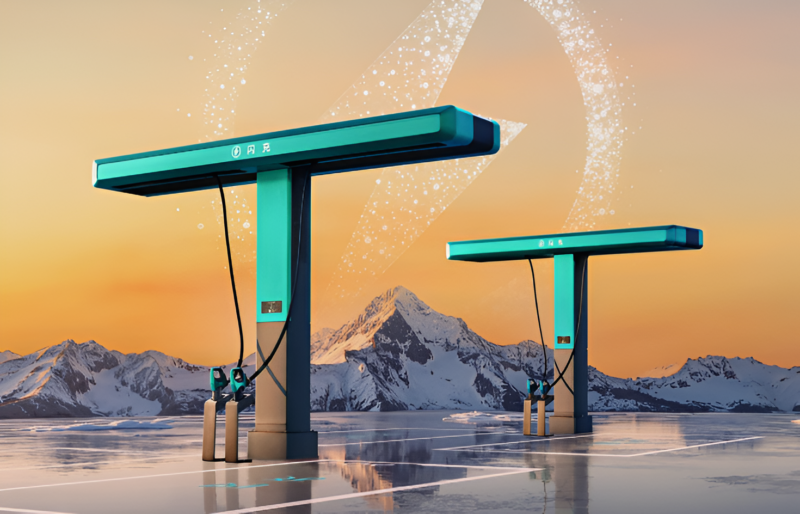
Chinese automaker BYD announced the commissioning of its 5,000th flash charging station via its Weibo account. With the latest facility opening at the Qinglan Expressway service area near Lanzhou in Gansu Province, as part of its nationwide “Flash Charging China” infrastructure initiative.
BYD’s flash charging network has now reached 297 cities across the country. According to the company’s technical overview, vehicles equipped with its second‑generation (Short) Blade Battery can achieve a state of charge from 10 % to 70 % in around 5 minutes and 10 % to 97 % in about 9 minutes at standard temperatures. At −30 °C, the charging interval from 20 % to 97 % extends to roughly 12 minutes, about 3 minutes longer than under normal conditions.
The second‑generation Blade Battery system underwent durability tests, during which 500 flash-charging cycles did not result in a fire under needle‑piercing, and the company has instituted a lifetime warranty on the battery cells. The flash charging stations also feature a suspended-cable design weighing about 2 kg, intended to keep connectors clean and off the ground, with automatic billing and plug‑and‑charge functionality that requires no smartphone interaction.
The deployment milestone follows a rapid build‑out that saw BYD’s flash stations expand quickly in late March, driven by the company’s declared goal of establishing 20,000 flash stations nationwide by the end of 2026. This includes both urban installations and dedicated highway flash charging hubs.
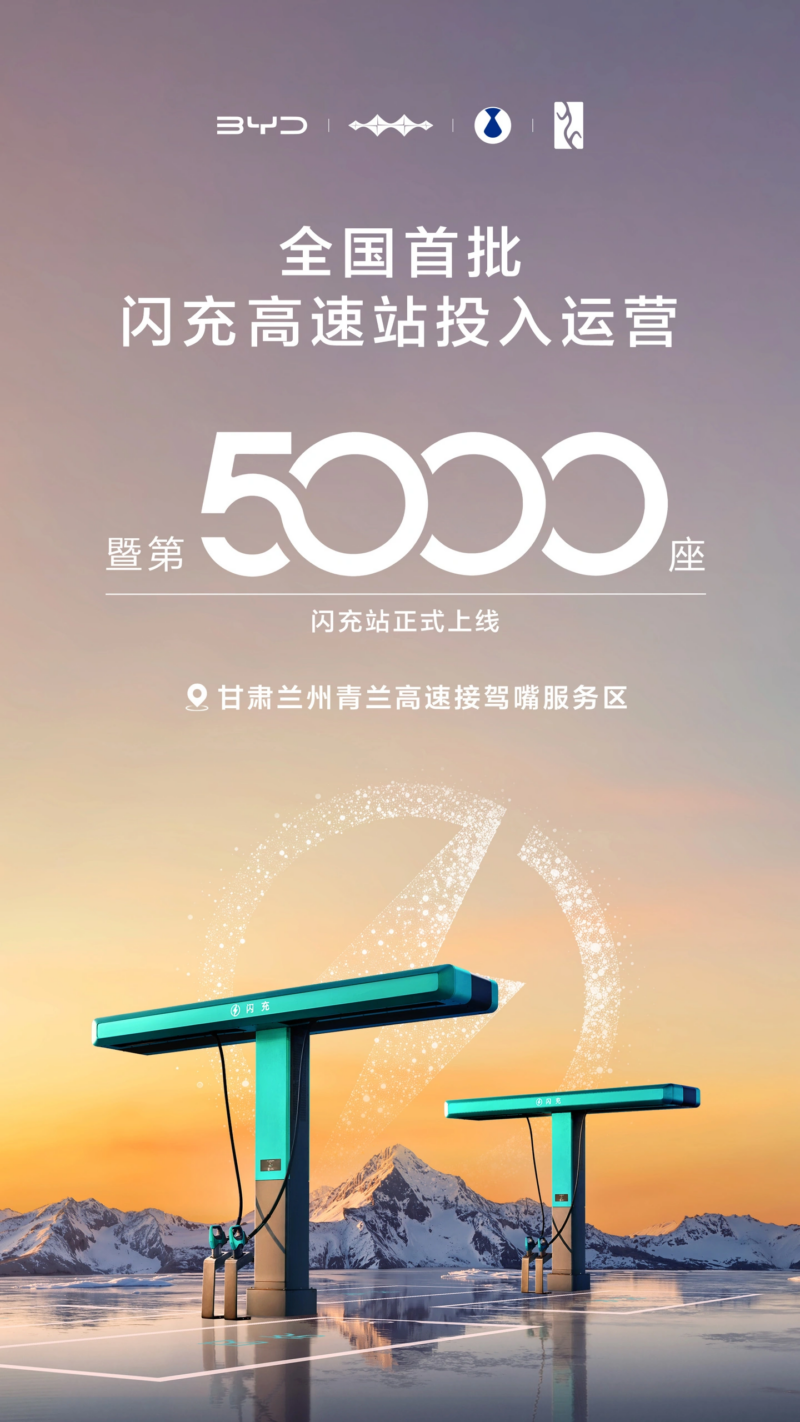
Flash Charging vs. Industry Landscape
BYD’s “flash charging” strategy complements a broader shift in China’s EV infrastructure, where companies are pushing high‑power charging solutions. Industry reporting shows BYD’s planned network, aiming for 20,000 stations by year‑end, will significantly outpace the combined reach of battery‑swap networks operated by rivals such as Nio and CATL within 2026.
At the same time, other domestic players are developing megawatt‑class charging facilities, underscoring a competitive acceleration in high‑power direct charging technology in China’s new energy vehicle market.
The expansion of flash-charging infrastructure also aligns with broader developments in the electric‑vehicle ecosystem that aim to improve user convenience and reduce “charging anxiety,” a longstanding barrier to EV adoption. Reports note that charging speeds and network density remain key differentiators in consumer choice and infrastructure planning.