GAC-backed company targets world’s first mass-producible solid-state battery in 2026, report says
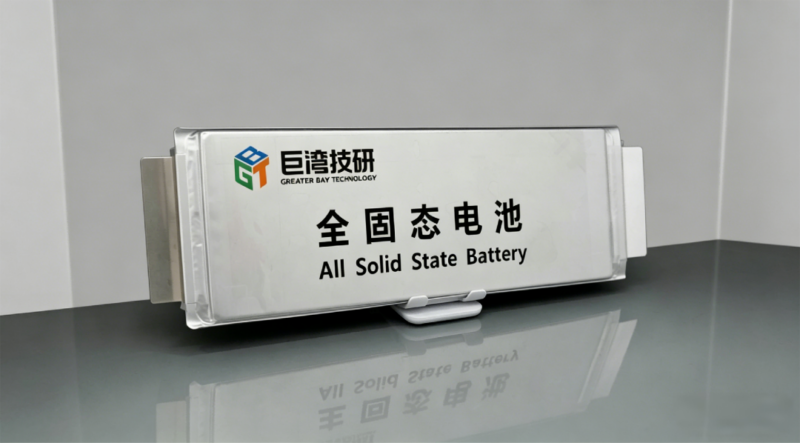
GAC-backed Greater Bay Technology has successfully produced its first A-sample cells of independently developed all-solid-state batteries, marking a critical step in the company’s industrialisation process. By leveraging its proprietary composite electrolyte technology, the company has overcome multiple core challenges in the industry, achieving simultaneous progress in fast charging, safety, and high energy density, as reported by NE-Time.
Composite electrolyte route breaks industry bottleneck
While the global solid-state battery sector focuses on four single-technology routes – sulfides, oxides, polymers, and halides – these approaches generally suffer from low conductivity, high interface impedance, slow charging, and complex manufacturing processes. Greater Bay Technology has pioneered a different path: a deep eutectic-based composite solid-state electrolyte technology.
The company’s approach combines “SDE cured deep eutectic + CFS anti-perovskite + low-dimensional nematic nanoconfinement” to create an organic-inorganic composite ESC all-solid-state electrolyte system with both high ionic conductivity and structural stability. This technology has received support from national major projects after evaluation by the National Development and Reform Commission.
A-sample cell performance verification
The recently produced A-sample cells have undergone testing with impressive results:
- Safety: Completely free of liquid electrolyte, the cells passed rigorous nail penetration, crushing, and thermal shock tests, achieving “non-flammable and non-explosive” performance, fundamentally eliminating fire and explosion risks associated with traditional liquid lithium batteries.
- Energy density: Single-cell energy density reaches 260-500 Wh/kg, higher than traditional liquid lithium batteries, improving range while creating space for lightweight and integrated vehicle design.
- Fast charging: Achieves stable 2-3C fast charging, breaking through the slow charging bottleneck that has plagued solid-state battery development.
- Cycle life: Maintains performance comparable to mainstream liquid lithium batteries, with minimal degradation and excellent consistency over long-term charge-discharge cycles.
Targeting GWh-scale production in 2026
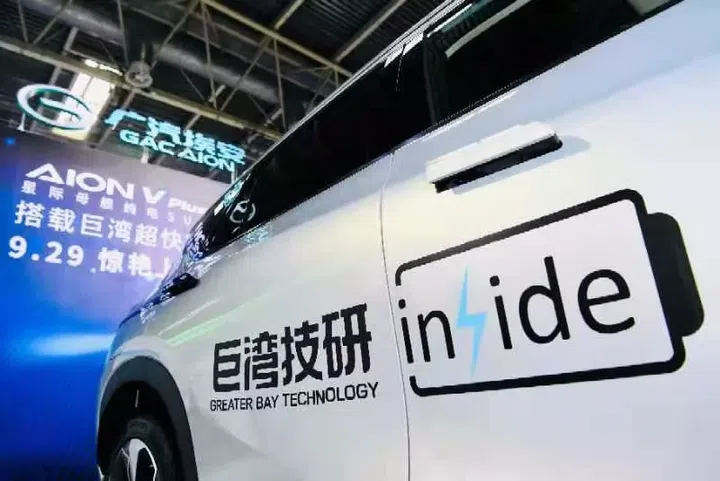
As a technology innovation benchmark incubated by GAC Group, Greater Bay Technology aims to achieve GWh-scale production in 2026 and begin vehicle installations, potentially becoming the world’s first mass-producible all-solid-state battery.
About the A-sample cell
“A-sample cell” refers to the initial prototype of a lithium-ion battery, typically produced on a small scale in a laboratory setting. Its main purpose is to validate the basic design concept, verify the feasibility of materials, and conduct preliminary performance and safety tests. This stage is crucial for laying the groundwork for subsequent development and mass production.
Editor’s comment
Last month, it was reported that GAC Group has completed its first large-capacity all-solid-state battery production line, with mass production planned for 2027-2030. However, China’s top EV expert said that solid-state batteries still take years to be widely used.