A newly disclosed integrated powertrain architecture from BYD has entered series production on the 2026 Denza D9, introducing a redesigned exhaust and chassis layout as part of the company’s next-stage plug-in hybrid development.
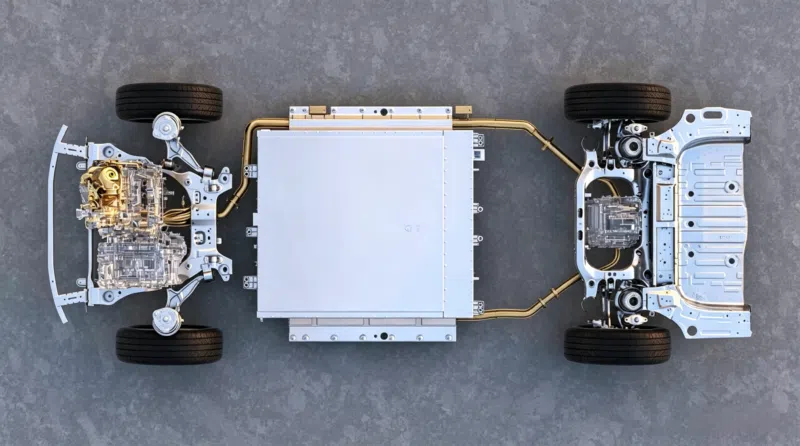
BYD’s “Heyuan” platform centres on relocating the exhaust silencer from the rear of the vehicle to the front engine bay, integrating it with other powertrain components. This contrasts with conventional layouts, in which exhaust systems occupy the rear underbody space.
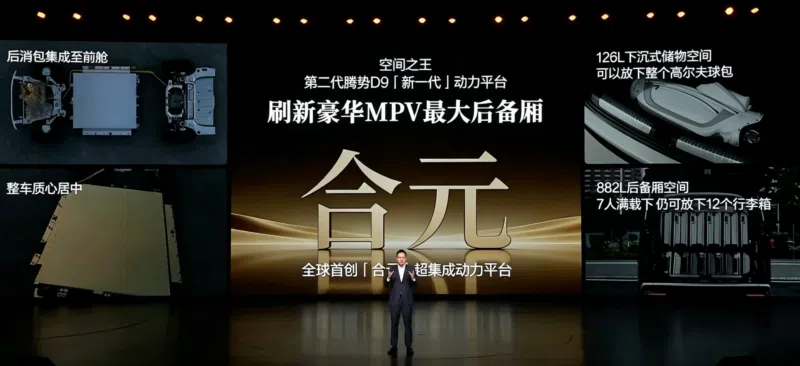
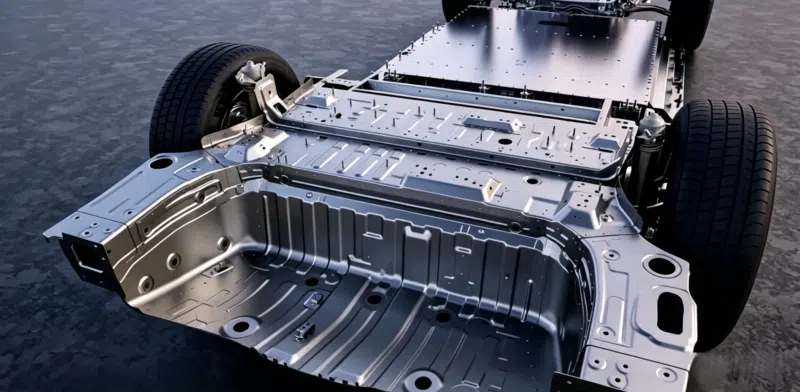
The change enables a reconfiguration of the chassis structure. With the rear section freed from exhaust hardware, the battery pack can be positioned more centrally. This shifts weight distribution and increases available rear cabin and cargo volume. In the Denza D9, the layout supports larger battery installations than typical plug-in hybrid MPVs.
The packaging change results in measurable space gains. In the Denza D9, the layout provides 126 litres of additional concealed storage in the rear, bringing total cargo capacity to 882 litres. The increase comes from integrating the rear muffler into the front engine bay, enabling more efficient use of underfloor and rear-compartment space.
In MPVs, where passenger capacity and luggage space are key parameters, the revised layout directly increases usable storage volume without altering overall vehicle dimensions.
Crossover toward next-generation hybrids
The platform forms part of BYD’s continued evolution of its DM hybrid systems beyond DM 5.0. While no official confirmation of a “DM 6.0” release has been made, the architecture introduces combined hardware and software changes.
These include integrated power-domain control, updated software algorithms, and compatibility with high-rate flash charging. The system moves away from a sole focus on thermal efficiency and fuel consumption, instead incorporating energy management through software-defined control.
Platform vs system: Heyuan and DM 5.0
BYD’s DM 5.0 is primarily a plug-in hybrid powertrain system focused on engine efficiency, electric-drive integration, and reduced fuel consumption. It combines a high-efficiency combustion engine, electric motors, and battery management under a unified hybrid strategy.
By contrast, the “Heyuan” platform focuses on physical architecture and packaging. Its key change is the relocation and integration of exhaust components into the front engine bay, which alters chassis layout, battery positioning, and available interior space.
The two are not mutually exclusive. The “Heyuan” platform can be deployed alongside DM-series hybrid systems, including DM 5.0, as it addresses structural layout rather than the hybrid control logic or core powertrain calibration.
Engineering constraints
Integrating the exhaust system into the engine bay introduces new engineering requirements. According to industry sources, development focused heavily on managing exhaust backpressure, heat dissipation, and noise, vibration, and harshness.
These factors typically become more complex when exhaust components are repositioned closer to the engine and other sensitive systems. The reported development timeline involved multiple years of engineering work and patent filings.
Scaling up battery capacity
The revised layout allows for expanded battery configurations. In the Denza D9, the platform supports a 66.48 kWh plug-in hybrid battery pack. The packaging concept also accommodates larger battery formats exceeding 100 kWh under certain configurations, enabled by the freed rear space.
This approach aligns with a broader trend toward greater electric-only range in plug-in hybrids, particularly in larger vehicles such as MPVs
Industry push and deployment
The second-generation Denza D9 is the first production model to adopt the “Heyuan” platform, marking its transition from development to mass production. The model remains one of China’s best-selling new energy MPVs, according to recent launch coverage.
Separately, BYD has outlined plans to deploy 6,000 flash charging stations overseas as part of Denza’s expansion into Europe, where the D9 and Z9 GT are expected to be introduced.
Data context
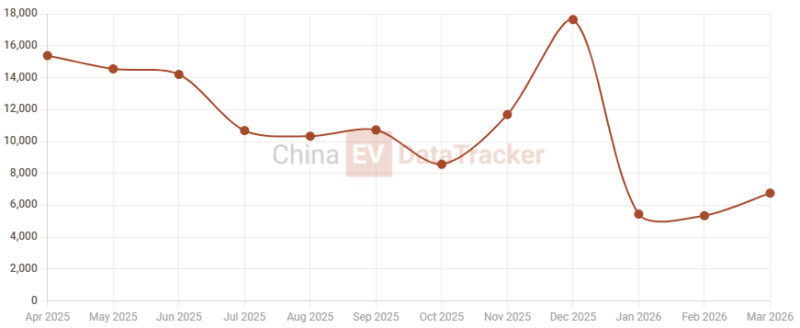
According to China EV DataTracker, Denza reported domestic sales of 6,762 units in March 2026, up 26.4% month-on-month and down 46.4% year-on-year. February sales reached 5,351 units, while January recorded 5,449 units, both showing year-on-year declines exceeding 35%.
Policy and technology backdrop
The platform reflects ongoing development in plug-in hybrid systems as automakers continue to expand electrification strategies globally. While battery-electric vehicles represent a growing share of new-energy-vehicle sales, plug-in hybrids remain part of transitional powertrain portfolios across multiple markets.