China’s new energy vehicle (NEV) exports reached 349,000 units in March, up 139.9% year-on-year, according to CPCA data, as rising global oil prices began to shift overseas demand toward electrified vehicles, 36kr reports.
The increase came amid supply disruptions in the Strait of Hormuz, which pushed fuel prices higher across multiple regions. Industry research from Deloitte indicates that a 1 USD-per-gallon increase in gasoline prices can lift EV sales by around 6%, providing a measurable demand trigger.
Overseas demand strengthens in key markets
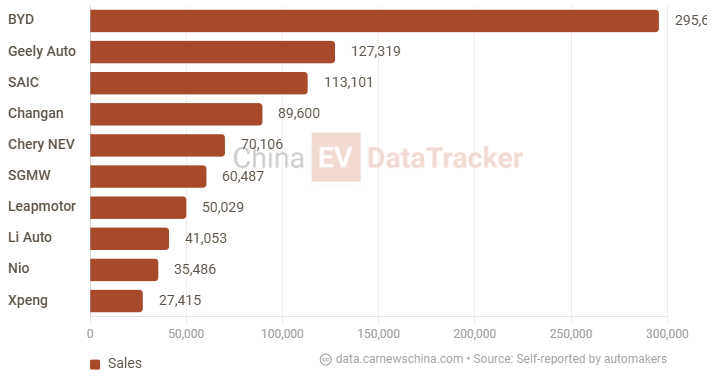
Chinese automakers reported strong overseas momentum. BYD sold 120,000 NEVs abroad in March, up 65.2% year-on-year, while Geely recorded 81,000 total overseas sales, up 120%. Geely’s NEV exports reached 51,000 units, marking a 479% increase.
Emerging EV brands also expanded exports. Leapmotor delivered 16,000 units overseas in March, up 77.8% month-on-month, while GAC Aion exported 11,000 units, up 175%.
In Australia, Chinese brands reached a 25% market share, ending a 28-year dominance by Japanese automakers. Local reports indicate customer inquiries for EVs increased by around 50% following the fuel price surge.
Retail-level impact: fuel costs driving behaviour shifts
Rising fuel prices have had a direct impact on consumer behaviour in markets such as Australia and New Zealand. Gasoline prices in Australia increased from below 2 AUD per litre (below 1.43 USD per litre) to around 2.5 AUD per litre (about 1.78 USD per litre), while diesel exceeded 3 AUD per litre (about 2.14 USD per litre). In New Zealand, gasoline prices rose by nearly 10%, and diesel increased by over 20%.
Dealers report a shift in purchasing patterns, with EV demand primarily focused on urban commuting use cases. In these markets, EV buyers typically already own internal combustion vehicles, suggesting EV adoption is currently incremental rather than a full replacement.
Structural limits remain
Despite stronger demand, price remains a constraint in developing markets. In Colombia, for example, EV pricing significantly exceeds average income levels. A BYD Dolphin was priced at approximately 170 million Colombian pesos (around 310,000 yuan, 45,300 USD), making it outside the mass-market affordability range.
Infrastructure and after-sales service also remain limiting factors. Reports indicate delays in spare parts supply in some overseas markets, with repair timelines extending to several months.
Policy response and uncertainty
Government responses may offset the impact of higher fuel prices. Australia recently introduced temporary fuel tax reductions, lowering gasoline prices by 0.26 AUD per litre (0.19 USD per litre) for three months.
Industry analysts note that sustained increases in oil prices over several months are typically required to produce lasting shifts in consumer behaviour. Short-term price spikes may not be sufficient to drive large-scale EV adoption.
Industry push continues despite uncertainties
Chinese automakers are continuing to expand overseas strategies. BYD has increased its 2026 export target from 1.3 million to 1.5 million vehicles, while brands such as Geely, Leapmotor, and GAC Aion are scaling international operations.
Recent data also shows localised breakthroughs. In Japan, BYD’s sales doubled in March 2026 as the company expanded its export-driven strategy, highlighting traction even in traditionally closed markets.
Data context
According to CPCA data, China exported 695,000 vehicles in March 2026, including both complete vehicles and CKD units, with NEVs accounting for roughly 50% of total exports. The 139.9% YoY growth in NEV exports significantly outpaced overall export growth, indicating a rapid shift in the composition of China’s outbound auto shipments.