Huawei expands 1,500 kW charging system with solar-storage push as EV fast-charging race intensifies
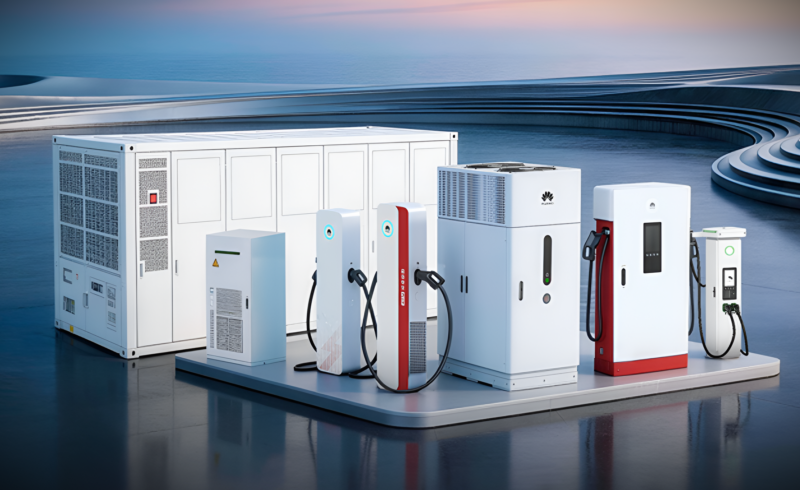
Huawei’s 1,500 kW megawatt charging system was first introduced in 2025 as a high-power solution for heavy-duty, high-utilisation electrification scenarios. The system supports up to 1,500 kW of peak output and 2,400 A of current, enabling a ~300 kWh battery charge in around 15 minutes under defined operating conditions, according to Bcar.
In 2026, the system is no longer positioned as a new introduction, but as part of a broader rollout strategy focused on deployment scale and infrastructure integration.
Beijing Auto Show: shift from product to system rollout
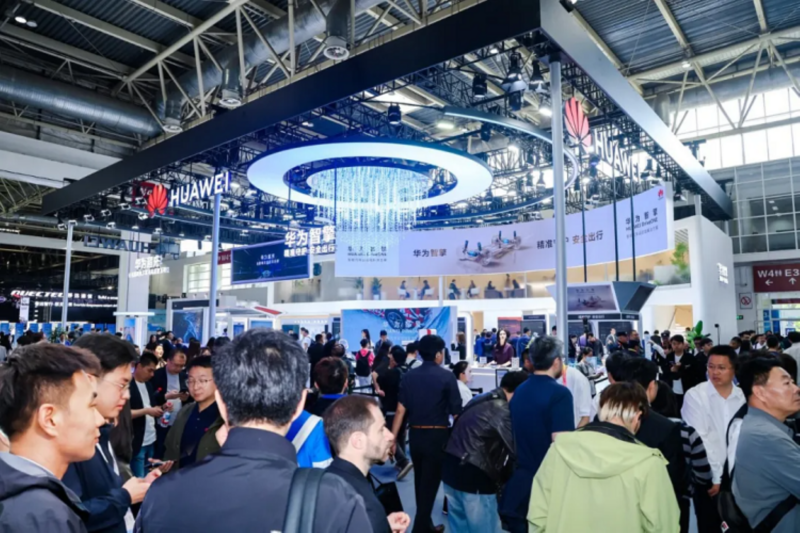
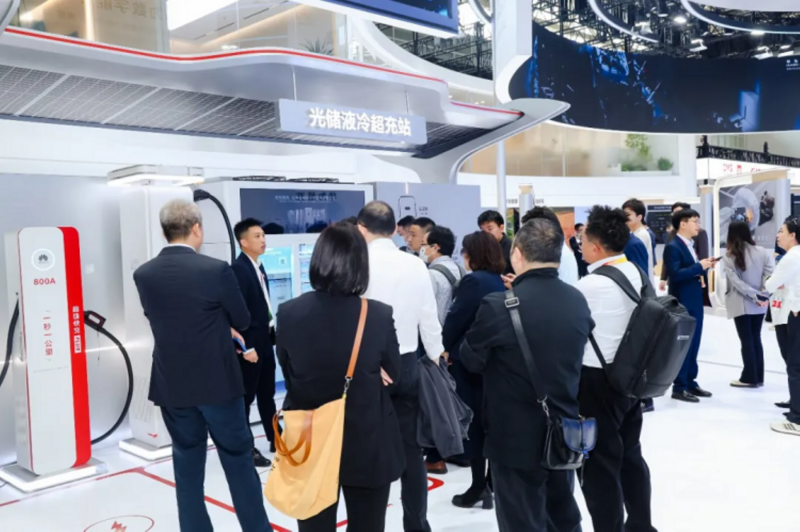
At the 2026 Beijing Auto Show, Huawei Digital Energy positioned its charging system as a full-stack solution rather than a standalone product, highlighting compatibility with China’s “2015+” charging standards and a broader terminal portfolio that includes natural-cooled 400A systems, liquid-cooled 800A units, and higher-power configurations above 1,000A, alongside charging equipment rated up to 1,000 kW and 1,440 kW.
The system also integrates solar-storage-charging coordination to improve grid utilisation and enable more flexible deployment under different infrastructure conditions. The architecture combines photovoltaic generation, energy storage, and charging infrastructure to reduce peak load pressure and support more stable station operation.
For passenger EV applications, Huawei presented upgraded ultra-fast charging terminals that support up to 800A of output. For higher-load corridors and commercial use cases, 1,000 kW-class systems and above are well-suited for logistics hubs and high-throughput charging environments.
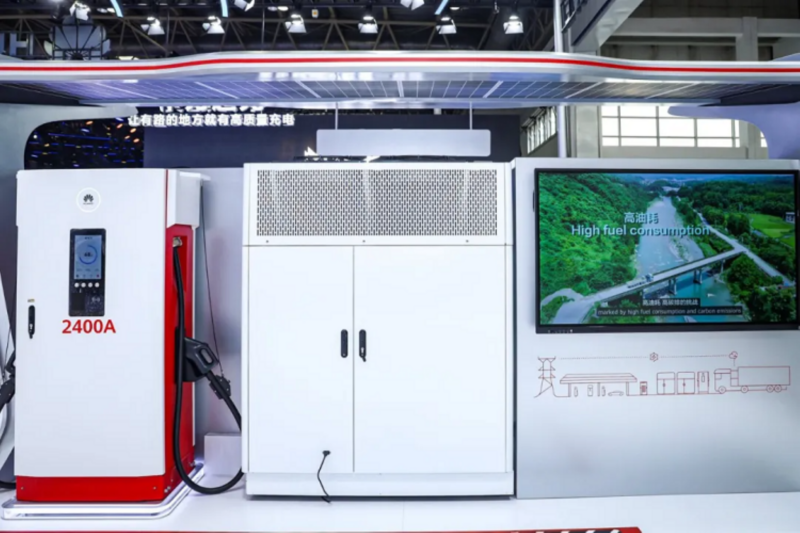
System architecture and energy buffering
The 1,500 kW charging system continues to rely on liquid cooling across charging guns, cables, and power electronics. A 215 kWh DC energy storage module delivers high power output even under constrained grid input conditions.
This decouples charging demand from direct grid supply, enabling faster station deployment in regions with weaker electrical infrastructure.
Passenger EV fast-charging competition
Huawei’s infrastructure-centric approach contrasts with passenger EV fast-charging strategies from other Chinese players.
BYD Flash Charging 2.0 integrates high-rate battery chemistry with peak charging power up to 1,500 kW, enabling 10% to 70% charging in around five minutes under defined conditions.
CATL Shenxing focuses on battery-level innovation, with a system-level claim of achieving full charge in about 6 minutes when paired with compatible charging infrastructure.
Huawei’s system instead prioritises infrastructure scalability, multi-vehicle compatibility, and grid buffering rather than battery-side integration.
Industry direction
Megawatt-level charging is increasingly being developed alongside improvements in battery chemistry. Passenger EV systems aim for sub-10-minute charging times, while infrastructure providers focus on grid stability, deployment speed, and multi-scenario applications.
Huawei’s 2026 positioning reflects a transition from early demonstration to broader network deployment.
Data context
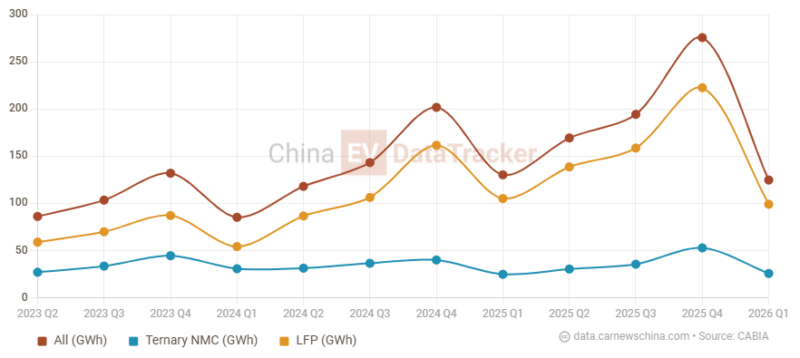
According to China EV DataTracker, China’s EV battery installations reached 124.8 GWh in Q1 2026, down 4.2% year-on-year. LFP accounted for 99.1 GWh (79.4% share), while ternary NMC accounted for 25.8 GWh (20.7% share), indicating continued dominance of LFP chemistry in fast charging and mass-market EV deployment.