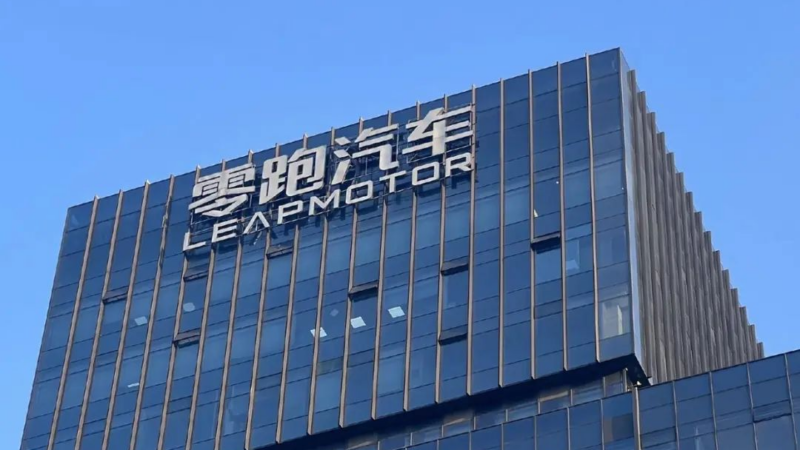
According to Chinese media outlet Latepost Auto, Leapmotor plans to launch a second brand in 2027, with vehicles priced above 300,000 yuan (43,500 USD). According to current plans, the new brand will adopt an independent sales network separate from Leapmotor’s existing channels.
Leapmotor officials declined to respond for comment.
Leapmotor’s current lineup—spanning the A, B, C, and D series plus Lafa 5—covers a price range from 65,800 yuan (9,500 USD) to 269,800 yuan (39,100 USD). It offers sedans, SUVs, and MPVs in both pure electric and extended-range configurations.
Last year, Leapmotor recorded 64.73 billion yuan (9.38 billion USD) in revenue and 540 million yuan (78.26 million USD) in net profit. Along with Li Auto, it remains one of only two Chinese EV startups to achieve full-year profitability. However, entering the mid-to-high-end market above 300,000 yuan (43,500 USD) typically requires stepping beyond existing product narratives and brand positioning.
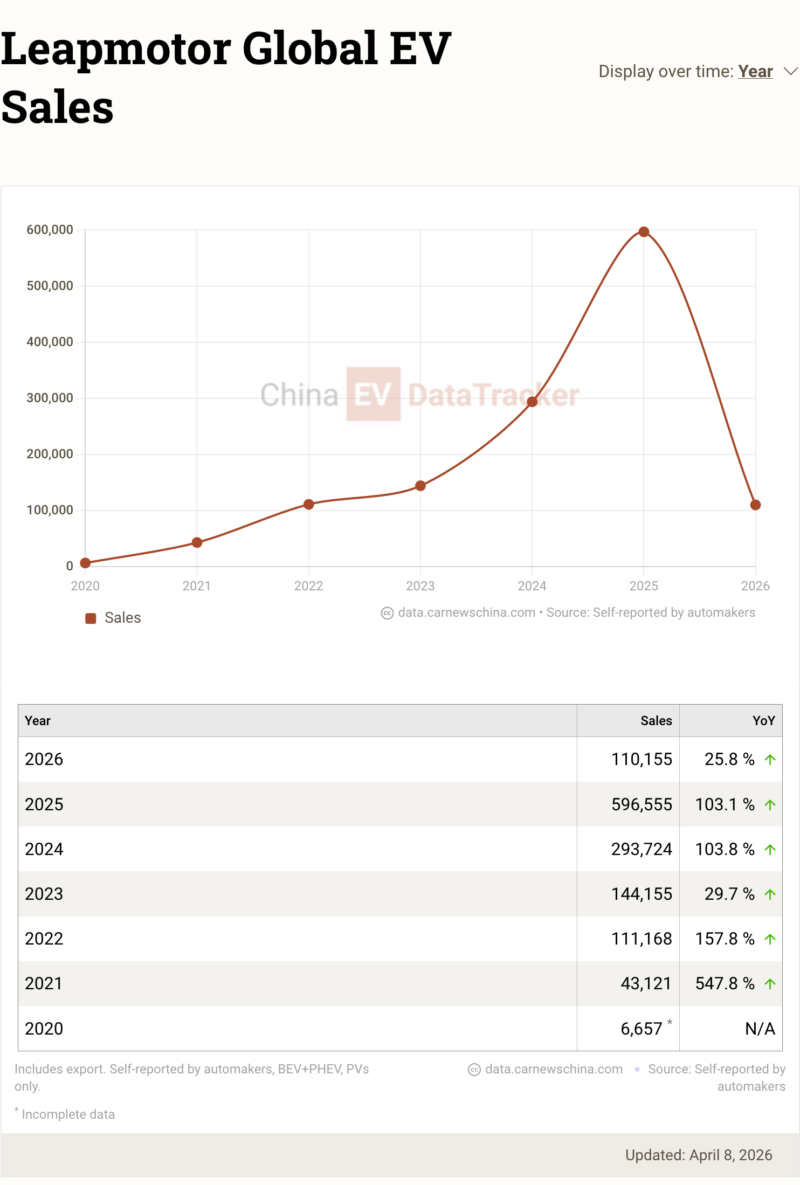
After a decade in business, Leapmotor ranked first among China’s EV startups last year with 596,000 vehicles sold.
According to automotive consulting firm Land Road, Leapmotor’s weighted average selling price across all models in 2025 is approximately 125,000 yuan (18,100 USD), comparable to Haval, Mazda, and iCAR. In 2026, Leapmotor plans to move upmarket through two new models: the D19 and D99.
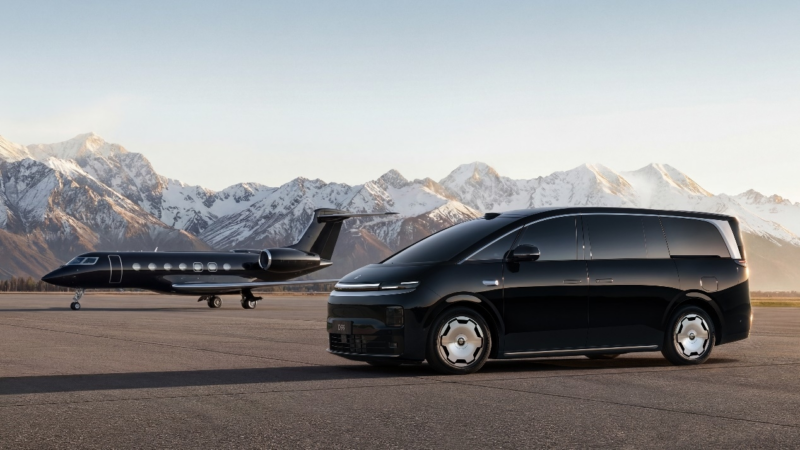
Leapmotor has set a target for 2026: 1 million vehicle sales and 5 billion yuan (725 million USD) in net profit. To achieve higher profits, entering higher price segments is the only path forward.
Toyota has Lexus, Nissan has Infiniti, and BYD has Denza and Yangwang. For Leapmotor, if it continues to uphold its “no high premium” philosophy for the main brand, launching a second brand becomes a more natural choice to break through the 300,000 yuan (43,500 USD) ceiling.
It remains unclear what powertrain strategy Leapmotor’s second brand will prioritise. Going pure electric means confronting the most challenging segment for EV startups, going plug-in hybrid or extended-range requires differentiation from Leapmotor’s D19 and D99. Once the powertrain route aligns with the main brand, platform, electronic control, and battery supply chain, sharing becomes difficult to avoid – and the cost structure of the main brand will constrain pricing above 300,000 yuan (43,500 USD).