Hyundai ‘triple down’ on Chinese market, to launch 20 new models in 5 years, says CEO José Muñoz
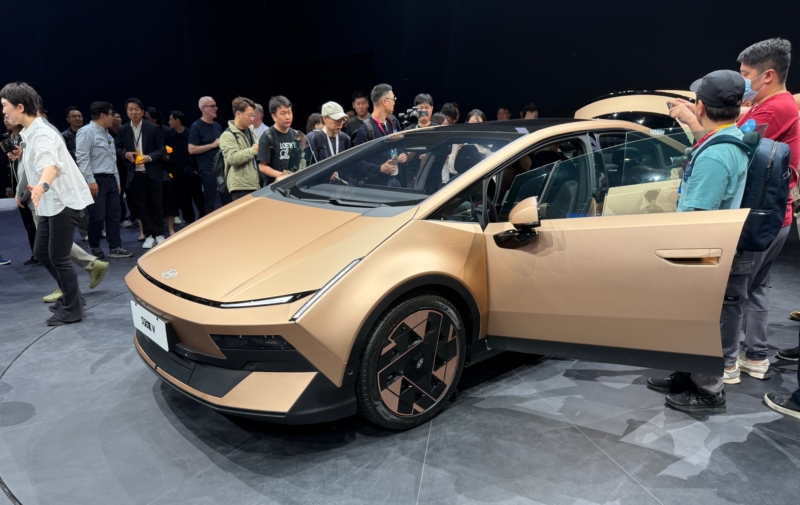
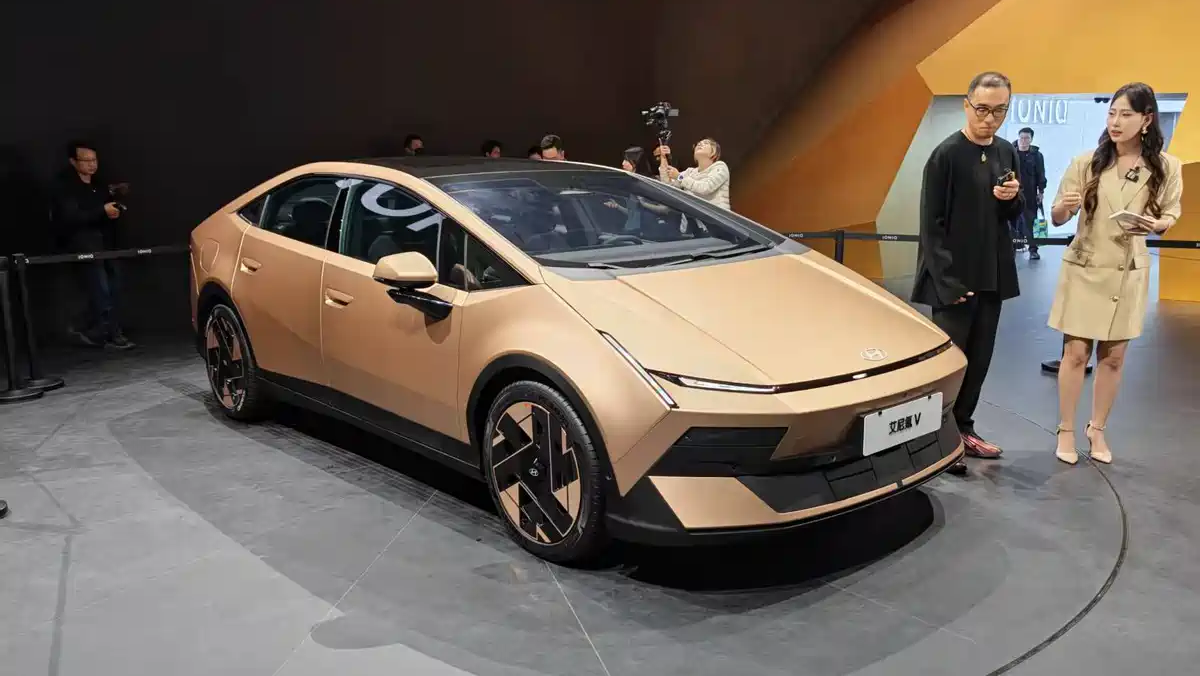
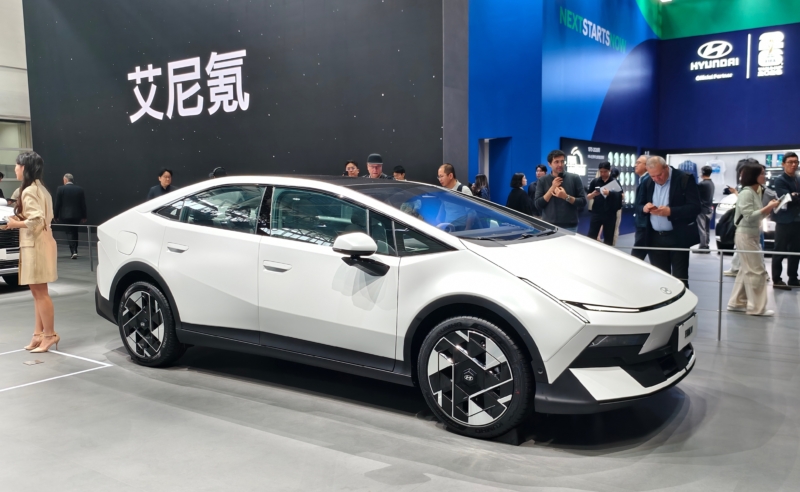
Hyundai Motor will launch 20 new models in China over the next five years as it tries to rebuild its position in the world’s largest car market, starting with the China-only Ioniq V electric vehicle unveiled at Auto China 2026 in Beijing on Friday.
The South Korean automaker aims to lift annual sales in China to 500,000 units by 2030 through its Beijing Hyundai joint venture with BAIC. The target includes exports from China. Hyundai CEO José Muñoz said China is an essential market for the company and that Hyundai is “tripling down” on its commitment to the country. “We are not leaving China. We are tripling down on it,” said Hyundai global CEO José Muñoz in a media meeting today.
The Ioniq V is the first production model under Hyundai’s Ioniq EV brand, developed specifically for China, with lots of China-inside tech. It is based on an EV platform co-developed with BAIC, with 800 V charging, using CATL batteries. The model also uses driver-assistance technology developed with the Chinese autonomous driving company Momenta.
The dimensions of the V are 4900/1890/1470 mm (length/width/height), with a wheelbase of 2900 mm. Hyundai said the long-range version of the Ioniq V will offer more than 600 km of range under China’s CLTC cycle. The company has not yet released detailed battery capacity, powertrain specifications, pricing, or launch timing for the model.
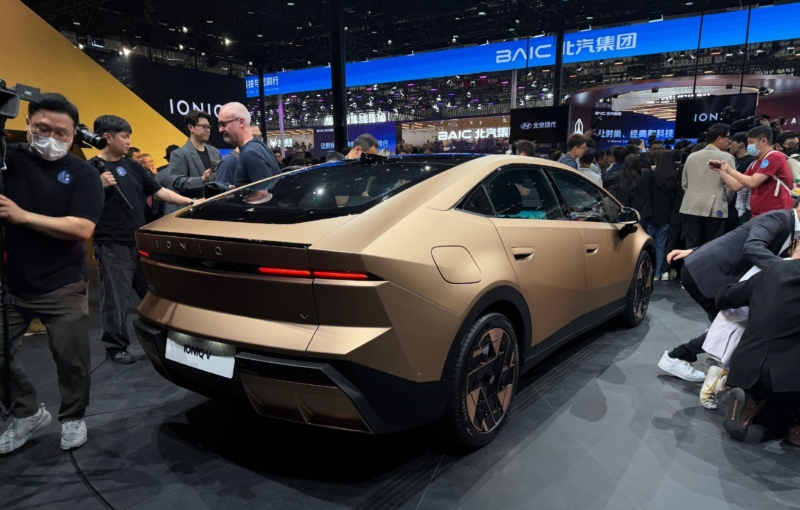
The Ioniq V follows the Venus Concept shown earlier in April, when Hyundai formally introduced the Ioniq brand to China. The production model keeps much of the concept’s wedge-like profile and single-curve silhouette. Hyundai said its China-bound Ioniq models will use a local design direction called “The Origin,” separate from the “Art of Steel” design language used for its global models.
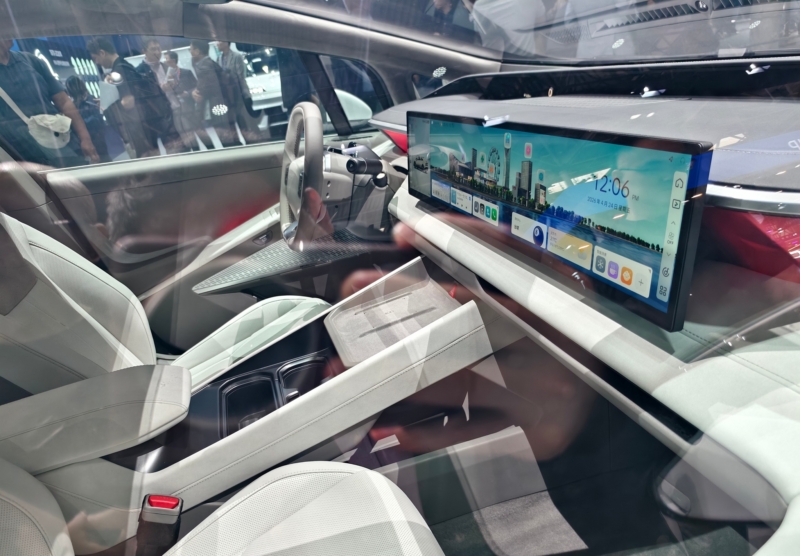
Inside, the Ioniq V features a 27-inch panoramic display and Hyundai’s Horizon head-up display. Hyundai also claims front-row legroom of 1,078 mm and rear legroom of 1,019 mm. Other equipment mentioned by the company includes a Dolby Atmos audio system and additional noise-reduction measures.
The Ioniq V is part of Hyundai’s broader “In China, For China, To Global” strategy. Hyundai said earlier this month that it would stop simply bringing global models to China and instead rely more on local design, local technology partners, and local development cycles.
The renewed China push comes after several difficult years for Hyundai in the country. Foreign automakers have lost ground as Chinese brands such as BYD, Geely, Chery, and Leapmotor expanded quickly in both battery-electric and plug-in hybrid segments. Reuters reported that Hyundai has struggled with weak market share in China amid growing pressure from domestic EV makers.
Hyundai also wants China to play a role beyond domestic sales. Muñoz told the media at the Beijing show that Hyundai wants to export China-made cars to other markets, including Britain, Europe, and the Middle East, while first becoming competitive in China itself.
The next model in Hyundai’s China plan will be another SUV, scheduled for the first half of 2027. The 20-model rollout will include both all-electric and plug-in hybrid vehicles.
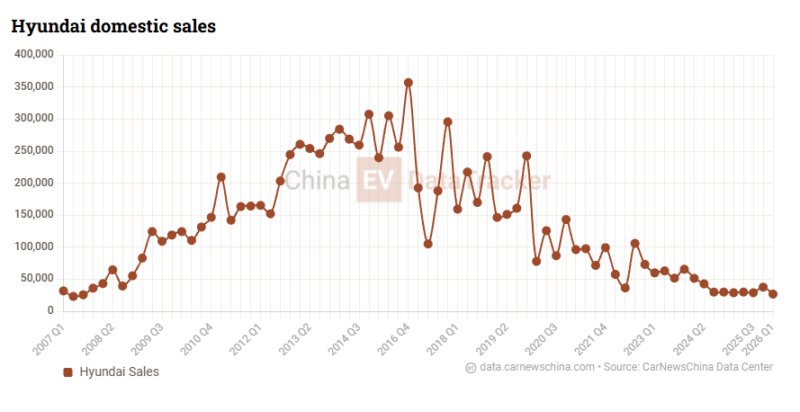
In the first quarter of 2026, Hyundai sold 26,913 vehicles in China, according to insurance registrations monitored by China EV DataTracker, down 7.2% year over year. This is significantly less than ten years ago, when Hyundai sold 239,654 vehicles in China in Q1 2016.