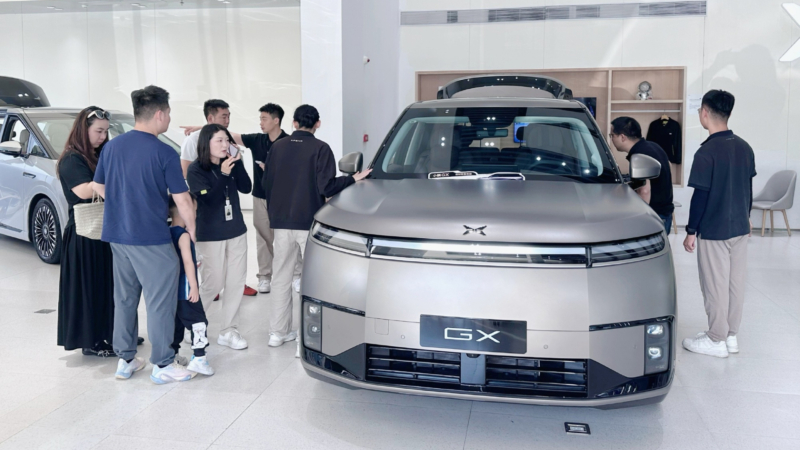
Xpeng CEO He Xiaopeng shared that five Chinese automakers will likely achieve trillions of yuan in revenue in the future with up to hundreds of billions of yuan in profits. He also addressed the industry innovation problem, citing the Beijing Auto Show 2026 as an example.
He Xiaopeng participated in the “Dialogue” program on China Central Television (CCTV) together with Nio co-founder and CEO William Li. They discussed their view on the electric vehicle industry and shared the vision of their companies.
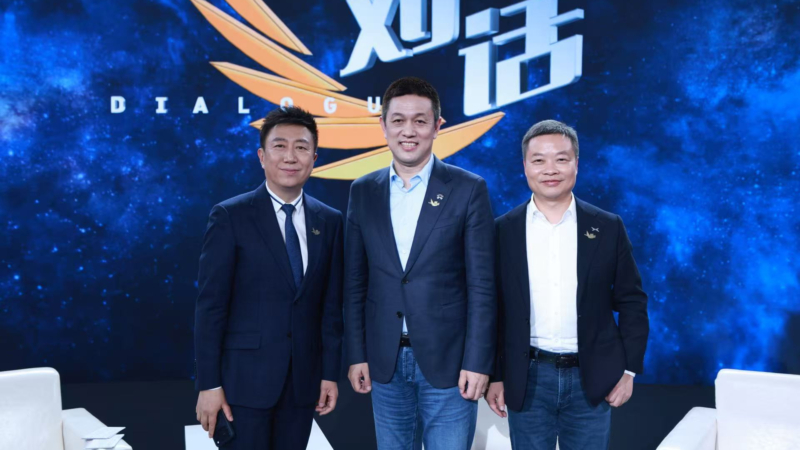
According to the Xpeng CEO, China will likely have five major automakers, each generating trillions in revenue and hundreds of billions in profit. Based on CarNewsChina’s calculation, a car maker needs to sell over 7 million cars annually. However, this number depends on the average price of the vehicle sold. At the moment, only five global automakers boast the same level of revenue: Toyota, Volkswagen Group, Kia-Hyundai, Stellantis, and General Motors.
He Xiaopeng didn’t name those five Chinese companies. However, the last year’s data indicates that BYD has the highest revenue of 803.9 billion yuan (117.7 billion USD). The top five also include SAIC (646.1 billion yuan / 94.6 billion USD), Geely (345.2 billion yuan / 50.5 billion USD), Chery (300.2 billion yuan / 40 billion USD), and GWM (222.8 billion yuan / 32.6 billion USD).
Involution and EREV tech
He Xiaopeng also shared that the industry is currently facing the problem of involution in China. It will enter a healthy development stage only when there are no longer around 150 new car launches at once at the Beijing Auto Show. In this scenario, Xpeng, Nio, and Li Auto will be able to achieve annual profits exceeding 50 billion yuan (7.3 billion USD).
He Xiaopeng also admitted that Nio made “tremendous changes” last year, and he is happy to see such a large company has changed so quickly. However, Xpeng CEO and Nio co-founder have different opinions on EREV technology. He Xiaopeng shared that such cars are an important intermediate stage due to the uneven distribution and demand of global energy. William Li replied that Nio focuses only on BEVs, looking at things from the perspective of the end goal.
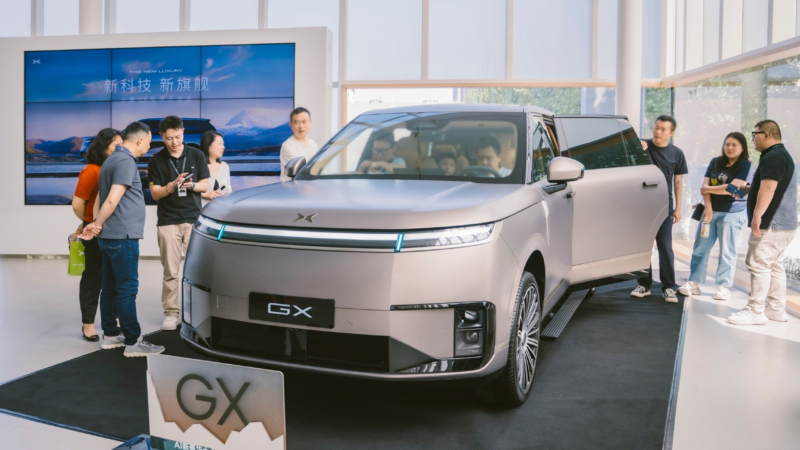
According to China EV DataTracker, Xpeng sold 94,693 new energy vehicles globally from January to April 2026, down 27.4%. This decline was partly caused by the short-term crisis in the Chinese domestic car market triggered by the phasing out of governmental subsidies towards the NEV segment. It was previously reported that Xpeng aims to sell up to 600,000 vehicles this year. This year, the company will launch the Xpeng GX full-size SUV to boost sales.


