Here are all key stories to watch at 2026 Beijing Auto Show, as year’s biggest EV event opens Friday
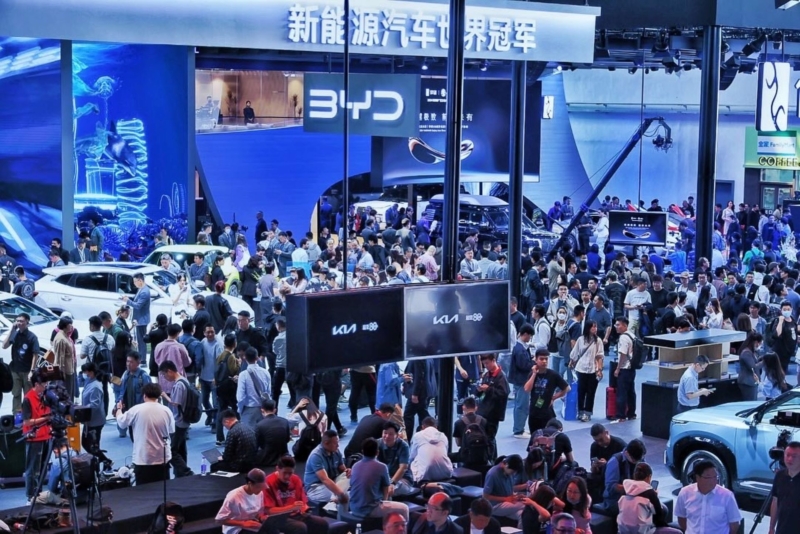
Quite a few people have recently asked me what the big themes are at this year’s Beijing Auto Show, also known as Auto China 2026 or the 19th Beijing International Automotive Exhibition.
Well, for starters, the big, overarching theme is that it is BIG, literally and figuratively, in every sense of the word.
With the show’s start just a few days away, its organizers have released official figures reflecting the sheer size of the exhibition venue.
Covering total exhibition area of 380,000 sqm thanks to the new Capital International Exhibition Center next to the existing China International Exhibition Center (Shunyi) where the show has been held biannually since 2008, it’s going to be the biggest international auto show ever held on this planet.
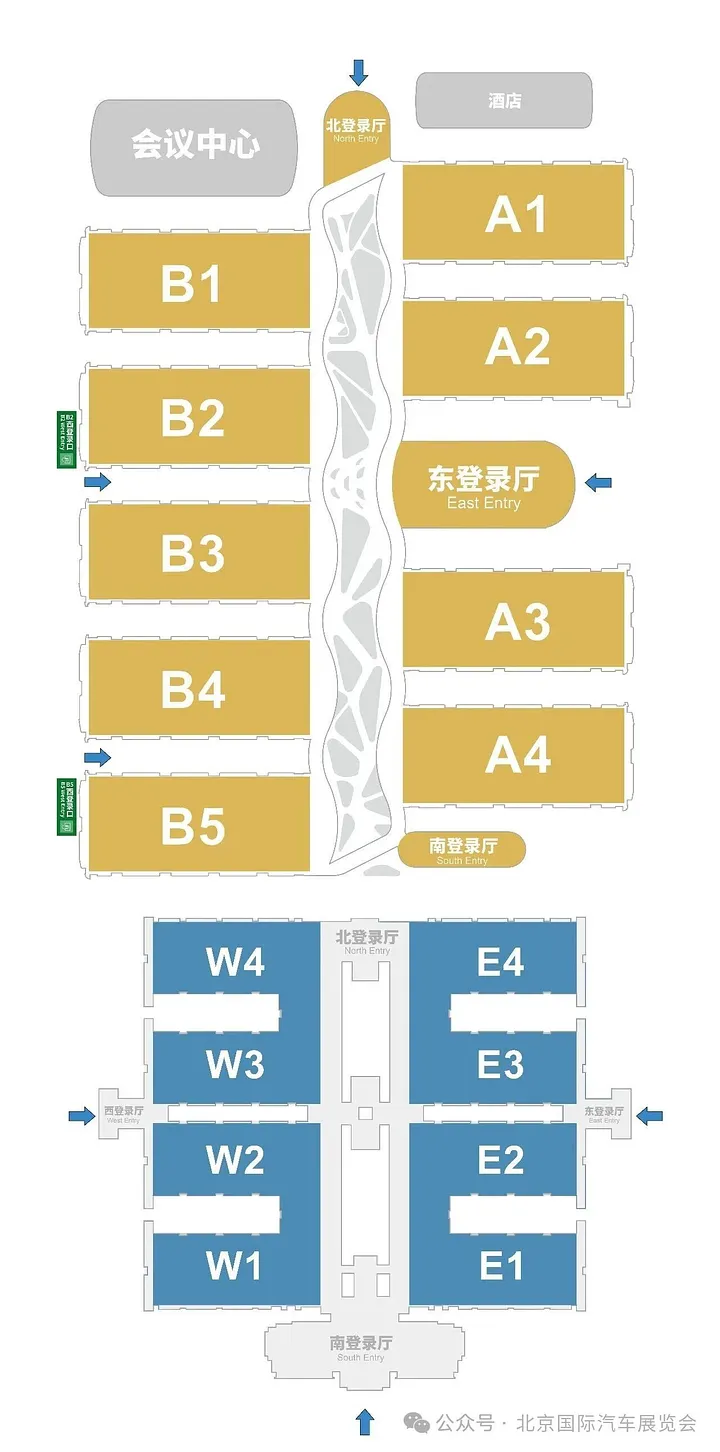
There will be a total of 1,451 vehicles on display, including 181 global and China premieres and 71 concepts. A total of 212 press conferences are expected to take place over the first two press days. Hundreds of companies from close to two dozen countries will be exhibiting and more than 30 industry forums will be held concurrently. Tens of thousands of Chinese and international journalists and KOLs are expected to cover the show and hundreds of thousands of people will visit the event from April 24 to May 3.
The global auto industry spotlight will shine on Beijing for a few days in late April, and it will for sure be madness. It’s a bit scary just thinking about walking the halls of the new venue to rush to press conferences because it is GIGANTIC.
While the show is going to be bigger, so are the vehicles on display, especially SUVs, which is the first major theme: the BIG “8” and “9” series electric SUVs (as well as a few MPVs and sedans) coming from virtually every brand Chinese and foreign, legacy or startup. Think of the:
- NIO ES9,
- Li Auto L9/L8,
- VW ID. ERA 9X,
- ID. UNYX 08,
- ID. UNYX 09 Concept,
- AUDI E7X,
- WEY V9X,
- ARCFOX Wendao V9,
- LUXEED V9,
- Yijing X9,
- Leapmotor D19/D99,
- AITO M9,
- Xpeng GX,
- BYD Great Tang (Da Tang),
- BYD Sealion 08
- Aistaland GT7,
- Shangjie Z7/Z7T,
- ONVO L80,
- ZEEKR 8X,
- Nissan NX8,
- VOYAH Taishan 8,
- IM LS8,
and Cadillac VISTIQ, just to name a few (more are coming later in the year, such as the Xiaomi YU9).
Some of these have already debuted, launched or gone on pre-sale; the rest will do so over the next few days, leading up to and following the show.
It almost feels like if you are not currently offering a large, full-size, three-row, six-seater electric SUV, your product planning team has failed at doing its job as what started as a fad by the Li Auto ONE (and later L9) and AITO M9 a few years ago has mushroomed into a major growth (and profitable) segment. What was once just a 20,000-unit-a-year has now become one with annual sales exceeding 100,000 units.
A big case in point is the NIO ES8, which is about to hit 100,000 deliveries in just 7 months on the market and has led sales in the large SUV segment for 4 months in a row. It’s a crucial model for NIO as the company seeks to achieve full-year profitability in 2026, following Q4 2025. One of the big reasons for the rise of these big SUVs is that China’s car market has become a customer retention and replacement/upgrade-driven market, and these big SUVs address that need, not only to help retain existing customers but to conquer those from other brands.
Notice some interesting brand names mentioned above, such as Shangjie, Aistaland and Yijing? How about Freelander, Huajing and Linghui, none of which existed two years ago, the last time the Beijing Auto Show was held. New brands on the block remain a major theme despite ultra-cutthroat competition.
Four of these brands — Shangjie, Aistaland, Yijing and Huajing — are Huawei-affiliated brands from SAIC Motor, GAC Group, Dongfeng Motor and SAIC-GM-Wuling, respectively, all of which have multiple EV brands already (Huajing is a new sub-brand/series under the Baojun brand from SGMW). The Freelander makes a comeback as a dedicated EV brand from Chery JLR based on the Land Rover nameplate, while the Linghui is a new “budget” brand from BYD dedicated to fleets and ride-hailing to differentiate its positioning from the namesake brand.
And, just in case you are counting, NIO’s ONVO and Firefly brands, as well as the new four-letter AUDI brand from Audi, among others, are all less than two years old. Luckily and thankfully, there is enough exhibition space to house these brands.
Speaking of Huawei, it’s worth giving it its own theme as its technologies continue to make their way into more vehicles from both Chinese and foreign brands and become a key driver behind the emergence of new ones: where there is a Huawei, there’s a way.
Huawei now has the “Big 5” HIMA (Harmony Intelligent Mobility Alliance) brands in AITO, LUXEED, STELATO, MAEXTRO and Shangjie with partners SERES, Chery, JAC, BAIC Group and SAIC Motor, respectively, as well as the “triple Jing” brands in Aistaland (Qijing), Yijing and Huajing. It is also a critical ecosystem partner to brands like AVATR and ARCFOX. It has gone into foreign brand vehicles like the Nissan Teana and Audi A6L e-tron as well as Chinese brands like BYD offering Harmony OS and Huawei Qiankun smart driving features. The next-generation AITO M9 is expected to be revealed with six Huawei in-house developed LiDARs, and the upcoming production SUV from Freelander will be the first to be equipped with Huawei’s next-generation Qiankun ADS 4.1 smart driving system.
So, look forward to Huawei announcing big updates to its smart driving and cockpit technologies with existing partners via new brands and models. For many of these partners and brands, Huawei almost feels like Red Bull: it gives them wings to compete and be relevant.
Speaking of giving wings to compete and being relevant, the latest and greatest offerings in advanced driver assistance systems (ADAS) or often referred to as L2++ point-to-point (parking space-to-parking space) assisted driving will be a big theme: the age of VLA for smarter driving has arrived.
This will be headlined by Xpeng’s VLA 2.0, which is not only going into its entire vehicle lineup but also to its foreign partner Volkswagen. Xpeng will hold a major global media event ahead of the show, and a host of others like Li Auto, NIO and LeapMotor will update their versions of the VLA or similar foundational world models for smarter driving. Everyone is going to claim they have the best all-scenario smart driving stack or capability in the market.
Unlike FSD in the U.S., there is no clear-cut winner in the battle for smarter driving supremacy in China, apart from Xpeng claiming that its VLA 2.0 is the only intelligent model in China capable of rivalling Tesla FSD and the first in China with L4 potential. But Huawei, Li Auto, NIO, Horizon Robotics, QCraft, NeueHCT, DeepRoute and even the Robotaxi company WeRide are all jostling to offer the best smart driving solutions.
And everyone is going to claim they have the best sensor suite and compute, which is the next and closely associated major theme: LiDARs and chips ahoy. Xpeng and NIO already offer their own smart driving chips in Turing and Shenji, while Li Auto’s Mach 100 chip is about to go into the upcoming new L9, and there’s an outside chance that Xiaomi could announce its XRING smart driving chips for EVs. Others who chose to continue buying rather than making are likely to offer newer versions of NVIDIA and Qualcomm chips, while domestic players like Horizon Robotics, Black Sesame, and SiEngine will announce their next-generation chips. In fact, Horizon Robotics is expected to announce its first integrated chip for both ADAS and smart cockpit.
The competition in the LiDAR space is escalating as all the “Big 3” of Hesai, RoboSense and Seyond now produce and deliver millions of LiDARs a year to a wide variety of applications including ADAS, robotaxi, humanoid robots, vacuum robots, lawnmower robots and last-mile unmanned delivery vans, among others. Huawei’s recently announced 896-line LiDAR was one upped by RoboSense’s 2160-line EM4 LiDAR which was one upped again by Hesai’s 4320-line 6D full-color LiDAR. And Hesai LiDAR is now standard on sub-RMB90,000 EVs for the first time with the recently launched LeapMotor A10.
Speaking of LiDARs, more and more of them are also finding their way onto the latest and greatest EV offerings from foreign brands, which are striking back with a vengeance with their next-generation “in China for China” electric-mobility offensive. Think of the Volkswagen ID. ERA 9X, ID. UNYX 08/07, ID. AURA T6, Audi A6L e-tron, AUDI E7X, JETTA X, BMW iX3 LWB, i3 LWB, Mercedes GLC LWB, Buick ELECTRA E7, Cadillac VISTIQ, Nissan NX8. Hyundai is officially introducing the IONIQ lineup in China and the first production model tailored for the Chinese market based on the Venus and Earth concepts, the development of which was led by Hyundai’s local R&D team in China.
All these models have one thing in common: they have Chinese tech inside, be it Xpeng, Momenta, Huawei, Alibaba, Tencent, or others, and they were developed with “China speed”: case in point is the ID. UNYX 08, which was developed in just 24 months. They also have updated design, styling and aesthetics that are comparable to offerings from Chinese brands and address critical segments like EREVs and large SUVs.
Finally, we are going to hear announcements of next-generation battery technologies, and it’s most likely a battle between the top two dogs: BYD and CATL. BYD has already announced its second-generation blade battery and sub-10-minute flash charging, while rapidly scaling its flash charging network, aiming to reach 20,000 by year’s end. CATL is expected to announce what senior management described as “the densest lineup of new and updated technologies announced at a single event ever” at its 2026 Tech Day on April 21, almost as a direct response to BYD. Expect the third generation of its Shenxing supercharging battery, capable of 15C charging, as well as updated solid-state, Xiaoyao dual-chemistry, sodium-ion, and condensed battery technologies for a variety of applications. Oh, also remember that CATL is rapidly rolling out its own battery swapping network that will number in the thousands by the end of this year to rival both BYD and NIO.
Xiaomi Founder & CEO Lei Jun just completed a 1,313-km Beijing-to-Shanghai trip in a new SU7 a few days ago, stopping only once to charge. It’s only a matter of time before an EV will be capable of completing the same trip without the need to stop to charge at all, and CATL (if not BYD) may just announce something that effect.
These are the “big” (but definitely not exhaustive) themes at this year’s Beijing Auto Show, one that I’ve attended over a dozen times throughout my quarter century of covering the Chinese auto market, and one that I will call my “home” auto show because most of that coverage happened on the ground in Beijing in the 2000s and 2010s.
It will also take place under the most complex industry and geopolitical backdrop ever: the roller coaster Iran war and the never-ending Russia-Ukraine war, the billions of dollars and Euros of write-offs from western automakers as they walk back from their previous electrification strategies but selectively going all-in in China, China EV chatter becoming mainstream in the U.S. with more narrative (most recently Jim Farley and Howard Lutnick) that they should be blocked from entering while Canada rolls out the carpet and the rest of the world are gradually being taken over by them, domestic sales facing increasing headwinds as export explodes and China EV presses on the electric pedal for global expansion. All of these precede the looming Xi-Trump summit in Beijing in less than a month, which could have significant ramifications for the global auto industry, which is increasingly dictated by developments in China.
Stefan Hartung, chairman of Bosch, said it perfectly at the German supplier’s annual press conference last week: “global prices in the automotive industry are increasingly based on just one standard, and that’s China’s.”
That pricing (and other competitive) involution as well as product and tech innovation/leadership will be on full display later this week.
p.s. just to give you a sense of how involuted the industry is, here’s a list (not exhaustive) of the more than three dozen or so events that have taken place and will take place leading up to the show’s start on April 24 (not including the hundreds of press conferences on the day of) since April 9:
- April 9: NIO ES9 pre-sale
- April 12: GAC Group Tech Day
- April 13: Chery Fulwin T9L launch
- April 13: Geely Auto Group i-HEV Smart Hybrid Tech launch
- April 14: Wuling Bingo Pro pre-Sale
- April 15: BYD Linghui e7 launch
- April 15: Xpeng GX Tech Day
- April 15: Volvo Cars 99th anniversary celebration and EX90, ES90 & XC70 launch/pre-sale
- April 16: LeapMotor D19 launch
- April 16: IM LS8 launch
- April 16: VW ID. UNYX 08 launch
- April 16: GAC AION N60 launch (powered by WeRide WRD 3.0 and Seyond Robin LiDAR)
- April 16: Geely Galaxy Xingyao 7 pre-sale
- April 16: The Realm of Ranger Rover
- April 17: GWM ONE Platform Tech & WEY V9X (AI powered luxury flagship) pre-sale
- April 17: ZEEKR 8X launch
- April 17: Hesai Tech Day
- April 18: Haval Menglong PLUS Super Hybrid pre-sale (starting at RMB189,800)
- April 19: EXEED EX7 launch (RMB194,800 starting)
- April 19: Geely Xingyue L/Xingrui i-HEV launch
- April 20: Dongfeng Mengshi Spring Launch
- April 20: BAIC Group Product Innovation Showcase
- April 20: GWM TANK 700 launch
- April 20–23: JAC Global Partners Conference
- April 21: Roewe 20-Year Anniversary Brand Night
- April 21: RoboSense Tech Day
- April 21: CATL Tech Day
- April 21: ONVO L90 2026 edition Launch
- April 21: Volkswagen Group Media Night
- April 21: Chang’an Group Global Strategy Launch & Global Partner Conference
- April 21–23: Geely Auto International Business Partner Conference
- April 21–24: Foton Day and 30th Anniversary Celebration
- April 22: VOYAH Taishan X8 pre-sale
- April 22: BMW Brand Night
- April 22: smart brand night all-new #2 global debut
- April 22: HIMA Spring Launch Shangjie Z7/Z7T, AITO M6 launch/pre-sale
- April 22: LUXEED V9 pre-sale
- April 22: Horizon Robotics Tech Day/Product Launch
- April 23: Geely Auto Group Night
- April 23: Huawei Qiankun Technology Conference
- April 25: ID. ERA 9X Launch
- April 28: ONVO L80 Tech Launch
Lei Xing is a former editor-in-chief of China Auto Review and co-host of the China EVs & More podcast; you can follow him on Twitter or Medium.


